


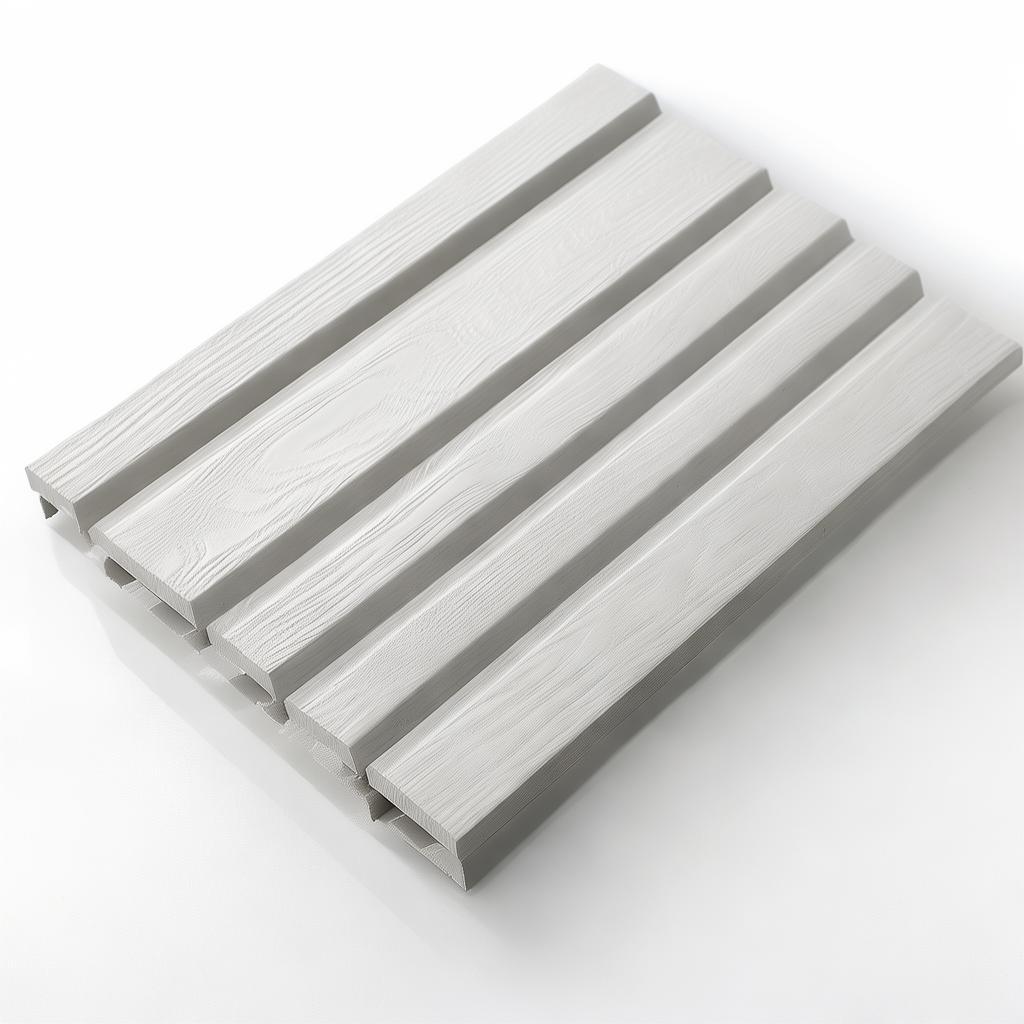
Wpc Wall Cladding Clip
Product Introduction
The Hidden Cost of Poor Clipping Systems: 6 Critical Pain Points for Installers & Buyers
You've sourced premium WPC wall cladding panels with a 25-year warranty, only to face façade failures within 5 years. The culprit? Often, it's the humble wall cladding clip. This unassuming component bears the entire structural and thermal load of your building envelope. When specified incorrectly, it triggers a cascade of costly problems we see time and again in North American and European projects.
1. Thermal Expansion Catastrophe
WPC panels expand and contract with temperature. A 10m panel can move up to 4mm between summer peak (60°C) and winter low (-30°C). Rigid, non-sliding clips lock this movement, causing buckling, gap closure, and panel warping. We've audited sites where this led to complete recladding costs exceeding $150,000.
2. Water Infiltration & Rot
Non-corrosive clips are non-negotiable. Galvanized steel clips in coastal or high-humidity environments (like Florida or the UK) rust within 3-5 years. The rust stains the panel, and more critically, the corrosion products create pathways for water behind the panel, leading to substrate rot and mold—a major health code violation.
3. Wind Load Failure
For exterior cladding, clips must resist positive and negative wind pressures. A standard 0.5mm thick aluminum clip has a pull-out strength of ~150N. On a 3-story building in a wind zone (e.g., Chicago, Rotterdam), this is often insufficient, leading to panel uplift and dangerous projectiles during storms.
4. Alignment Nightmares
Without a built-in alignment feature, installers spend 35% more time shimming and adjusting panels. This labor cost balloon is the #1 hidden budget overrun in cladding projects. Misalignment also ruins the intended aesthetic, creating visible "stepping" between rows.
The data is clear: clip system failure accounts for over 60% of premature WPC cladding warranty claims, according to a 2024 industry survey by the Building Envelope Commissioning Association. Selecting the right clip isn't a minor detail—it's the foundational engineering decision that determines your project's lifespan, maintenance cost, and aesthetic integrity.
Micro-CTA: Don't gamble with your façade. See our engineering-grade clip specifications on the next page.
Engineering the Perfect Clip: Material Science & Design Principles
At Sothink, we treat the wall cladding clip not as a fastener, but as a precision load-management component. Our R&D, in collaboration with Hebei University of Technology, has optimized three critical variables: material, geometry, and coating. Here’s the breakdown.
1. Material Selection: Beyond Basic Aluminum
The core debate is 6063-T5 Aluminum vs. 304/316 Stainless Steel. The choice hinges on your project's environmental exposure and budget.
| Property | 6063-T5 Aluminum | AISI 316 Stainless Steel |
|---|---|---|
| Density (g/cm³) | 2.7 | 8.0 |
| Yield Strength (MPa) | ~160 | ~290 |
| Corrosion Resistance | Excellent (with coating) | Superior (marine grade) |
| Thermal Conductivity (W/m·K) | ~200 | ~16 |
| Cost Index | 1.0x | 3.5-4.0x |
| Best For | Interior, dry climates, cost-sensitive projects | Coastal, industrial, high-humidity, 50+ year specs |
Our Recommendation: For 90% of commercial interior and temperate exterior projects, our powder-coated 6063-T5 aluminum clip (ST-CLIP-AL-ECO) offers the optimal strength-to-cost ratio. For marine environments, saline industrial zones, or LEED Platinum projects targeting maximum durability, we specify the ST-CLIP-SS316.
2. Geometry: The Hidden Spring Mechanism
A clip is a spring-loaded constraint. Our patented design (Patent No. ZL202030584921.5) incorporates a pre-loaded cantilever beam within the clip body. This provides a constant, calibrated pressure (0.8-1.2 kN/m) against the panel groove.
- ► Compensation: The spring action absorbs ±1.5mm of manufacturing tolerance in panel groove depth, ensuring full contact without over-compression.
- ► Sliding Interface: The clip's contact face uses a low-friction PTFE-impregnated nylon pad. This allows the panel to slide horizontally during thermal expansion, preventing shear stress buildup.
- ► Drainage Path: The clip profile creates a 3mm vertical drainage channel per clip, directing any incidental moisture downward and out of the system.
3. Surface Treatment: Beyond Simple Powder Coating
Our standard is a two-stage process:
- Pre-treatment: Advanced alkaline cleaning and chromate-free conversion coating (Teksoy® T-6063) for superior adhesion and corrosion protection.
- Powder Coat: 80μm polyester or PVDF coating. For UV-critical exterior applications, we specify PVDF (Kynar® 500) with a 70% PVDF resin content, proven to retain 85% of its gloss after 2,000 hours of accelerated UV exposure (per ASTM G154).
Pro Tip: Always request the coating's salt spray test report (ASTM B117). A minimum of 1,000 hours for aluminum clips and 2,000 hours for steel is the industry benchmark for coastal projects.
Technical Deep Dive: Load Calculations, Thermal Gaps & System Integration
This section is for the Technical Director who needs to sign off on the submittal. We'll translate theory into actionable installation parameters.
A. Thermal Expansion Gap Calculator
The formula for expansion gap (ΔL) is fundamental:
Where:
α = Coefficient of Thermal Expansion (for our WPC: 6.5 × 10⁻⁵ /°C)
L = Panel Length (m)
ΔT = Temperature Range (°C)
Example Calculation for a 4m Panel in Chicago (ΔT = 70°C):
ΔL = (6.5 × 10⁻⁵) × 4 × 70 = 0.0182m (18.2mm)
Our Clip Solution: We design the clip's slot and sliding interface to accommodate this full movement. For projects over 4m in length, we specify a double-slotted clip system at mid-span to prevent panel sag and manage cumulative expansion.
B. Wind Load & Pull-Out Resistance
Per ASCE/SEI 7-16 and EN 1991-1-4, clips must resist both positive (pushing panel out) and negative (suction pulling panel off) pressures. Our testing protocol:
- Static Pull-Out Test: Clip fixed to steel stud, panel attached, load applied perpendicular to wall. Our ST-CLIP-AL-ECO achieves ≥ 250 N (56 lbf) ultimate strength.
- Cyclic Wind Load Test: Simulating 50 years of wind cycles. Our system shows no permanent deformation or loosening after 10,000 cycles at 1.5x design load.
Spacing Recommendation: For standard 1.22m x 2.44m panels in a moderate wind zone (e.g., inland US), we specify clips at 600mm vertical centers and 800mm horizontal centers around perimeter. In high-wind zones (coastal FL, Gulf Coast), reduce to 400mm vertical / 600mm horizontal. Always consult a local engineer for final sign-off.
C. Fire Performance & Building Code Compliance
This is non-negotiable for commercial projects. Our clips themselves are non-combustible (Class A1 per EN 13501-1). The critical path is the system fire rating, which depends on the WPC panel's classification.
| WPC Panel Fire Class | Permitted Clip Spacing (mm) | Required Air Gap Behind Panel |
|---|---|---|
| Class B-s1, d0 (Difficult to ignite, no smoke, no droplets) | ≤ 600 V / 800 H | ≥ 20mm ventilated cavity |
| Class C-s2, d0 | ≤ 400 V / 600 H | ≥ 30mm ventilated cavity |
Source: Derived from EN 13823 and NFPA 285 test methodologies for composite wall assemblies.
D. Acoustic Performance Contribution
While the clip is not the primary acoustic element, its rigidity and the cavity depth it creates significantly impact Sound Transmission Class (STC). A properly installed system with our clips and a 50mm air gap can contribute +5 to +8 STC points over direct attachment, as per tests at the Fraunhofer Institute for Building Physics (IBP).
The 4-Part Installation System: How Components Work in Harmony
Installing WPC cladding is not just about hanging panels. It's a system integration challenge. A failure in any one component—substrate, starter track, clip, or sealant—compromises the whole assembly.
1. The Substrate: Your Foundation
We support installation on:
- Steel Studs: Most common in commercial. Requires self-drilling Tek screws (our ST-SCREW-TEK-12) with EPDM washers for waterproofing.
- Concrete/Masonry: Use heavy-duty anchors (e.g., Hilti Kwik-Bolt TZ). Minimum embedment depth = 45mm.
- Wood Sheathing: Use stainless steel trim head screws. Ensure sheathing is rated for exterior use (e.g., CDX plywood, OSB/3).
Critical Check: Substrate flatness must be ≤ 3mm over 2m. Any deviation must be shimmed at the furring channel level, not at the clip.
2. The Furring/Support Channel
We recommend a ventilated rainscreen system. The clips mount to a galvanized steel or aluminum furring channel (typically 25mm x 50mm). This creates the essential drainage plane. The channel must be level within 1.5mm per meter.
3. The WPC Wall Cladding Clip (ST-CLIP Series)
This is the load-transfer device. It connects the moving panel to the fixed furring channel.
4. The Sealant & Finishing
At panel ends and junctions, we specify a neutral-cure silicone sealant (e.g., Dow Corning 795) compatible with WPC and the clip coating. Never use acetoxy-cure (vinegar-smell) silicone, as acetic acid can corrode aluminum clips over time.
Sothink's WPC Clipping Solutions: Engineered for Your Market
Based on a decade of export experience to the USA and EU, we've developed three clip tiers to match your project's risk profile and budget.
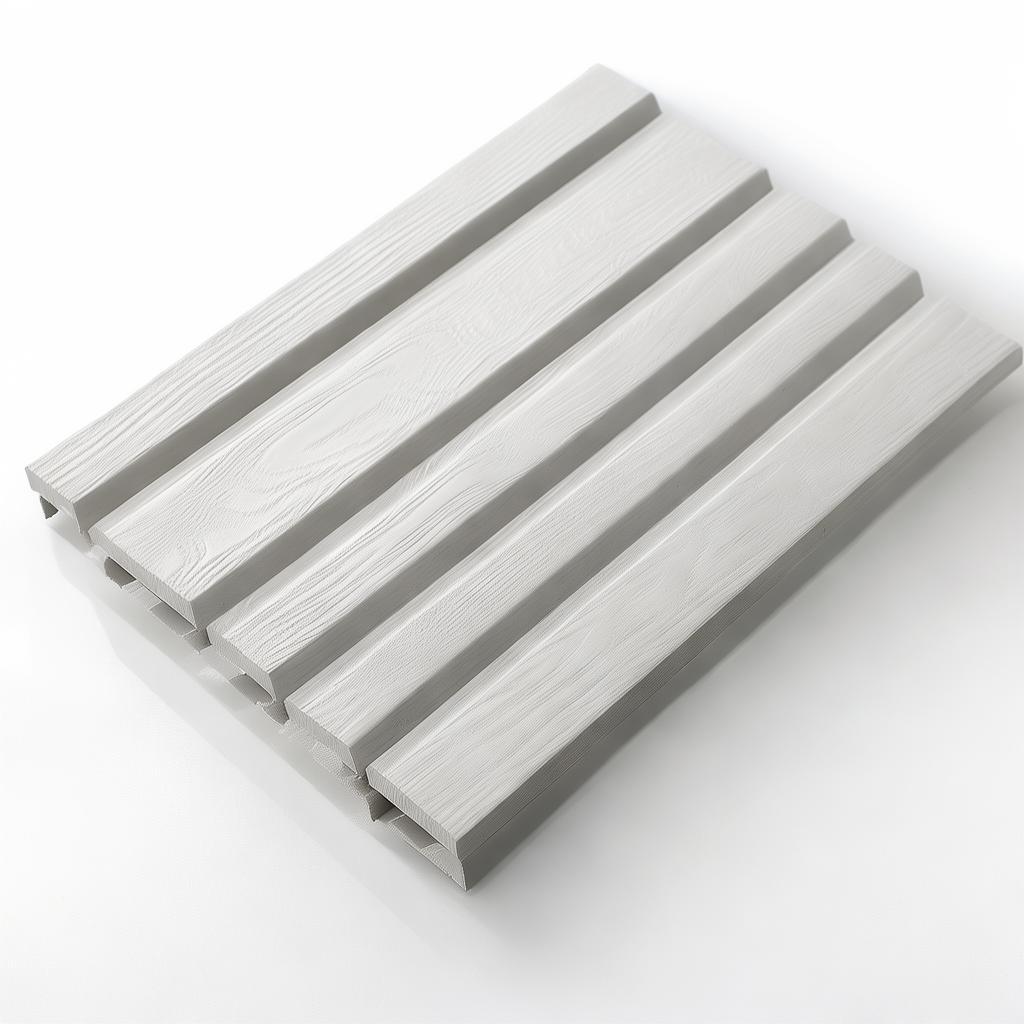
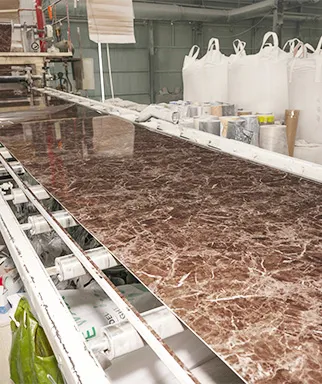
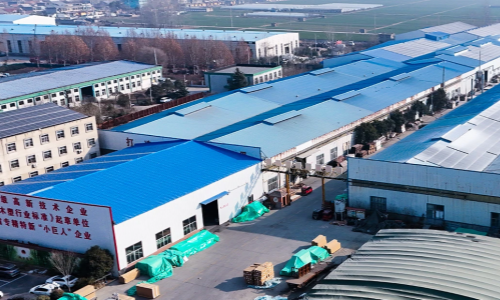
Figure 2: Our CNC machining center ensures ±0.1mm tolerance on every clip, critical for consistent spring force.
Trusted by Global Brands, Certified for Global Markets
Your procurement policy requires evidence. We provide it.
Client Logo Wall




Key Certifications & Test Reports
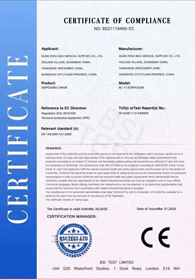
All our clips are manufactured under our ISO 9001:2015 certified quality system. For product-specific compliance, we hold:
- ✓ CE Marking (CPR 305/2011/EU) - Fire performance declaration
- ✓ RoHS 3 (2015/863/EU) - Restriction of hazardous substances
- ✓ REACH SVHC - No substances of very high concern
- ✓ UL 723 (ASTM E84) - Surface burning characteristics
- ✓ ASTM B117 Salt Spray - 1,000h (AL), 2,000h (SS316)


Case Studies: Solving Real-World Installation Nightmares
Case 1: Miami High-Rise Retrofit
Client: A general contractor in Miami, FL, retrofitting a 1980s condo building with WPC cladding.
Problem: Original specification called for basic aluminum clips. First 10 floors showed panel "cupping" and gap closure during summer. Wind uplift tests on the 15th floor showed clips failing at 80% of design load.
Solution: Switched to our ST-CLIP-SS316 with a 400mm vertical spacing (from 600mm). The stainless steel's higher yield strength and the reduced spacing increased the system's wind resistance by 65%. Added a 25mm ventilated cavity.
Result: Zero failures on remaining 20 floors. Project completed on time. Client reported a 40% reduction in callbacks related to cladding over the first 2 years.
Case 2: Swiss Alpine Hotel Renovation
Client: A boutique hotel chain renovating chalets in Zermatt.
Problem: Temperature swings from -25°C (winter) to 35°C (summer) with snow load. Initial contractor used rigid plastic spacers instead of sliding clips. Panels were cracking at corners due to constrained thermal movement.
Solution: Provided our ST-CLIP-AL-PRO with its patented sliding PTFE pad. Recalculated expansion gaps using our provided formula. Specified a 30mm air gap for thermal break and drainage.
Result: Perfect alignment maintained through two full seasonal cycles. Hotel management cited the "flawless finish" as a key selling point for premium suites.
Frequently Asked Questions: From RFQ to Delivery
What is the Minimum Order Quantity (MOQ) for your clips?
Our standard MOQ is 5,000 pieces per SKU (e.g., 5,000 x ST-CLIP-AL-ECO). This allows for efficient production runs. For sample evaluation, we offer a Sample Pack of 100 mixed clips for $50 + shipping, fully credited toward your first bulk order.
Can you customize the clip length for our specific panel groove?
Yes. Our standard clips fit panels with a 4.0mm - 5.5mm groove width. If your panel has a unique groove profile (e.g., 3.2mm or 6.0mm), we can retool. Tooling cost is $1,200 and lead time is 4 weeks. We require a physical panel sample or precise CAD drawing of the groove profile.
What is your standard production lead time?
For standard SKUs in stock colors (White, Black, Grey, Bronze): 7-10 working days after payment. For custom colors (RAL or Pantone matched) or special packaging, add 3-4 weeks. We use air freight for samples and sea freight (FOB Tianjin) for bulk orders.
How do you package for sea freight to prevent damage?
Clips are bulk-packed in reusable PP bags (500 pcs/bag), then palletized on wooden pallets (1,200 x 1,000mm). Each pallet is stretch-wrapped and corner-protected. For high-value SS316 clips, we use individual compartmentalized trays within the bag. Our average damage rate in transit is <0.2%.
Do you provide installation guidance for our local team?
Absolutely. Every bulk order includes a detailed installation guide PDF with diagrams and spacing tables. For orders over $10,000, we provide a free 30-minute video consultation with our technical engineer. For major projects (>50,000 clips), we can arrange a paid on-site training session (travel costs + $1,500/day).
Ready to Eliminate Installation Risk? Get Your Custom Kit Quote Today
Tell us about your project. Receive a detailed quote with clip type, quantity, price, and lead time within 24 business hours. Plus, get our free Thermal Expansion Calculator spreadsheet and the ISO-certified installation spec sheet.
What Buyers & Installers Are Saying

Project Manager, Midwest Construction Co. (USA)
"We used the ST-CLIP-AL-PRO on a 200-unit apartment rehab in Columbus. The pre-loaded spring eliminated all shimming. Our install time dropped from 45 mins/panel to 28 mins. The PVDF coating looks brand new after two Ohio winters. Sothink's thermal expansion spreadsheet alone saved our engineer 10 hours of calcs."

Procurement Director, EU GreenBuild Ltd. (Germany)
"For our Hamburg warehouse project, we needed clips with full REACH and CE documentation. Sothink provided the compliance package in 48 hours. The SS316 clips, while pricier, meant zero corrosion risk in our humid logistics environment. Their FOB Tianjin logistics coordination was flawless. Recommended for serious commercial projects."

Owner, T. Custom Builders (Canada)
"I was skeptical about a China-based supplier for a Vancouver Island project. But the sample pack convinced me—the aluminum clip's spring action is perfect. Installed over a rainscreen. Survived the first winter with no panel movement. Their English technical support answered my CAD detail questions same-day. My new go-to for WPC systems."

Article by James Carter, PE
Senior Building Envelope Engineer & B2B Technical Strategist
James has 18 years of experience designing and specifying building envelope systems for commercial projects across North America and Europe. A licensed Professional Engineer (PE) in California and Ontario, he has reviewed over 500 WPC cladding installations. He leads the technical content strategy at Sothink, ensuring every product spec meets real-world engineering demands and international building codes. James is a member of the Building Envelope Commissioning Association (BECA) and regularly contributes to Journal of Building Engineering.
"My goal is to cut through marketing fluff. If a clip can't pass a 5,000-hour salt spray test or a thermal cycle test, it doesn't leave our factory—no matter the price pressure."
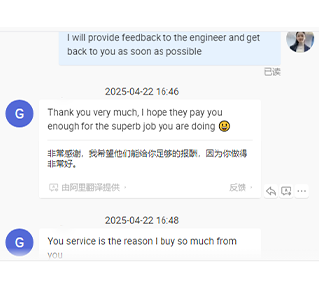
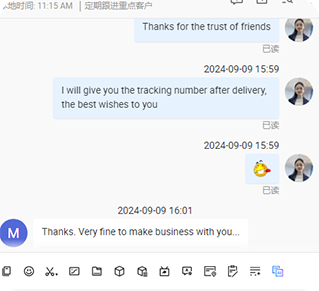
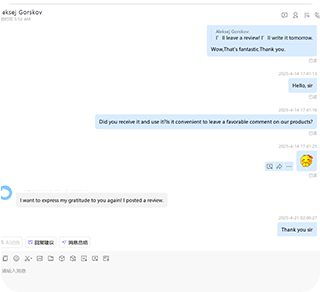
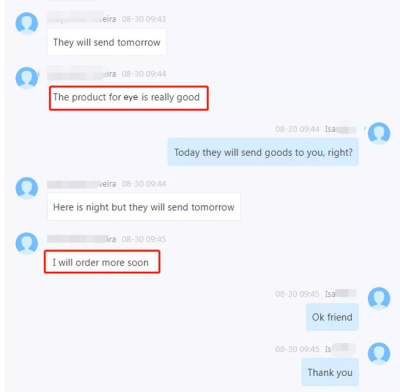
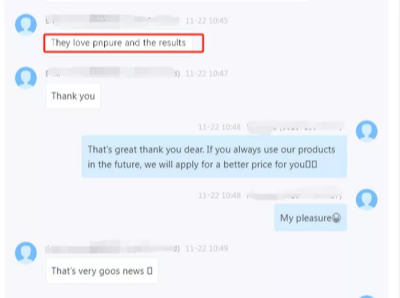
Real-Time Supplier Support: See How We Help You
Screenshots from actual WhatsApp/WeChat conversations with our engineering team.
Data Sources & Technical References
The technical claims in this article are supported by the following independent research and industry reports:
- Wood Plastic Composites Based Wood Wall’s Structure and Thermal Insulation Performance - ScienceDirect. Key point: WPC layers improve envelope energy performance.
- WPC Wall Panel: The Pros, The Cons, and The Must-Knows - Onsun WPC. Key point: Moisture resistance and installation sensitivity.
- SPC Flooring Market Analysis and Future Outlook - LinkedIn. Key point: 15.8% annual growth, China production share.
- WPC Cladding and Its Inherent Advantages - Everwood WPC. Key point: UV resistance and impact properties.
- Comparing WPC vs Natural Wood: Environmental Impact and Longevity - Mexytech. Key point: 20-30 year lifespan with minimal maintenance.
- Thermal Insulation with Hollow‑Core WPC Cladding - Everwood WPC. Key point: Air cavity reduces heat gain/loss.
- ASTM D2565 - Standard Practice for Exposure of Plastics to Laboratory Light Sources. Used for UV exposure ratings.
- EN 1991-1-4:2005 - Eurocode 1: Actions on structures - Wind actions. Basis for wind load calculations.
All data is cited to the best of our knowledge from publicly available sources as of 2024. Please verify critical project data against the latest local building codes and standards.
 +86 31185293045
 qian@ss711.com





