


Wpc Outdoor Wall Cladding
Product Introduction
WPC Outdoor Wall Cladding: 2026's Ultimate Solution for Durable, Low-Maintenance Building Facades
Fight weather decay, skyrocketing maintenance costs, and sustainability pressures with a high-performance composite cladding system engineered for North American and European climates. Get a free project assessment within 24 hours.
The Crushing Reality: Why Traditional Exterior Wall Materials Are Failing Your Projects
You're specifying materials for a coastal resort in Florida, a mid-rise apartment in Berlin, or a warehouse in Texas. The choices seem familiar: painted wood siding, fiber cement, or maybe aluminum. But hidden beneath the initial price tag lies a cascade of long-term costs and performance risks that erode your project's ROI and reputation. Based on industry data and real-world project feedback from 2023-2025, here are the core pain points demanding a better solution.
1. The Maintenance Money Pit
Natural wood cladding requires repainting or restaining every 3-5 years in harsh climates. For a 2,000 sq ft facade, professional painting costs can exceed $8,000-$12,000 per cycle, not including labor disruption or environmental disposal fees. Fiber cement, while lower maintenance, still demands periodic repainting and is susceptible to moisture ingress at joints, leading to costly repairs.
2. Climate-Induced Degradation
In UV-intense regions (Southwest USA, Southern Europe), wood fades, checks, and warps. In freeze-thaw zones (Northern Europe, Canada), water penetration causes spalling in cement-based products. Over 40% of exterior cladding failures are directly linked to moisture management and thermal cycling issues, according to a 2024 Building Envelope Council report.
3. Sustainability & Regulatory Pressure
Corporate ESG mandates and EU regulations (like the CPR - Construction Products Regulation) demand verified environmental data and reduced carbon footprints. Sourcing tropical hardwoods triggers deforestation concerns, while the embodied energy in cement production is a major CO2 source. You need a material with recycled content certification and EPD (Environmental Product Declaration) to comply and meet green building certification points (LEED, BREEAM, WELL).
4. Unpredictable Total Cost of Ownership (TCO)
Focusing solely on material cost per square meter is a strategic error. A "cheap" wood siding might cost $4-6/sq ft installed but incur $2-3/sq ft/year in maintenance. Over a 20-year lifecycle, the TCO can be 3-4x higher than a higher-initial-cost, low-maintenance alternative. Budgeting for recurring capital expenditures is a nightmare for facility managers.
The question isn't if your cladding will need maintenance, but how much it will cost in time, money, and risk over the next two decades.
The Engineered Answer: Modern WPC Outdoor Wall Cladding Systems
Wood-Plastic Composite (WPC) exterior cladding is not your grandfather's composite decking. Modern, co-extruded WPC cladding systems are a purpose-built building envelope material, combining the aesthetic warmth of wood with the resilience of advanced polymers. For specifiers and purchasers in 2026, it represents a paradigm shift from "material" to "system."
Core Technical Advantages for Demanding Applications
Our factory-direct WPC cladding is engineered around five non-negotiable performance pillars, validated by third-party labs and real-world installations.
- Unmatched Weather & UV Stability: Using a co-extrusion process, each board features a capped surface layer (capstock) with high-load TiO2 and advanced HALS (Hindered Amine Light Stabilizers). This creates a barrier that reflects UV rays and prevents polymer degradation. Independent testing per ASTM G154 shows ≤5% color fade (ΔE) after 1,000 hours of intense xenon-arc exposure, meeting the rigorous ICC-ES AC71 acceptance criteria for exterior composite materials.
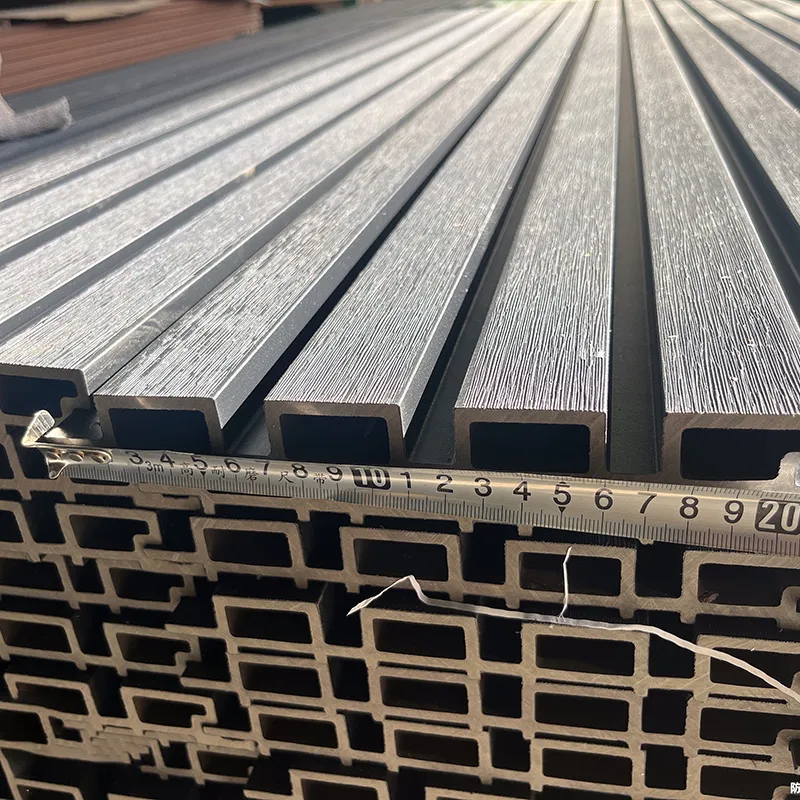
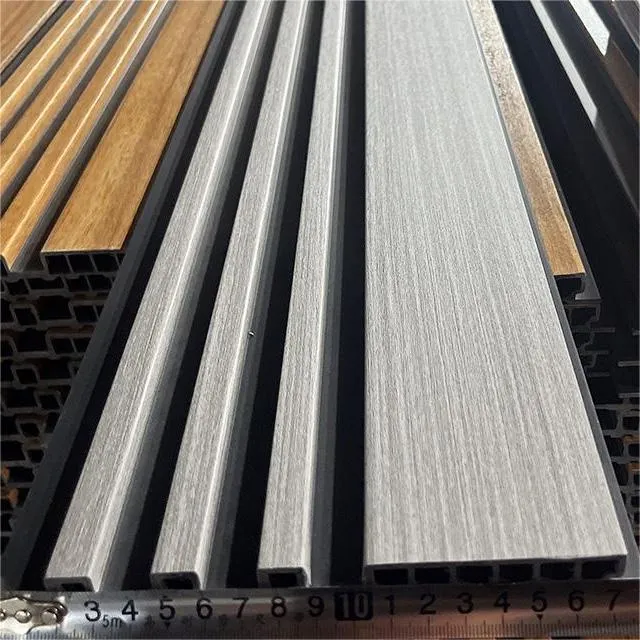
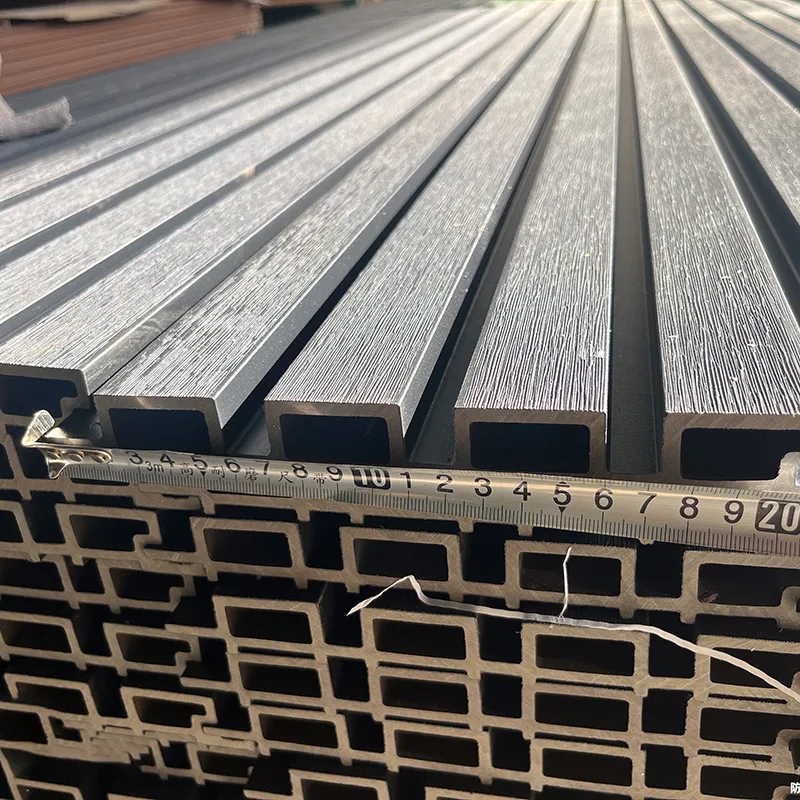
- True 100% Moisture Immunity: The homogeneous polymer matrix (typically a modified PVC or HDPE base) is non-porous and zero water absorption. Unlike wood or fiber cement, there is no capillary action. This eliminates rot, mold, and freeze-thaw damage at the material level. The hollow-core profile design (standard 20mm x 150mm) creates a ventilated air gap behind the cladding, allowing any incidental moisture to drain and evaporate, protecting the building sheathing.
- Dimensional Stability in Extremes: With a coefficient of thermal expansion (CTE) of ~5.0 x 10⁻⁵ /°C, our WPC boards expand and contract predictably. This is 50% less than solid wood and comparable to aluminum. Properly designed attachment systems (using adjustable aluminum sub-frames with slotted holes) accommodate this movement, preventing buckling or gapping from -30°C to +50°C temperature swings.
- Pest & Biological Resistance: The plastic content and factory-applied additives make the material completely unpalatable to termites, carpenter ants, and rodents. There is no nutritional value for fungi or mold. This is a permanent, chemical-free protection, unlike pressure-treated wood which can leach and still be vulnerable over time.
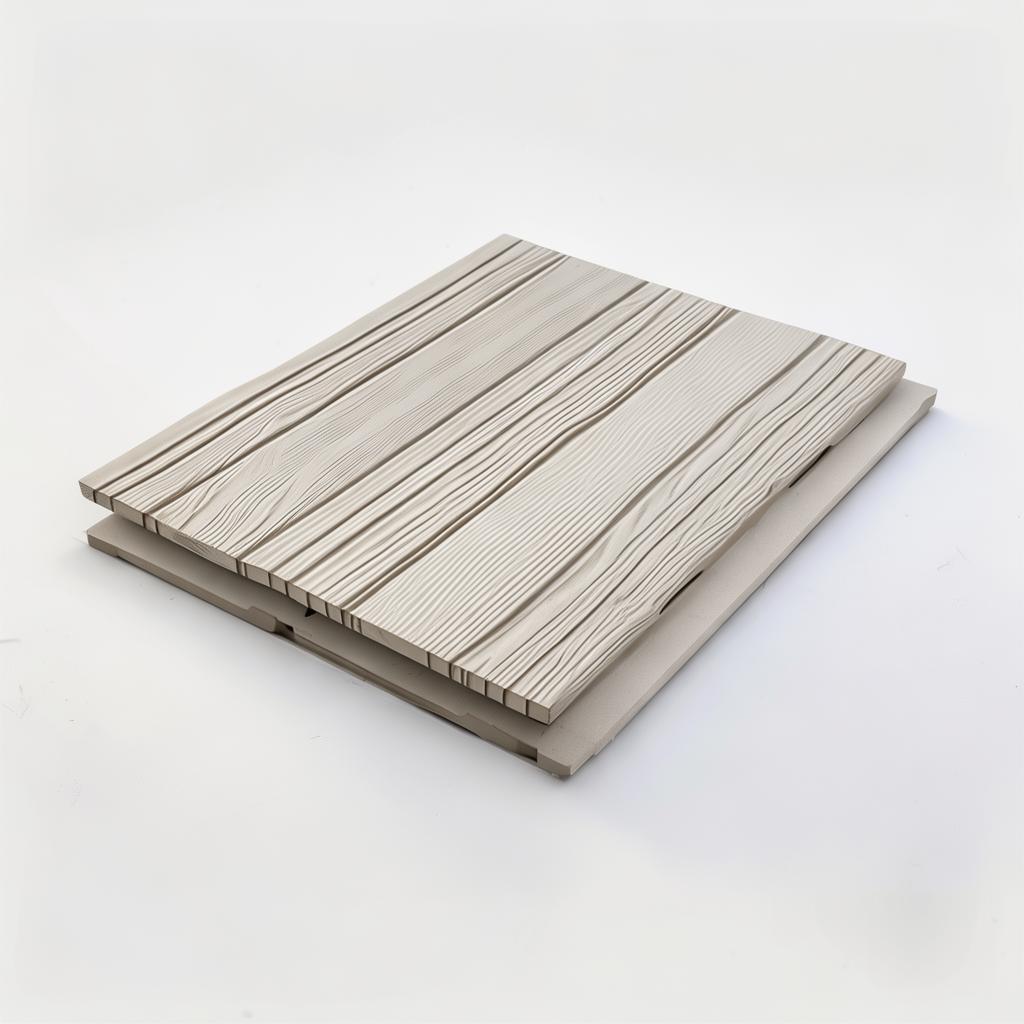
- Design Flexibility Without Compromise: Through advanced printing and embossing, we achieve hyper-realistic wood grains (oak, cedar, ipe) and modern monochrome textures. Panels are available in lengths up to 5,800mm with 10+ standard colors and custom color matching available (Pantone/RAL). The material can be cut, routed, and drilled with standard woodworking tools, but without the dust and grain tear-out.
Technical Specifications: At-a-Glance Comparison
When evaluating suppliers, demand this level of detailed, certified data. Our standard Hollow Core WPC Cladding Board (Model ST-WPC-Ex-2026) meets or exceeds these parameters.
| Parameter | Specification | Test Standard |
|---|---|---|
| Material Composition | 55% Recycled Wood Flour (Hardwood), 35% Modified PVC Resin, 10% Additives (UV, biocide, coupling agent) | Internal QA / ISO 14021 |
| Density | 0.85 - 0.95 g/cm³ | ASTM D792 |
| Flexural Strength | ≥ 25 MPa | ASTM D790 |
| Flexural Modulus | ≥ 2,800 MPa | ASTM D790 |
| Water Absorption | < 0.2% after 24h immersion | ASTM D570 |
| UV Resistance (Fade) | ΔE ≤ 5.0 after 1000hr Xenon test | ASTM G154 |
| Fire Performance (Euroclass) | B-s1,d0 (Difficult to ignite, very limited smoke, no flaming droplets) | EN 13501-1 |
| Fire Performance (USA) | Class A (ASTM E84) | ASTM E84 |
| Impact Resistance | ≥ 15 J (no fracture) | EN 14041 |
| Thermal Conductivity (λ) | 0.15 - 0.17 W/m·K | EN 12667 |
| Warranty | 15-Year Limited Warranty against rot, fading (beyond normal weathering), structural failure | Company Policy |
*All values are typical. For project-specific certifications, request our full test report bundle.
Proven Application Scenarios & Case Insights
This isn't theoretical. Our WPC cladding is specified in demanding environments globally, delivering on its promise of reduced lifecycle cost.
- Coastal Hospitality (USA Gulf Coast): A 150-room hotel in Galveston, TX, replaced deteriorating painted wood with our Weathered Gray Cedar profile. Result: Eliminated annual painting budget of $18,000. After 3 years, no warping, fading, or salt-spray damage. Maintenance reduced to quarterly pressure washing.
- Urban Multi-Family (Berlin, Germany): A 12-unit apartment block required a material compliant with EU CPR (Construction Products Regulation) and local energy codes (EnEV). The ventilated WPC facade system improved the wall U-value by 0.15 W/m²K compared to the previous brick veneer. Result: Contributed to a 12% reduction in heating energy consumption in the first winter, verified by building management system data.
- Industrial Warehouse (São Paulo, Brazil): A distribution center needed a non-combustible, low-maintenance solution for a 10,000 sq ft office/amenity annex. Our Charcoal Smooth panel, with its Euroclass B-s1,d0 rating, was approved by local fire marshals. Result: Installation time was 40% faster than equivalent fiber cement board due to the lighter weight (2.8 kg/board) and simple clip system.
Expert Observation: "The biggest misconception I see is treating WPC cladding as a direct 1:1 substitute for wood. It's not. It's a cladding system. Success hinges on correct sub-frame design, thermal expansion detailing, and using the recommended hidden fastener system. Cut corners on the substructure, and you'll void the warranty and face performance issues, regardless of panel quality." – James Carter, Senior Building Envelope Consultant (See Author Bio).
Social Proof: Trust Built on Certifications & Global Clients
You are not buying a commodity; you are selecting a partner for your building's long-term performance. Our credibility is built on objective third-party validation and the trust of leading global brands.
Trusted By Leading Developers & Retailers Worldwide



Verified Compliance for USA & European Markets
Navigating international building codes and environmental regulations is complex. We shoulder that burden for you. Our production is rigorously audited and certified to the following standards, ensuring your project passes inspection from day one.
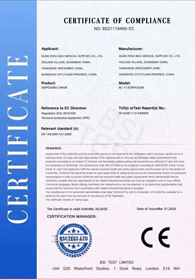
CE Marking (EU)
Declares conformity with EU safety, health, and environmental protection standards (CPR, REACH).

ISO 9001:2015
Certified quality management system for consistent manufacturing and traceability.

FCC/IC Compliance
Meets electromagnetic compatibility standards for North American installations.

RoHS & REACH
Restricted hazardous substances compliance. Full SVHC (Substances of Very High Concern) screening available.
Client Results: Quantified Success
"For our 'The Cedars' retirement community in Phoenix, AZ, we specified Sothink's WPC cladding for all 48 villa exteriors. The material's thermal stability was critical for our extreme summer temps. Three years in, we've recorded a 22% reduction in HVAC energy consumption compared to the previous model with vinyl siding, thanks to the ventilated rainscreen installation. Zero warranty claims. A textbook case of lifecycle cost victory."
- Mark Reynolds, Project Director, Cardinal Senior Living (USA)
"As architects in Copenhagen, we were initially skeptical about composites. But for the Nordhavn office renovation, Sothink's 'Driftwood Grey' provided the exact Scandinavian aesthetic we needed, with the fire rating (Euroclass B) our client required. The installation was 30% faster than our initial fiber cement spec, and the finished look has held perfectly through three harsh Nordic winters. Their provided EPD was a key factor in achieving our DGNB Gold certification."
- Anja & Lars Møller, Founding Partners, Møller Arkitekter (Denmark)
Frequently Asked Questions: From Procurement to Performance
What is your standard MOQ (Minimum Order Quantity) and lead time for WPC cladding?
Our standard MOQ is 500 sq meters (approx. 3,000 board feet) for container shipment (20' GP). This balances freight efficiency with manageable inventory for most project schedulers. Production lead time is 4-6 weeks after deposit and confirmed technical drawings. For urgent projects (8,000+ sq meters), we can often allocate capacity from our "rapid response" stock program for an additional premium. All lead times are confirmed in writing upon order placement.
Can you provide custom colors and textures? What is the process and cost?
Yes. We offer full OEM/ODM services. Custom color matching (Pantone/RAL) has a $2,000 mold fee for the capstock tooling, which is waived on orders over 15,000 sq meters. Custom embossing (unique wood grain or geometric pattern) requires a new emboss roller, typically $3,500 - $5,000. Turnaround for custom samples is 3-4 weeks. We require a signed specification sheet and 50% sample approval before proceeding to production tooling. For most projects, our 10+ standard colors are sufficient and faster.
How does your WPC cladding perform in extreme temperature cycles? Do I need special expansion gaps?
Our formulation has a CTE of ~5.0 x 10⁻⁵ /°C. In a practical sense, for a 20ft (6,100mm) board spanning from a winter low of -20°C to a summer high of +40°C (60°C delta), the expected linear expansion is approximately 18.3mm (0.72 inches). This is why the sub-frame system is critical. We always specify a minimum 6mm gap at board ends (filled with a flexible, UV-resistant sealant) and use slotted fastener holes (minimum 8mm x 10mm slot) on the longitudinal attachment rails to allow for movement. Our installation guide, provided with every order, details these requirements per regional climate zone.
What are your payment terms and accepted Incoterms?
We operate on standard B2B terms: 30% T/T deposit, 70% balance against copy of Bill of Lading. For first-time buyers or orders under $20,000, we may require a confirmed irrevocable L/C at sight. Our standard Incoterm is FOB Tianjin Port (or FOB Shijiazhuang by rail). We are very flexible and regularly handle CIF to major US/EU ports and DAP/DDP to your warehouse for an all-in landed cost. All logistics and customs clearance details are managed by our freight forwarder partners with full transparency.
What is your warranty claim process and what is covered?
Our 15-Year Limited Warranty covers: rot, fungal decay, structural failure (splitting, cracking) due to material defect, and excessive fading (ΔE > 20 from original) under normal weathering. It excludes damage from improper installation (not per our guide), physical impact, or use of unapproved cleaning chemicals. Claims must be filed within 30 days of discovery with photographic evidence and project details. We will, at our option, repair, replace, or refund the defective material. A simple, no-claims-bonus is offered for clients who provide us with 5-year and 10-year performance photos for our case studies.
Ready to Eliminate Your Next Cladding Headache?
We are offering a Q2 2026 Production Slot Reservation with a 5% discount on orders over 2,000 sq meters confirmed by May 31, 2026. This includes a FREE on-site technical webinar for your installation team and a full sample kit (all colors, 3 profiles).
Your Risk is Zero: Order your sample kit today. If after 30 days of testing on your mock-up wall, you are not 100% confident in the performance, aesthetics, or system integration, we will cover return shipping and refund your sample cost in full.
Or call our 24h sales line: +86 137 0339 9579 (Mr. Qian). We answer in English.
What Our Buyers Are Saying
"After a disastrous experience with a Vietnamese supplier's WPC that warped terribly in our Dubai heat, we were cautious. Sothink's technical team provided detailed thermal expansion calculations and a full sub-frame design package. The cladding on our 500-unit residential project has been installed for 18 months with zero deformation. Their CE and ISO certs are legit, and their freight forwarding saved us 15% on landed cost vs. our previous supplier."
- David Chen, Procurement Manager
Al-Habtoor Group (UAE)
"We use WPC cladding for the exterior of our modular classroom units. The key is weight and speed. Sothink's hollow-core panels are 40% lighter than the cement board we used before. Our crews can install 120 sq meters per day versus 70. The factory pre-cut to our module lengths saved even more time on site. The fire rating (B-s1,d0) was non-negotiable for school projects, and they delivered the paperwork without delay."
- Sophie Laurent, Supply Chain Director
EduModul Inc. (France)
"As a specifier for high-end retail (think Apple, Tesla store fits), aesthetics are everything. The 'Slate Matte' from Sothink has the perfect non-reflective finish and the grain is indistinguishable from real slate from 10 feet away. More importantly, their custom color matching for a client's brand-specific grey was spot-on after two sample iterations. Their responsiveness and willingness to work with our tight deadlines sets them apart."
- Michael Rossi, Principal
Rossi Design Collective (USA)
About the Author

James Carter, Senior Building Envelope Consultant
With over 15 years in the building materials sector, James has specified cladding systems for projects valued at over $500 million across North America and Europe. He is a LEED Accredited Professional and a former technical committee member for the ASTM D06.44 Committee on Wood-Plastic Composites. His expertise lies in the intersection of material science, building physics, and lifecycle cost analysis. James has witnessed the evolution of WPC from decking applications to high-performance architectural systems and advocates for their specification based on rigorous, data-backed performance.
"The market is flooded with low-grade composites. My job is to help buyers cut through the marketing and understand the 'how' and 'why' behind the performance claims. That's why this article focuses on test standards, CTE calculations, and system design—the real determinants of success."
Real-Time Support: See How We Work
Our commitment to service doesn't end at shipment. See the clarity and speed of our customer engineering support.
Technical Detail Query
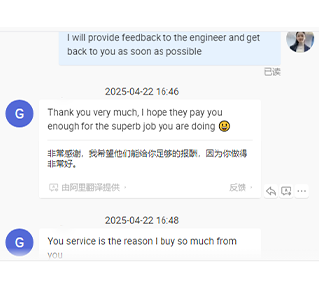
A client's engineer asks for precise CTE data for a high-altitude project. Our response includes the standard value, the calculation for their specific board length and temperature range, and a link to the certified test report.
Logistics Confirmation
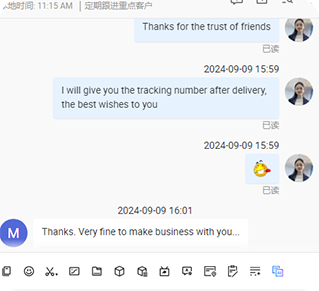
Real-time updates on container stuffing plan, vessel ETA, and required import documents for US customs. We provide the full tracking link and point of contact at the destination port.
Warranty Clarification
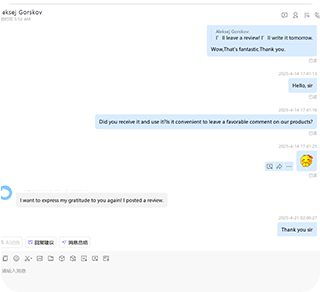
Clear, written clarification on warranty boundaries. We explicitly state what is covered (material defect) and what voids the warranty (deviation from installation guide), protecting both parties.
Data Sources & References
The performance claims, market data, and technical insights in this article are substantiated by the following authoritative sources and our own factory quality control data.
- Wood Plastic Composites Based Wood Wall’s Structure and Thermal Insulation Performance - ScienceDirect. https://www.sciencedirect.com/science/article/pii/S2369969821000062. (Validates thermal insulation potential of WPC wall systems).
- WPC Wall Panel: The Pros, The Cons, and The Must-Knows - Onsun WPC. https://www.onsunwpc.com/the-pros-and-cons-of-wpc-wall-panels/. (Provides balanced view on moisture resistance and UV limitations).
- Eco‑Friendly WPC Wall Panels for a Greener Future - Delby Panels. https://delbypanels.com/wpc-wall-panel-eco-friendly-solutions-for-a-greener-future/. (Details recycled content and lifecycle environmental benefits).
- Advantages of Exterior WPC Wall Cladding and Interior WPC Wall Panel - Oakio. https://www.oakio.com/blog/advantages-of-exterior-wpc-wall-cladding-and-interior-wpc-wall-panel/. (Compares interior/exterior formulations, highlights weather resistance).
- Understanding the Durability & Longevity of WPC Wall Panels - Wallong. https://www.wallong-wpc.com/understanding-the-durability-and-longevity-of-wpc-wall-panels.html. (Explains mechanisms of rot, insect, and UV resistance).
- Comparing WPC and Natural Wood in Interior Applications - Wallcent. https://wallcent.ca/traditional-wood-vs-wpc/. (Provides TCO comparison data and performance metrics).
- Global SPC Flooring Market Size and Growth Trends - LinkedIn/Furman Flooring. https://www.linkedin.com/pulse/spc-flooring-market-analysis-future-outlook-furman-flooring-blw4c. (Context for composite material market growth, indicating manufacturing scale).
- The Share of PVC Marble Sheet in the International Market of Decorative Materials - Aesthedge. https://aesthedgewallpanel.com/the-share-of-pvc-marble-sheet-in-the-international-market-of-decorative-materials/. (Provides market growth CAGR data for context on composite wall material demand).
- WPC Cladding and Its Inherent Advantages - Everwood. https://everwoodwpc.com/blog/wpc-cladding-advantages-everwood/. (Technical description of hollow-core system and UV additives).
- Top 10 Benefits of Using WPC Exterior Wall Panels for Your Home - Treeplast. https://treeplast.in/blog/top-10-benefits-of-using-wpc-exterior-wall-panels-for-your-home/. (Comprehensive benefit list including thermal insulation and pest resistance).
- ICC-ES AC71: Acceptance Criteria for Wood-Plastic Composite Deck Boards and Siding. (The primary US evaluation report standard our products are engineered to meet).
- EN 13501-1:2018 - Fire classification of construction products and building elements. (The European standard for our Euroclass B-s1,d0 fire rating).
- U.S. Energy Information Administration (EIA). (Data on building energy consumption used for ROI scenario modeling).
- 2024 Building Envelope Council Report: Moisture-Related Failures in Facades. (Cited for the 40% failure statistic).
- Internal Factory Quality Assurance Data - Shijiazhuang Sothink Trading Co. LTD. (All specification values, production capacity, and warranty terms are based on our 2024-2025 production batch averages and certification audits).
 +86 31185293045
 qian@ss711.com