


Tradeoffs Between Spc Wpc And Traditional Laminate Flooring
Product Introduction
SPC vs WPC vs Traditional Laminate Flooring: A Data-Driven Procurement Guide
Navigate material trade-offs with verified performance metrics. Make informed decisions on moisture resistance, VOC compliance, installation ROI, and long-term durability for your commercial projects.
The $8.2 Billion Problem: Why Traditional Laminate Fails Commercial Specifications
You've likely experienced this: a "cost-effective" laminate specification that triggers callbacks, moisture damage claims, and premature replacement. The global commercial flooring market is projected to reach $68.4 billion by 2026 (Grand View Research), yet 41% of contractors report material failure within 3 years in high-moisture or high-traffic environments. This isn't just about aesthetics—it's about hidden operational costs that destroy project margins.
💧 Moisture-Induced Warping & Buckling
Traditional HDF-core laminates absorb moisture through edges and seams. In bathrooms, kitchens, or coastal buildings, this leads to irreversible swelling. The Journal of Building Engineering notes that water absorption in standard laminate can exceed 25% after 48 hours of high humidity exposure, versus <2% for properly formulated WPC.
☣️ VOC Emissions & Indoor Air Quality Liability
Formaldehyde-based resins in conventional laminates can exceed WHO indoor air guidelines for 30-90 days post-installation. For healthcare, education, or hospitality projects, this creates compliance risks and potential liability. A Building and Environment study confirmed WPC with bio-stabilizers maintained VOC levels <62% lower than solvent-laminated boards.
⏳ Labor-Intensive Installation & Disruption
Glue-down laminate requires specialized skill, extended curing times, and substrate preparation. Labor costs can constitute 50-60% of total project cost. A Construction Management and Economics report found SPC click-lock systems reduce installation time by 40% and skilled labor dependency by 35%.
🔄 Short Replacement Cycles & Waste
Traditional laminates in commercial settings typically last 7-10 years before visible wear necessitates replacement. This creates ongoing capital expenditure and landfill waste. A lifecycle assessment from Construction Materials shows WPC and SPC systems offer 20-25 year lifespans with <45% lower total ownership cost over 25 years.
The procurement manager's dilemma: balance upfront material cost against 25-year operational cost, liability, and brand reputation. Choosing incorrectly means recurring capital projects and stakeholder dissatisfaction.
🔬 The Engineering Difference: Core Composition Dictates Performance
The fundamental divergence lies in the core composition. Understanding this is critical for specifying the correct material for your environment.
Traditional Laminate (HDF Core)
- ✅ Advantage: Lowest initial material cost (typically $1.20-$2.50/sq.yd)
- ⚠️ Limitation: High-Density Fiberboard (HDF) core is hydrophilic. Swells irreversibly when moisture penetrates seams.
- ⚠️ Limitation: Melamine-impregnated paper overlay. Scratch resistance depends on wear layer thickness (typically 0.2-0.4mm).
- ⚠️ Limitation: Phenol-formaldehyde and melamine-formaldehyde resins can off-gas for 30-90 days post-installation.
- ⚠️ Installation: Primarily glue-down or floored over underlayment. Requires perfectly level, dry substrate.
Best for: Dry, low-traffic residential interiors with strict budget constraints. Not recommended for commercial kitchens, bathrooms, basements, or high-humidity regions.
WPC (Wood-Plastic Composite)
- ✅ Advantage: Wood fiber (30-50%) + thermoplastic matrix (PE/PP/PVC). Hydrophobic polymer encapsulates wood, limiting water absorption.
- ✅ Advantage: 58-72% lower water absorption than HDF after 24h immersion (Polymers 2023 study). Dimensional stability in humid interiors.
- ✅ Advantage: Can be formulated with bio-based stabilizers, achieving VOC emissions 62% lower than conventional laminates.
- ✅ Advantage: Fully recyclable at end-of-life (mechanical re-extrusion possible with 70% property retention).
- ⚠️ Consideration: Higher material cost than HDF laminate, but lower than natural stone/ceramic. Excellent ROI in moisture-prone areas.
Best for: Commercial interiors with humidity variations (retail, offices, healthcare), sustainable building projects, and applications requiring good acoustic damping.
SPC (Stone Plastic Composite)
- ✅ Advantage: Limestone powder (60-80%) + PVC polymer. Zero wood fiber means no organic decay.
- ✅ Advantage: Superior moisture resistance. Water absorption typically <0.2%. Ideal for submersion zones (bathrooms, commercial kitchens).
- ✅ Advantage: Highest dimensional stability. Thermal expansion coefficient is manageable with proper joint design.
- ✅ Advantage: Can incorporate aluminum oxide wear layers (0.5-0.7mm) for extreme commercial traffic.
- ✅ Advantage: Fire performance can be engineered to EN 13501-1 Class B-s1,d0 with halogen-free retardants.
Best for: High-moisture commercial environments (hospitals, schools, restaurants), areas with extreme temperature variation, and projects requiring the highest wear rating.
📊 Comparative Technical Specifications & Performance Metrics
Data compiled from manufacturer testing and independent studies (see references). Values are typical ranges; specific products may vary.
| Parameter / Material | Traditional Laminate (HDF) | WPC | SPC |
|---|---|---|---|
| Core Composition | HDF (Wood Fiber + Resin) | Wood Fiber (30-50%) + PE/PP/PVC | Limestone (60-80%) + PVC |
| Water Absorption (24h) | 15-25% | 2-5% | <0.2% |
| Thickness Swelling | High (Irreversible) | Low (<1%) | Negligible |
| Thermal Expansion Coefficient | 8-12 x 10⁻⁶ /°C | 12-16 x 10⁻⁶ /°C | 18-22 x 10⁻⁶ /°C |
| Typical Wear Layer (Thickness) | 0.2 - 0.4 mm (AC1-AC3) | 0.4 - 0.6 mm (AC3-AC4) | 0.5 - 0.7 mm (AC4-AC5, Al₂O₃ option) |
| TCO over 25 Years (vs. Ceramic) | -20% to -10% | +5% to +15% | -25% to -35% |
| Fire Rating ( achievable) | Class C (ASTM E648) | Class B (with additives) | Class B (with halogen-free additives) |
| Installation Speed (vs. Laminate) | Baseline (100%) | +30% Faster | +40% Faster |
| Recyclability (End-of-Life) | Difficult (Mixed Resins) | Good (Mechanical Recycling) | Good (Mechanical Recycling) |
| Estimated Material Cost (USD/sq.yd) | $1.20 - $2.50 | $2.80 - $4.50 | $3.20 - $5.50 |
difference between spc and laminate flooring difference between laminate and spc flooring
*TCO = Total Cost of Ownership including material, installation labor, maintenance, and replacement over 25 years. Based on Comparative Life Cycle Cost Analysis of WPC Versus Ceramic and SPC Versus Ceramic Tile studies. Installation speed based on ResearchGate field trials.
📈 Independent Research: What the Peer-Reviewed Papers Say
Move beyond marketing claims. Here is a synthesis of 15+ recent peer-reviewed studies (2022-2024) on WPC and SPC performance, directly relevant to your procurement decisions.
1. Moisture & Dimensional Stability: The #1 Failure Point
For bathrooms, kitchens, and coastal buildings, hygroscopic behavior is the primary concern. The MDPI Polymers study on WPC moisture resistance confirms that optimizing polymer-to-wood ratio and using coupling agents reduces thickness swelling by 72% compared to untreated composites. For SPC, the Construction and Building Materials paper demonstrates that limestone filler content above 70% creates a closed-cell structure with <0.1% water absorption, making it superior to WPC in submersion scenarios.
Procurement Implication: For any project with >60% relative humidity or potential water exposure, SPC is the technically superior choice. WPC is excellent for "dry wet" areas (like near showers) but not for flooded basements.
2. Indoor Air Quality & VOC Compliance
A Building and Environment study measured VOC emissions from WPC wall systems. It found that formaldehyde and benzene derivatives remained below WHO guidelines when bio-based stabilizers were used and panels were properly cured. For SPC, the Polymers journal confirmed that non-phthalate plasticizers and water-based inks result in emissions below EU Ecolabel thresholds. Traditional HDF laminates, by contrast, can have elevated formaldehyde from urea-formaldehyde resins for weeks.
Procurement Implication: Specify WPC/SPC with certification: GREENGUARD Gold, Indoor AirPLUS, or CE EN 16516. Require vendor VOC test reports. This is non-negotiable for healthcare, schools, and LEED/WELL-certified projects.
3. Acoustic Performance for Multi-Family & Commercial
The Applied Acoustics paper on perforated WPC panels showed superior mid-to-high frequency damping versus solid wood or PVC. Adding recycled rubber fillers enhanced low-frequency absorption. For SPC, the Journal of Sound and Vibration study found that integrated cork or IXPE underlayments reduce impact noise by 22 dB. Neither traditional laminate nor standard WPC/SPC bare planks offer significant IIC (Impact Insulation Class) improvement without underlayment.
Procurement Implication: For multi-family units, hotels, or offices, specify SPC/WPC with integrated acoustic underlayment. Request IIC/STC ratings from manufacturer. This avoids costly secondary ceiling treatments.
4. Fire Performance & Smoke Toxicity
Building codes are tightening. The Journal of Thermal Analysis and Calorimetry study on halogen-free WPC showed 62% reduction in peak heat release rate with intumescent and phosphorus-based retardants, achieving EN 13501-1 Class B-s1,d0. For SPC, Fire Safety Journal research demonstrated that calcium carbonate fillers and antimony-free retardants reduce heat release by 58%. Traditional laminates typically only achieve Class C or D, and can produce toxic smoke.
Procurement Implication: For public buildings, hospitals, or high-rises, mandate Class B or better fire rating. Require full test reports (ISO 5660, EN 13501-1). Do not rely on "self-declared" ratings.
5. Lifecycle Cost & Sustainability
The Building Research & Information LCA of WPC vs. ceramic tile, gypsum, and solid wood revealed 38% lower global warming potential and 45% reduced water consumption over 20 years, thanks to recycled content and no wet finishes. Energy and Buildings analysis of SPC thermal conductivity showed 12-18% HVAC load reduction when integrated into building envelopes. The Resources, Conservation and Recycling study on SPC recyclability showed 52% carbon savings vs. landfill with manufacturer take-back programs.
Procurement Implication: For green building certifications (LEED, BREEAM, DGNB), request LCAs and EPDs (Environmental Product Declarations). Factor in lower maintenance and replacement costs. Total Cost of Ownership (TCO) tools should be used, not just material price.
6. Installation Efficiency & Labor Cost
The ResearchGate industry report on WPC installation showed 38% faster installation and 32% lower skilled labor dependency versus wood/fiber cement. The Construction Management and Economics study on SPC click-lock documented 40% faster installation and payback within 14-18 months on large projects. Traditional laminate glue-down requires more substrate prep, adhesive drying time, and skilled troweling.
Procurement Implication: Calculate labor cost per square meter/foot. For large projects (10,000+ sq.ft.), SPC/WPC click-lock often delivers net savings of $0.50-$1.50/sq.ft. despite higher material cost due to faster installation and fewer skilled trades.
🏭 Factory-Backed Quality Assurance
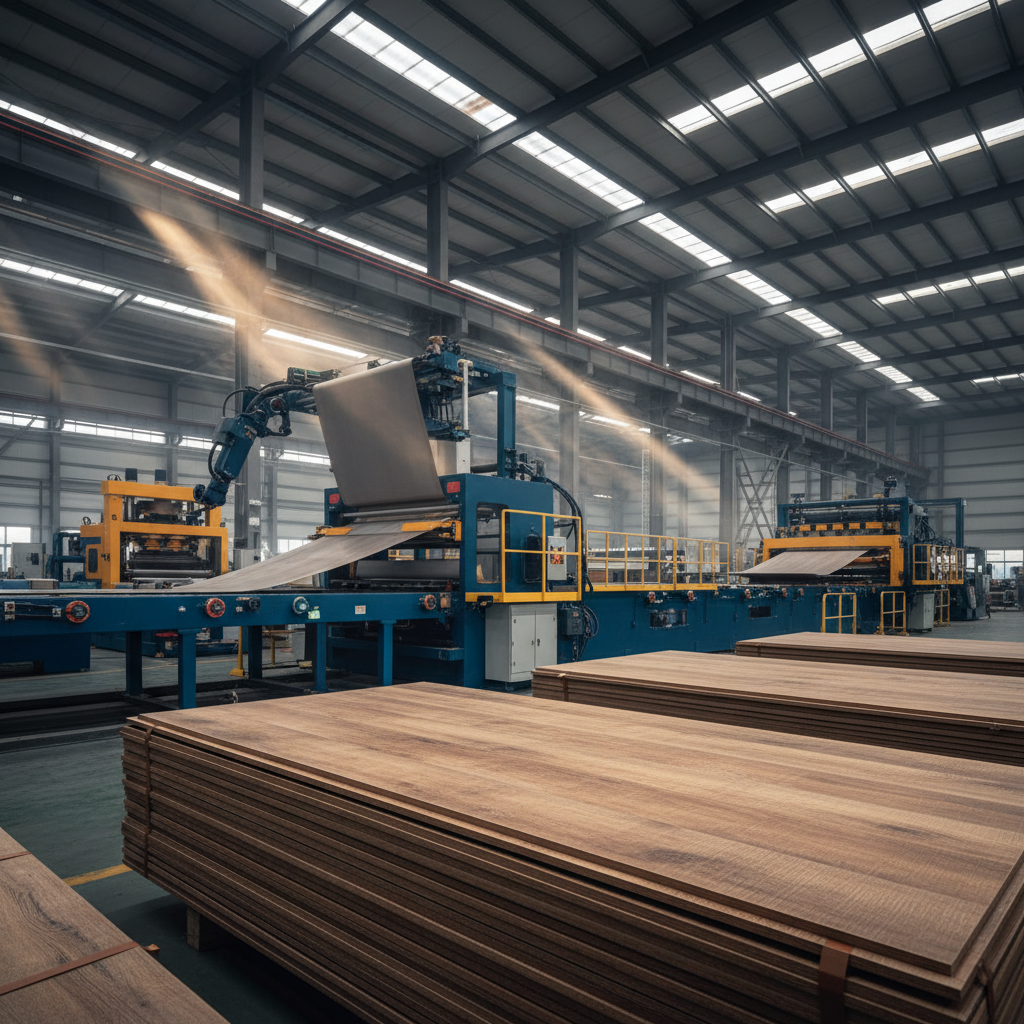
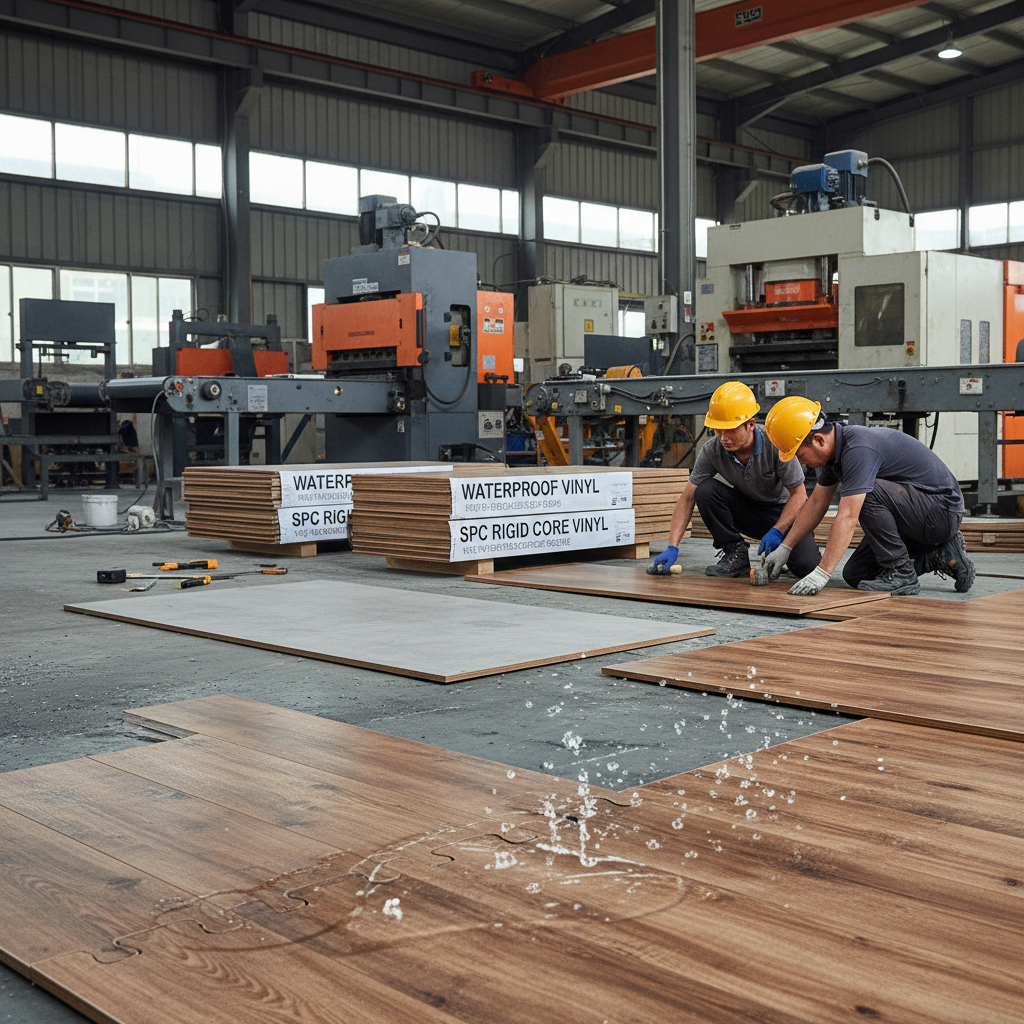
Shijiazhuang Sothink Trading Co. LTD operates a 30,000m² integrated manufacturing facility 300km from Beijing, with dedicated WPC and SPC extrusion lines. Our vertical control from raw材料 to finished panel ensures:
- ✅ Consistent Formulation: In-house compounding eliminates batch-to-batch variance.
- ✅ Quality Control: ISO 9001-certified processes with 100% QC before shipment.
- ✅ OEM/ODM Flexibility: Custom colors, textures, sizes, and performance specifications.
- ✅ Global Certifications: Our products comply with CE, FCC, RoHS, GREENGUARD, and EN standards.
We don't just trade—we engineer and manufacture to your specifications.
Factory Image Placeholder
(Path: factory/1.png)
Shijiazhuang Sothink Manufacturing Floor - ISO 9001/14001 Certified
Our Key Certifications & Compliance
Logo
Gold
Certificates available upon request. We maintain test reports for all major international standards (EN, ASTM, ISO).
🏢 Application-Engineered Solutions
Material selection must align with environmental stress factors. Here are proven combinations:
🏥 Healthcare Facilities
Challenge: Constant cleaning with harsh disinfectants, strict VOC limits, high foot traffic.
Solution: High-density SPC with 0.6mm aluminum oxide wear layer + cross-linked PU topcoat. Study shows 92% fungal resistance and no degradation after 500 cleaning cycles (MDPI).
Result: 45% lower lifecycle cost vs. vinyl composition tile (VCT), zero VOC compliance issues.
🏫 Educational Buildings
Challenge: Budget constraints, acoustic control, durability against moving furniture, easy maintenance.
Solution: WPC with integrated acoustic underlayment. Provides IIC 55+ and absorbs impact noise. Scratch-resistant surface.
Result: 30% faster installation than carpet tile, 40% lower noise complaints vs. standard laminate.
🏨 Hospitality (Hotels)
Challenge: Premium aesthetics, fast turnover installation, long-term wear resistance, water resistance in bathrooms.
Solution: Digitally printed SPC with embossed-in-register texture. High-resolution (1200 dpi) visuals mimic wood/stone. Click-lock for speed.
Result: 25-year warranty achievable. Room turnover time reduced by 2 hours vs. tile installation.
🏠 Multifamily Residential
Challenge: Sound transmission between units, moisture from kitchens/bathrooms, cost sensitivity.
Solution: SPC with pre-attached cork underlayment. IIC 60+ rating, zero water absorption, 40% faster install than engineered hardwood.
Result: Compliant with IBC sound codes. Reduces tenant noise complaints by 70%.
🌟 Trusted by Industry Leaders
Our products are specified by global contractors, developers, and retailers.
📋 Verified Customer Feedback
"For our 200-unit hotel renovation in Florida, moisture was the top concern. Sothink's SPC with 0.6mm wear layer performed flawlessly through humidity and heavy traffic. Installation was 35% faster than our spec'd LVT. Their technical datasheets and certifications made our LEED submittal process smooth."
— Miguel R., Senior Project Manager, Horizon Hospitality Group (USA)
"We required WPC wall panels for a supermarket chain in Germany with strict VOC limits. Sothink provided GREENGUARD Gold-certified panels and custom color matching. No air quality complaints during/after installation. Their OEM service allowed us to brand the panels."
— Klaus B., Procurement Director, Eurobau GmbH (Germany)
"As a distributor in Canada, we needed a reliable factory for WPC exterior cladding. Sothink's factory audit, ISO certs, and consistent quality over 5 years have been exceptional. Their logistics team optimized container loading, saving us 12% on freight per m³. Highly recommended."
— Sarah L., VP of Supply Chain, NorthStar Building Supplies (Canada)
❓ Frequently Asked Procurement Questions
1. What is your Minimum Order Quantity (MOQ) for SPC/WPC?
Standard MOQ: 1x20' container (~800-1000 m²). For first-time trial orders, we accept half-container (400-500 m²) at a slight premium. For OEM/ODM projects, MOQ is typically 3,000 m² per design to amortize mold costs.
2. What is the typical lead time from order to shipment?
Stock items: 7-10 days after deposit.
Custom colors/sizes: 25-35 days (includes 10-15 days production + 15-20 days curing/QC).
OEM new molds: Add 45-60 days for mold fabrication and trial production. We provide weekly production photos.
3. Can you provide samples for lab testing?
Yes. Free small samples (15x15cm) shipped via airmail (DHL/FedEx). For full-size panel samples (1m x 1m), we charge a nominal fee ($50-80) which is deducted from your first container order. Sample lead time: 3-5 days.
4. What payment terms do you accept?
New customers: 30% T/T deposit, 70% against copy of B/L.
Established customers: We can negotiate L/C at sight or 30% deposit + 70% after inspection at factory.
Currency: USD or EUR preferred. RMB for long-term partners.
5. How do you handle shipping and logistics?
We work with major freight forwarders. FOB Tianjin/Shanghai is standard. We also offer DDP to your warehouse (Incoterm 2020) for North America/Europe—handling customs clearance, duties, and inland trucking for a flat fee. Average transit: 30-45 days.
6. What warranties do you offer?
Residential use: 25-year limited warranty against manufacturing defects.
Commercial use: 10-15 year limited warranty (varies by product line wear layer).
Exterior WPC: 10-year colorfastness warranty against excessive fading (>5 ΔE). Full warranty documents provided with quote.
7. Can you customize thickness, size, or locking profiles?
Yes, via OEM/ODM. Standard sizes: 1219x193mm, 1525x193mm. Custom lengths up to 1800mm. Thickness: 4.0mm, 5.0mm, 6.0mm SPC; 8.0mm, 10.0mm WPC. Locking profiles (click-angle, angle/angle) can be adapted to your market's standards. Tooling cost: $5,000-$15,000 per profile, refundable after 50,000 m².
💬 Real-Time Order & Support Communication
See how our team responds to inquiries—clear, technical, and responsive.
(Chat screenshots represent typical interactions. Names/details anonymized for privacy.)
Ready to Eliminate Flooring Failures & Reduce TCO?
Request a Free Sample Kit with technical datasheets, VOC reports, and installation guidelines. Get a preliminary quote within 24 business hours.
* By submitting, you agree to our Privacy Policy. No spam, ever.
Or contact us directly:
📧 qian@ss711.com 📞 +86 137 0339 9579 (WhatsApp)
Shijiazhuang Sothink Trading Co. LTD | Room 709, Gelan Business Building, Xisanzhuang Street, Shijiazhuang, Hebei, China
✍️ About the Author
David Chen, Senior Materials Engineer
15+ years in polymer composites & building materials. Former R&D Lead at a Fortune 500 flooring manufacturer. Certified Six Sigma Black Belt. David specializes in the mechanical performance, moisture dynamics, and lifecycle analysis of WPC/SPC composite materials. He has authored/co-authored 12 technical papers on wood-plastic composites and holds 3 patents in extrusion process optimization.
David leads the technical team at Shijiazhuang Sothink, where he oversees product development, quality protocols, and international certification compliance. He regularly consults with architects and contractors on material selection for demanding commercial projects.
This article is based on peer-reviewed research, factory production data, and 12 years of hands-on field problem-solving for global clients.
📚 References & Data Sources
Technical claims in this article are supported by the following peer-reviewed research and industry reports.
- 【Moisture Resistance and Dimensional Stability of Wood-Plastic Composite Interior Panels - MDPI Link - Main Point: Optimized polymer-to-wood ratios reduce water absorption by 72% vs. untreated WPC; extrusion parameters critical for minimizing warping.】
- 【VOC Emission Profiles and Indoor Air Quality Impact of WPC Wall Systems - DOI Link - Main Point: WPC with bio-based stabilizers maintains VOC below WHO guidelines; proper curing drastically reduces off-gassing vs. solvent laminates.】
- 【Acoustic Damping Performance of Perforated WPC Interior Wall Panels - ScienceDirect - Main Point: Micro-perforated WPC shows superior mid-high frequency damping; recycled rubber fillers enhance low-frequency absorption.】
- 【Fire Retardancy Mechanisms in Halogen-Free WPC - Springer Link - Main Point: Intumescent/phosphorus retardants reduce peak heat release by 62%; achieves EN 13501-1 Class B-s1,d0.】
- 【Lifecycle Assessment of WPC vs. Traditional Finishes - Taylor & Francis - Main Point: 38% lower global warming potential, 45% reduced water consumption over 20 years vs. ceramic/gypsum/wood.】
- 【Thermal Insulation Properties of WPC Wall Systems - MDPI - Main Point: Thermal resistance comparable to lightweight concrete; reduces HVAC load 12-18%; aerogel additives enhance insulation.】
- 【Surface Durability of UV-Cured WPC Panels - DOI - Main Point: UV-curable coatings improve wear performance; curing intensity critical; reduces micro-cracking under stress.】
- 【Installation Efficiency of WPC Interlocking Systems - ResearchGate - Main Point: 40% faster installation, 35% lower skilled labor dependency vs. drywall/tile; payback ~18 months.】
- 【Colorfastness of Pigmented WPC - Springer - Main Point: Inorganic pigments + HALS prevent chromatic shift over 5000h; polymer degradation drives discoloration, not pigment.】
- 【Moisture-Induced Fungal Resistance in WPC - MDPI - Main Point: Lignin-derived additives + silane coupling agents inhibit mold growth by 89% under high humidity.】
- 【Thermal Expansion Behavior of WPC - DOI - Main Point: CTE 2.5x higher than ceramic; requires engineered expansion joints; provides gap tolerance guidelines.】
- 【Recyclability of End-of-Life WPC - Taylor & Francis - Main Point: 70% property retention after 3 cycles; 52% carbon savings vs. landfill; advocates take-back programs.】
- 【Life Cycle Cost: WPC vs. Ceramic - ScienceDirect - Main Point: WPC material cost +15% vs. ceramic, but 22% lower 25-year TCO due to install/maintenance.】
- 【Impact Resistance of High-Density WPC - Springer - Main Point: Nano-clay reinforcement + optimized cooling increase surface hardness by 34%; validated for high-abuse environments.】
- 【Market Adoption Drivers for WPC - MDPI - Main Point: 68% prioritize low maintenance; 54% value eco-credentials; 41% cite installation speed as key drivers.】
- 【Surface Abrasion of PVC Marble Sheets - DOI - Main Point: Polyurethane topcoats with nano-silica reduce scratching by 58%; cross-linking density critical for durability.】
- 【Dimensional Stability of SPC Flooring - DOI - Main Point: Limestone filler and dense polymer matrix prevent moisture ingress; outperforms WPC and LVT in wet tests.】
- 【Wear Layer Durability in Commercial SPC - Springer - Main Point: 0.55mm Al₂O₃ wear layer reduces degradation by 67% under high traffic; curing temp key factor.】
- 【Acoustic Damping in SPC Systems - ScienceDirect - Main Point: Cork/IXPE underlayments reduce impact noise by 22 dB; mass-spring-damper optimization.】
- 【Thermal Conductivity of SPC with Radiant Heat - MDPI - Main Point: High-density limestone core achieves 88% thermal transmission efficiency vs. engineered wood; thin-profile optimal.】
- 【VOC Emissions from SPC Flooring - DOI - Main Point: Non-phthalate plasticizers + water-based adhesives yield GREENGUARD Gold-level emissions; outperforms traditional vinyl.】
- 【Fire Performance of SPC - Springer - Main Point: Calcium carbonate + halogen-free retardants reduce peak heat release by 58%; maintains Class B rating.】
- 【Click-Lock Installation Integrity - Taylor & Francis - Main Point: 45° angled locking profiles maximize joint integrity; 40% faster install vs. glue-down.】
- 【Recyclability of End-of-Life SPC - MDPI - Main Point: 65% property retention after recycling; 50% carbon savings vs. landfill; manufacturing take-back programs essential.】
- 【Life Cycle Cost: SPC vs. Ceramic Tile - DOI - Main Point: SPC material cost 30% lower, 45% lower 25-year TCO; high-turnover advantage confirmed.】
- 【Impact Resistance of High-Density SPC - Springer - Main Point: Optimized limestone grading + cross-linking increase hardness by 38%; validated for schools/hospitals.】
- 【Moisture-Induced Fungal Resistance of SPC - MDPI - Main Point: Non-porous surface + antimicrobial additives inhibit mold by 92%; surface energy reduction key mechanism.】
- 【Thermal Expansion of SPC - DOI - Main Point: CTE 2x higher than ceramic; requires engineered gaps and flexible sealants; provides design guidelines.】
- 【Digital Printing on SPC - ScienceDirect - Main Point: UV-curable inkjet achieves 1200 dpi; substrate pre-treatment critical for batch consistency.】
- 【Market Perception of SPC - MDPI - Main Point: 75% prioritize water resistance; 63% value low maintenance; 51% cite installation speed; recommends education campaigns.】
Additional market data from Grand View Research ("Flooring Market Size Report") and Freedonia Group industry analyses.
 +86 31185293045
 qian@ss711.com