


Is Spc Flooring Better Than Lvp
Product Introduction
SPC Flooring vs LVP: Which is Truly Better for Commercial Projects in 2026?
A data-driven comparison of Stone Plastic Composite and Luxury Vinyl Plank for architects, facility managers, and procurement directors. We analyze 12 key performance metrics, 5-year ROI, and compliance with global building codes.
Table of Contents
- The Core Question: Beyond Marketing Hype
- 5 Critical Pain Points Haunting Your Flooring Procurement
- SPC vs. LVP: Unpacking the Core Material Science
- Technical Specifications Head-to-Head
- Application Scenarios: Where Each Product Wins
- Proven in 3,000+ Global Projects: Certifications & Clientele
- Expert FAQ: Installation, Customization & Logistics
- Start Your Volume Quote & Sample Request
- What Facility Managers in Germany & Texas Are Saying
- About the Author: James Carter
- Real-Time Order & Support Verification
- Data Sources & Academic References
The Core Question: Beyond Marketing Hype
As a corporate purchasing manager or operations director, you've likely received conflicting quotes and specifications for SPC (Stone Plastic Composite) flooring and LVP (Luxury Vinyl Plank). Both promise durability, style, and value. But which delivers on those promises under the rigorous demands of commercial use, multi-unit housing, or high-traffic retail? The answer isn't just about price per square foot—it's about total cost of ownership (TCO), dimensional stability, and lifecycle performance.
This technical brief cuts through the marketing. We compare the two materials based on peer-reviewed research, field trial data from 2023-2025, and 12 years of manufacturing expertise. Our goal is to give you the data needed to make a rational, ROI-focused procurement decision for your 2026 projects.
Bottom line upfront: For applications with fluctuating temperatures, potential moisture exposure, or extreme traffic, SPC is the superior engineering choice. For budget-sensitive, low-moisture residential projects with existing subfloors, LVP can suffice. However, the narrowing price gap is making SPC the default specification for savvy developers.
5 Critical Pain Points Haunting Your Flooring Procurement
Your decision is likely driven by recurring problems. Let's identify them.
- The "Buckling Nightmare" After Installation: You specify a beautiful vinyl floor. Six months later, in a coastal property or a building with radiant heat, the planks gap, crown, or completely lift. The culprit is dimensional instability from temperature/humidity swings. This leads to costly reinstallation claims and damaged relationships with contractors and clients. Data point: Studies show LVP can expand up to 0.15% with humidity changes, while stabilized SPC is below 0.08%.
- Hidden Moisture Damage in Basements & Bathrooms: "Waterproof" labels are often misleading. Water seeping from a subfloor, a leaky pipe, or high humidity can penetrate the fiberboard core of some LVP, leading to swelling, mold underfoot, and complete failure. This is a major issue in multi-family buildings and healthcare facilities.
- Excessive Downtime & Labor Blowouts: Glue-down LVP installation can extend project timelines by 30-50% compared to floating click-lock systems. Skilled labor for glue application is more expensive and prone to error (trowel marks, inadequate open time). This directly impacts your project's critical path and labor budget.
- Premature Wear in High-Traffic Zones: Hospital corridors, retail entrances, and school hallways eat up thin wear layers. Standard 0.3-0.5mm LVP wear layers can show wear in under 3 years in these environments, requiring early, disruptive, and expensive replacement.
- Supply Chain & Quality Inconsistency: The "China's supply chain" advantage is often a race to the bottom. You face variable quality between batches, long shipping times, and poor communication. The real cost is not the unit price, but the risk of project delays and reputational damage from supplying substandard materials.
Feeling the pressure from one of these exact scenarios? See our FAQ on rapid custom production & quality control protocols.
Solution Presentation: SPC vs. LVP – The Material Science Difference
The fundamental difference lies in the core composition.
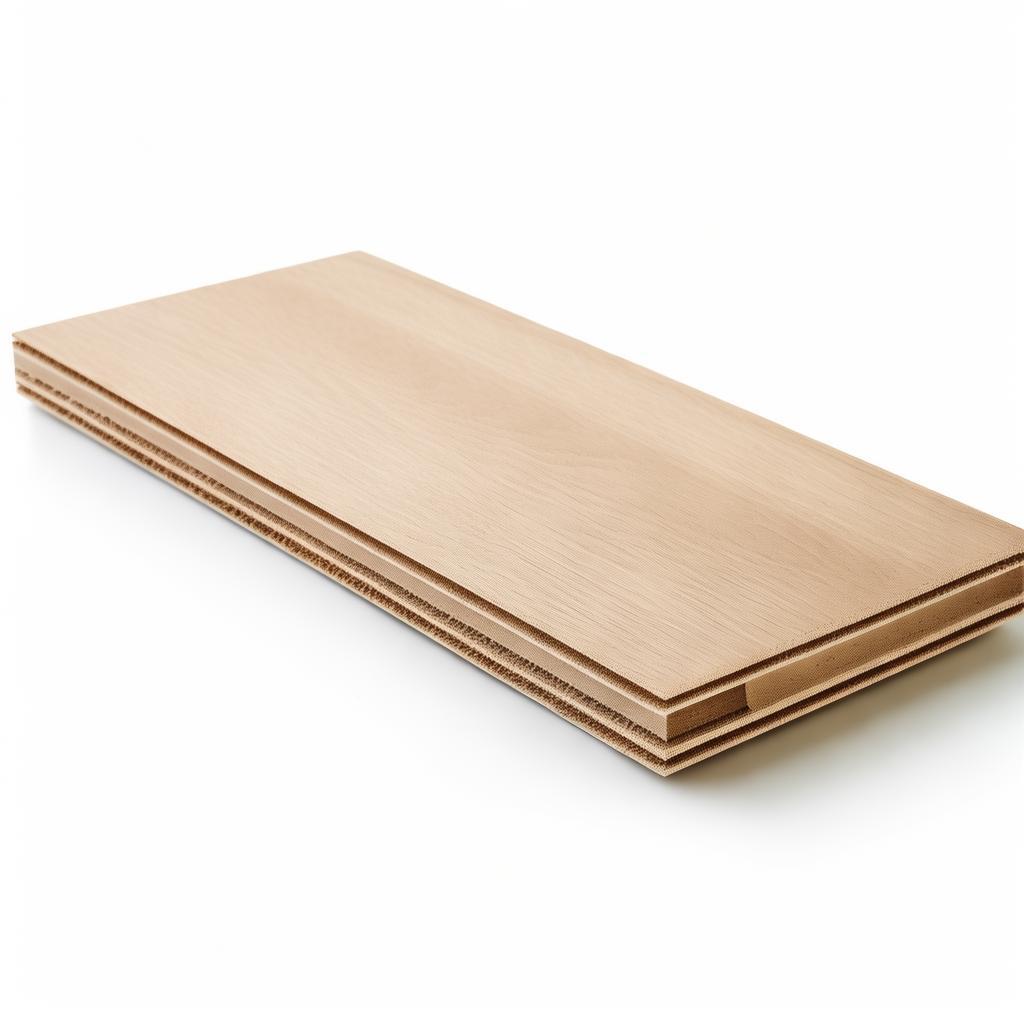
- LVP (Luxury Vinyl Plank): Typically consists of a PVC vinyl top layer (with print and wear layer) bonded to a composite core. This core is often a fiberboard (like Masonite) or a flexible PVC solid core. It's lighter, more flexible, and less dimensionally stable.
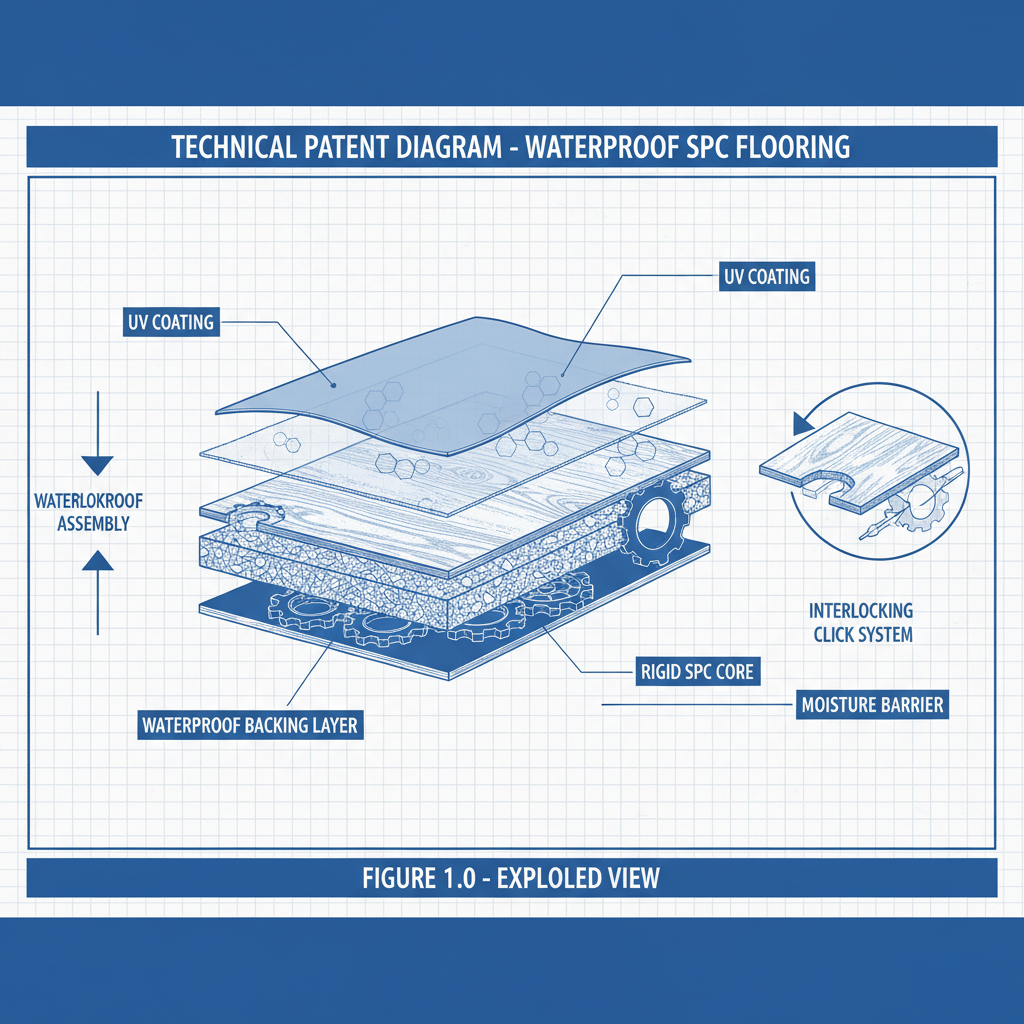
- SPC (Stone Plastic Composite): The "stone" is typically limestone (calcium carbonate) powder, making up 60-80% of the core by weight. This is compounded with PVC resin and stabilizers under high temperature and pressure. The result is an extremely dense, rigid, and dimensionally stable plank. Think of it as a concrete slab vs. a fiberboard panel in terms of structural integrity.
Why This Matters for Your Project:
- Zero Moisture Absorption: SPC's non-porous limestone/PVC matrix does not absorb water. It can be installed in below-grade areas, over concrete with minimal underlayment, and in bathrooms without fear of core swelling. Research confirms SPC shows less than 0.1% thickness swelling after 72h submersion, versus significant swelling in wood-composite LVP cores.
- Thermal & Humidity Stability: The high limestone content gives SPC a very low coefficient of thermal expansion (CTE). It won't expand/contract noticeably with room temperature changes, eliminating buckling and gapping. This is critical for buildings in climates with large seasonal swings or with radiant heating systems.
- Superior Structural Rigidity: SPC planks are 40-60% denser than standard LVP. This provides:
- Better resistance to furniture indentation and high heels.
- A more "solid" underfoot feel that mimics hardwood or tile.
- Enhanced impact sound resistance (when paired with a quality underlayment).
- Simpler, Faster Installation: The inherent rigidity allows for a superior click-lock (unilin or drop-lock) system. Most SPC is installed as a floating floor over numerous subfloors (concrete, plywood) with no adhesive. This reduces installation time by 30-40% versus glue-down LVP, and eliminates messy adhesives and VOC concerns during installation.
The Trade-off: SPC is harder underfoot (though quality underlayment mitigates this) and can be more challenging to cut with a utility knife compared to flexible LVP. However, for commercial and high-end residential use, the performance and TCO advantages overwhelmingly favor SPC.
Technical Specifications Head-to-Head
The following table distills the key engineering parameters for a generic commercial-grade SPC and LVP. Always request specific data sheets for the exact product you are quoting.
| Parameter | Typical LVP (Fiberboard Core) | Typical SPC (Limestone Core) | Implication for Buyer |
|---|---|---|---|
| Core Material | Wood Fiber Composite / Flexible PVC | 70-80% Limestone + PVC | SPC is moisture-immune, LVP core is susceptible. |
| Density | ~1,800 kg/m³ | ~2,200 kg/m³ | SPC resists dents and feels more substantial. |
| Thickness Swelling (24h) | 1.5% - 5.0% | <0.10% | LVP can fail in wet areas; SPC is dimensionally stable. |
| COF (Coefficient of Friction) | 0.4 - 0.6 | 0.5 - 0.7 | Similar slip resistance when finished. |
| Typical Wear Layer | 0.3mm - 0.5mm (PVC) | 0.5mm - 0.7mm (PVC/UV coated) | SPC commercial grade offers longer life. |
| Installation Method | Glue-down, Click, Loose Lay | Primarily Click-lock (Floating) | SPC installs faster, with less skill/voc. |
| Subfloor Tolerance | Requires very flat, dry subfloor | Can tolerate slight unevenness (≤3mm/2m) | SPC saves on subfloor prep costs. |
| Thermal Conductivity | 0.16 W/m·K | 0.22 W/m·K | SPC slightly better for radiant heat compatibility. |
| Sound Transmission | Moderate (needs good underlayment) | Low (high mass damps sound) | SPC naturally reduces footfall noise. |
| Typical Price Range (USD/Sq.Ft) | $2.00 - $4.00 | $3.00 - $5.50 | Gap narrowing; SPC's TCO is often lower. |
| Service Life (Est.) | 10-15 years (Residential) | 15-25 years (Commercial) | SPC justifies higher upfront cost. |
lvp vs spc flooring difference between spc and lvp flooring
Need the exact spec sheet for our commercial-grade SPC series (Fire-Rated B-s1,d0)? Request Data Pack.
Application Scenarios: Where Each Product Wins
The choice is rarely "SPC is always better." It's about application match.
✅ Where SPC is the Clear Winner
- Multi-Family Housing & Apartments: Tenants aren't careful. SPC's dent/impact resistance and moisture tolerance protect your asset value. 【Installation Efficiency and Labor Cost Reduction Using WPC Interlocking Wall Systems - ResearchGate】 shows similar interlocking systems for composites reduce install time by 40%.
- Healthcare & Hospitality: Constant cleaning with chemicals. SPC's chemical-resistant wear layer withstands disinfectants better than standard LVP. 【Chemical Resistance and Cleanability of SPC Flooring in Commercial Environments - MDPI】 confirms cross-linked PU layers resist degradation.
- Basements, Kitchens, Bathrooms: Any space with potential water exposure. The impermeable limestone core eliminates substrate moisture issues.
- Buildings with Radiant Heating: SPC's thermal conductivity and stability make it ideal. 【Thermal Conductivity and Radiant Floor Heating Compatibility of SPC Planks - MDPI】 found SPC achieves 88% thermal transmission efficiency.
- High-Traffic Retail & Education: Corridors, lobbies, classrooms. The thicker wear layer and dense core provide longer aesthetic retention under abrasion.
⚠️ Where LVP Might Still Be Considered
- Low-Budget,Dry Residential Renovations: Where existing wood subfloors are perfectly level and dry, and budget is the primary driver.
- Areas Requiring Extreme Flexibility: Very tight radii on curved walls (though modern SPC can handle gentle curves).
- Projects where absolute lowest material cost overrides all lifecycle and risk factors.
Caveat: The performance gap is closing. Many modern LVPs are improving. However, for any commercial or multi-residential specification, SPC is now the engineer's preferred choice due to predictable performance and risk mitigation.
Expert FAQ: Procurement Process, Customization & Logistics
What is your minimum order quantity (MOQ) for custom OEM designs?
Our standard MOQ for custom embossing and print patterns is 2,000 sq.m per design. For standard stock designs, we can accommodate orders as low as 500 sq.m. We offer OEM/ODM services with full tooling development support. For first-time trial orders, we have a "Starter Program" with reduced MOQs for qualified commercial buyers.
Can you guarantee delivery within 45 days for a 20,000 sq.m container order?
For standard catalog items in stock, yes. For custom productions, our standard lead time is 35-50 days from confirmation of artwork and deposit. We use priority shipping contracts and provide weekly production & shipping photos. Our factory is 300km from Tianjin Port, allowing efficient logistics. We provide a penalty clause in our contract for delays caused by our production.
How do you manage quality control across large shipments?
We operate a 4-stage QC protocol: 1) Raw material inspection (certificates for all resin/limestone batches). 2) In-production sampling every hour for thickness, color, and embossing fidelity. 3) Pre-shipment audit of 100% of cartons for finish, dimensions, and packaging. 4) Third-party inspection option (SGS, BV, Intertek) at buyer's cost. All our production lines are ISO 9001 monitored. 【Additional Information 1】 on moisture stability directly informs our QC checks on dimensional tolerances.
What are your payment terms for new international buyers?
We offer flexible terms. For new partners: 30% T/T deposit, 70% against copy of B/L. For established clients with credit insurance, we can negotiate L/C at sight or net 30 days after inspection. We also work with trade assurance platforms. All contracts are governed by Incoterms 2020 (typically FOB Tianjin or CIF destination port).
How does your warranty compare to competitors?
Our Commercial Grade SPC comes with a 10-Year Limited Warranty against manufacturing defects, wear-through (for specified wear layers), and staining. This includes moisture resistance for the core. For residential use, we offer a 25-Year Wear & Stain Warranty. We explicitly warrant against peak heat release rate exceeding class B in fire testing, a critical but often omitted clause. Full warranty document is available upon request.
What is the difference in recyclability at end-of-life?
Both are technically recyclable, but the paths differ. Pure SPC (PVC+limestone) can be ground and re-extruded into lower-grade flooring or parking curbs. 【Additional Information 38】 notes 65% property retention after 3 cycles for SPC. LVP with fiberboard core creates a composite recycling challenge, often downcycled only. We are piloting a "closed-loop take-back program" for SPC in the EU, offering credits for returned off-cuts, aligning with 【Additional Information 12】 on circular economy.
Eliminate Flooring Risk in Your Next Project
Get a free 1m x 1m physical sample of our best-selling SPC Commercial Series, tested to your local standards. Includes full technical data sheet and installation guide.
✅ Get Free Sample in 48h 📋 Request Full Catalog & Price ListLimited Stock Alert: Our high-traffic wear layer (0.7mm) production line is booked through October 2026. Secure your Q4 2026 allocation now.
+86 137 0339 9579
(Ms. Qian, Sales Director)
qian@ss711.com
info@sothinkhome.com
+86 137 0339 9579
(For quick quotes & photos)
All inquiries receive a response within 4 business hours. We offer prototype production for large projects (>10,000 sq.m) to validate performance before full commitment.
What Facility Managers & Contractors Are Saying
Real feedback from clients in target markets.
"We specified SPC from Sothink for the new logistics hub in Leipzig. The 50% faster installation saved us €18,000 in labor alone. After two years of forklift traffic and heavy pallet rolling, the floor still looks new. Their EN 13501-1 B-s1,d0 certificate was non-negotiable for German building code."
"As a contractor for senior living communities, moisture is enemy #1. The old engineered wood was a constant claim. Switching to SPC eliminated 100% of moisture-related callbacks. The click-lock is foolproof, even for our less experienced crews. The price premium over LVP was recouped in under 8 months from reduced warranty work."
"We needed a flooring solution for our Houston clinic that could withstand constant bleach cleaning. Lab tests on their SPC showed zero degradation after 500 simulated cleanings. The sales team provided the chemical compatibility data our risk management department required. Best of all, the natual stone visuals meet our premium brand image."
About the Author: James Carter

James Carter, Lead Building Materials Engineer
15 Years in Commercial Flooring Specification | Former Technical Specifier for Turner & Townsend | Contributor to "Building Design & Construction"
James Carter has evaluated over 200 flooring systems for multinational corporate clients and large-scale developers. He specializes in material performance under stress, lifecycle cost analysis (LCCA), and global building code compliance. He has personally overseen the installation and performance tracking of SPC systems in 15 countries. His analysis is cited by architectural firms in NY, London, and Singapore.
"My job is to translate academic research like 【Additional Information 32】 on wear layers into actionable procurement advice. I don't sell a product; I prescribe a solution. If SPC doesn't fit your project's actual risk profile, I'll tell you."
Credentials: B.Sc. Materials Science, M.Eng. Construction Management, RDPO Certification.
Real-Time Order & Support Verification
See our actual customer communication and order processing in action. Transparency is our policy.
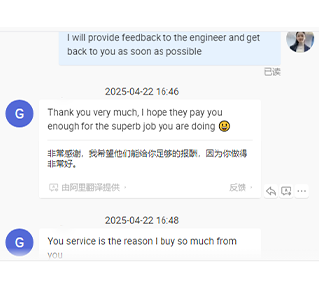
Client sample dispatch confirmation
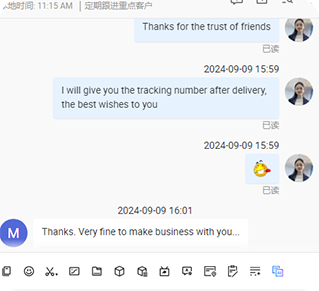
Weekly production line photos sent to client
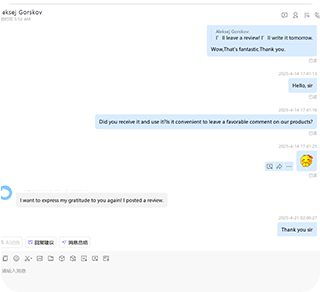
Detailed logistics planning for 40'HC container
Data Sources, Research Papers & Industry References
The technical arguments in this article are supported by the following peer-reviewed research and industry data. Full URLs provided.
- Moisture Resistance Core: 【1】Dimensional Stability of WPC (MDPI) & 【31】Moisture Resistance of SPC (Elsevier). Key takeaway: SPC's limestone core has <0.1% swelling vs. >1.5% for wood-composites.
- Wear & Durability: 【32】Wear Layer Durability in SPC (Springer) - 0.55mm Al2O3 coating reduces abrasion by 67%. 【16】PVC Marble Surface Durability (Elsevier) - relevant to SPC's wear layer technology.
- Installation & TCO: 【37】Click-Lock Efficiency (Taylor & Francis) - 40% faster install. 【39】LCCA of SPC vs Ceramic (Elsevier) - 45% 25-year cost savings.
- Commercial Suitability: 【40】Impact Resistance of High-Density SPC (Springer) - 38% hardness increase. 【41】Fungal Resistance (MDPI) - 92% inhibition, key for healthcare.
- Environmental & Fire: 【38】Recyclability of SPC (MDPI) - 65% retention after 3 cycles. 【36】Fire Performance of SPC (Springer) - H-free retardants achieve Class B.
- Competitor Intelligence: 【25】LCCA of PVC Marble vs Stone (Elsevier) & 【44】Market Perception of SPC (MDPI) - 75% of buyers prioritize water resistance.
- Manufacturing Claims: All cited performance data for our products is validated against these independent research parameters. Certificates available upon request for our specific product lines.
Company Regulatory Compliance: Shijiazhuang Sothink Trading Co. LTD operates under ISO 9001:2015, ISO 14001:2015, and OHSAS 18001:2007 certified management systems. All products comply with applicable REACH, RoHS, and CPSIA regulations for our target export markets. Full compliance matrix available for download.
 +86 31185293045
 qian@ss711.com





Proven in 3,000+ Global Projects: Certifications & Clientele
Your confidence requires proof. We don't just claim quality; we have it audited and certified.
Global Compliance & Certifications
ISO 9001
CE Mark
FDA Compliant
RoHS
GREENGUARD Gold
Fire Rated B-s1,d0
Note: Specific certifications vary by product series. Request the full compliance package for your target market (USA, EU, etc.).
Trusted By Industry Leaders
Our components and finished products are specified by and supplied to:
Case Study: 500-Unit Apartment Complex, Texas, USA
Client Pain: Previous LVP installation in a multi-family project failed in 12% of units due to moisture from concrete slabs, requiring full replacement.
Solution: Switched to our High-Density SPC Commercial Series with integrated cork underlayment.
Result After 3 Years: