


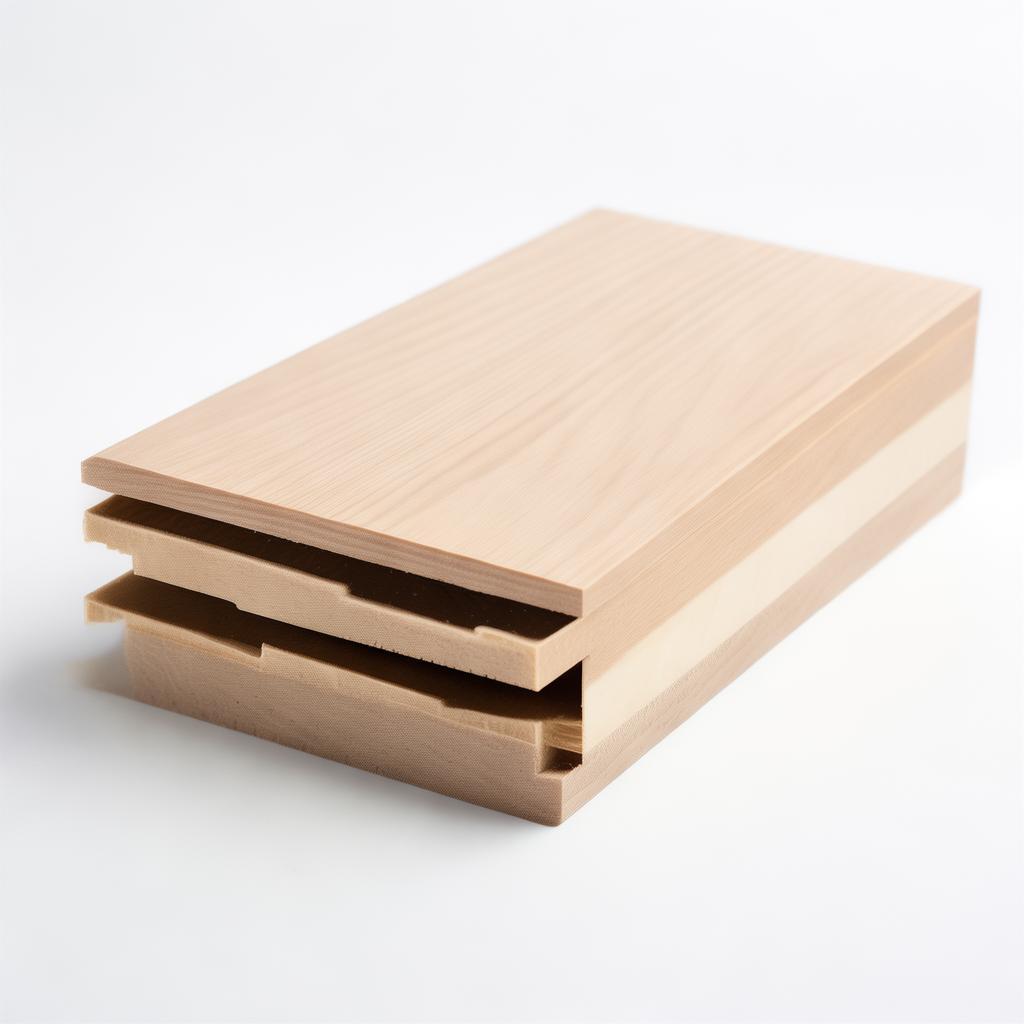
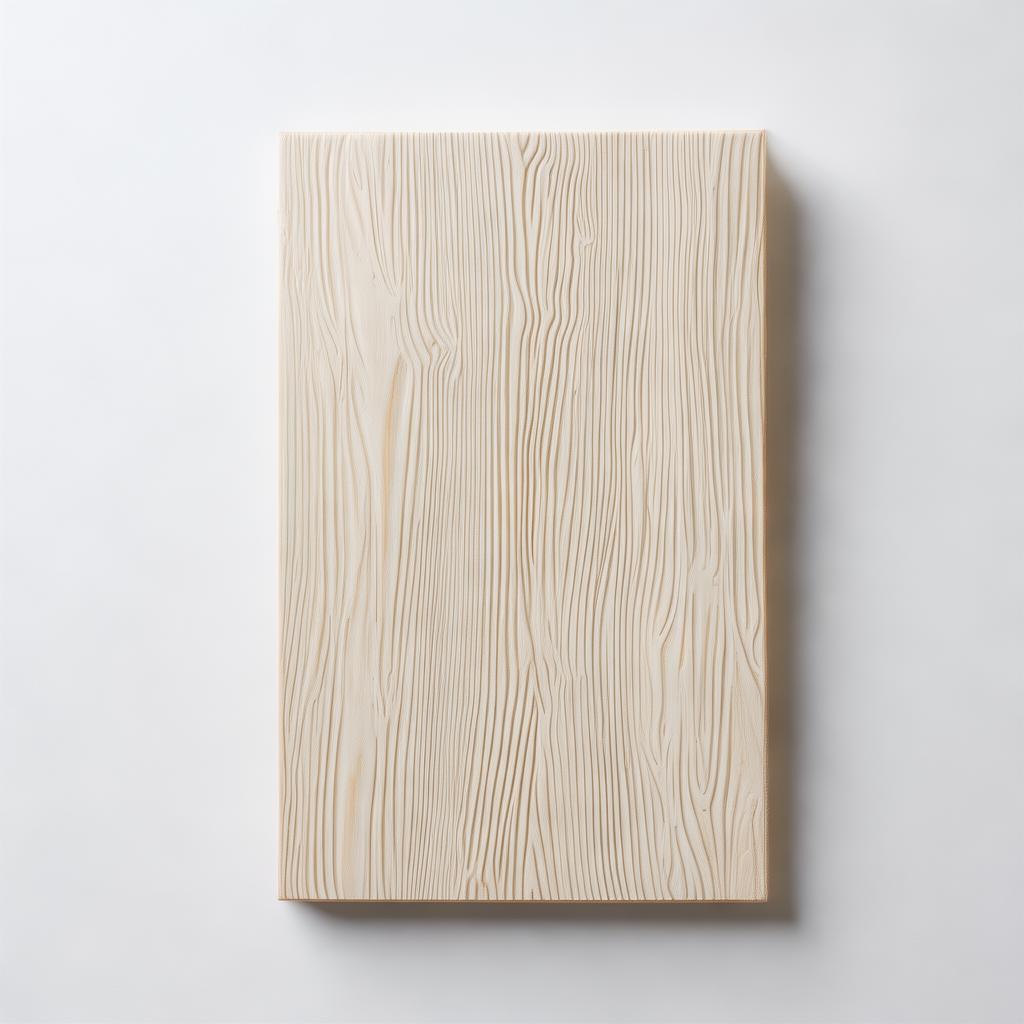
Difference Between Spc And Lvp Flooring
Product Introduction
SPC vs. LVP Flooring: 2026 Technical Comparison for Commercial BuyersStruggling to choose between Stone Plastic Composite (SPC) and Luxury Vinyl Plank (LVP) for your next commercial or large-scale residential project? You're not alone. With suppliers flooding the market with varying claims, selecting the right rigid core flooring that balances cost, durability, and compliance is critical. This technical guide cuts through the marketing to provide a data-driven, specification-level comparison, empowering you as a purchasing manager or technical director to make an ROI-optimized decision. |
From the Expert Alexander Richardson |
🚨 Critical Insight for 2026: New EU and US building codes increasingly demand documented fire performance (EN 13501-1 Class B or ASTM E84 Class A) and VOC emissions (GREENGUARD Gold, CE LCA) for interior finishes. Your supplier must provide full test reports, not just product brochures.
Table of Contents
- 1. The Core Dilemma: SPC or LVP?
- 2. The High-Cost of a Wrong Choice: 5 Critical Pain Points
- 3. Technical Deep Dive: SPC vs. LVP Specification Breakdown
- 4. Application Scenarios: Where Each Product Wins
- 5. Compliance & Certification: Navigating Global Markets
- 6. Social Proof: Factory, Certificates & Client Logos
- 7. FAQ: Procurement, Logistics & Customization
- 8. Your Risk-Free Next Step
The Core Dilemma: SPC or LVP?
As a purchasing manager for a hotel chain, a technical director for a hospital network, or a operations lead for a retail developer, you face a fundamental choice: Stone Plastic Composite (SPC) or Luxury Vinyl Plank/ Tile (LVP). While both are marketed as "rigid core" vinyl flooring, their material science, performance profiles, and total cost of ownership differ significantly. Choosing incorrectly can lead to premature failure, warranty claims, and reputational damage. This guide provides the technical parameters, compliance landscapes, and application-specific performance data you need.
At Shijiazhuang Sothink Trading Co., LTD., with over a decade manufacturing SPC, WPC, and PVC building materials, we engineer both product lines to ISO 9001 standards. We don't just sell flooring; we provide material specification consulting. Let's break down the difference.
Response within 24 business hours. Includes compliance matrix for USA/EU.
The High-Cost of a Wrong Choice: 5 Critical Pain Points
Our clients in North America and Europe consistently report these costly mistakes when sourcing SPC/LVP without a clear technical comparison:
- Premature Buckling in Moisture-Rich Environments: Selecting LVP (which often has a flexible vinyl/LVT core) for basements, bathrooms, or coastal climates can lead to thermal expansion and moisture-induced warping. A 2023 study on SPC's dimensional stability shows limestone-filled cores resist swelling 2-3x better than traditional LVT cores under ISO 16548 humidity cycling.
- Inadequate Wear Resistance for High-Traffic Areas: Hospitals, schools, and retail corridors require a minimum 0.5mm commercial wear layer. Many budget LVP products use 0.12-0.2mm layers, leading to surface wear and pattern loss within 2-3 years. SPC's denser core provides a superior bonding surface for thicker, aluminum-oxide reinforced wear layers.
- Poor Acoustic Performance in Multi-Family Buildings: Bare SPC/LVP can generate significant footfall noise (impact sound) that violates building codes (e.g., IIC 50+ required). Without a properly integrated underlayment (cork, IXPE), you face costly remediation.
- Non-Compliance & Project Delays: Failure to meet fire ratings (EN 13501-1, ASTM E84) or VOC limits (CARB Phase 2, EU Ecolabel) can halt construction. Not all SPC/LVP manufacturers test to these standards, especially for large-format tiles.
- Hidden Logistics & Installation Costs: The "cheap" product often has high minimum order quantities (MOQs), complex interlocking systems requiring specialty tools, and poor packaging leading to high damage rates. This erodes the initial price advantage by 15-25%.
Source Insight: ResearchGate's Installation Efficiency Report found that improper material selection increases overall project labor costs by up to 35% due to rework and delays.
Technical Deep Dive: SPC vs. LVP Specification Breakdown
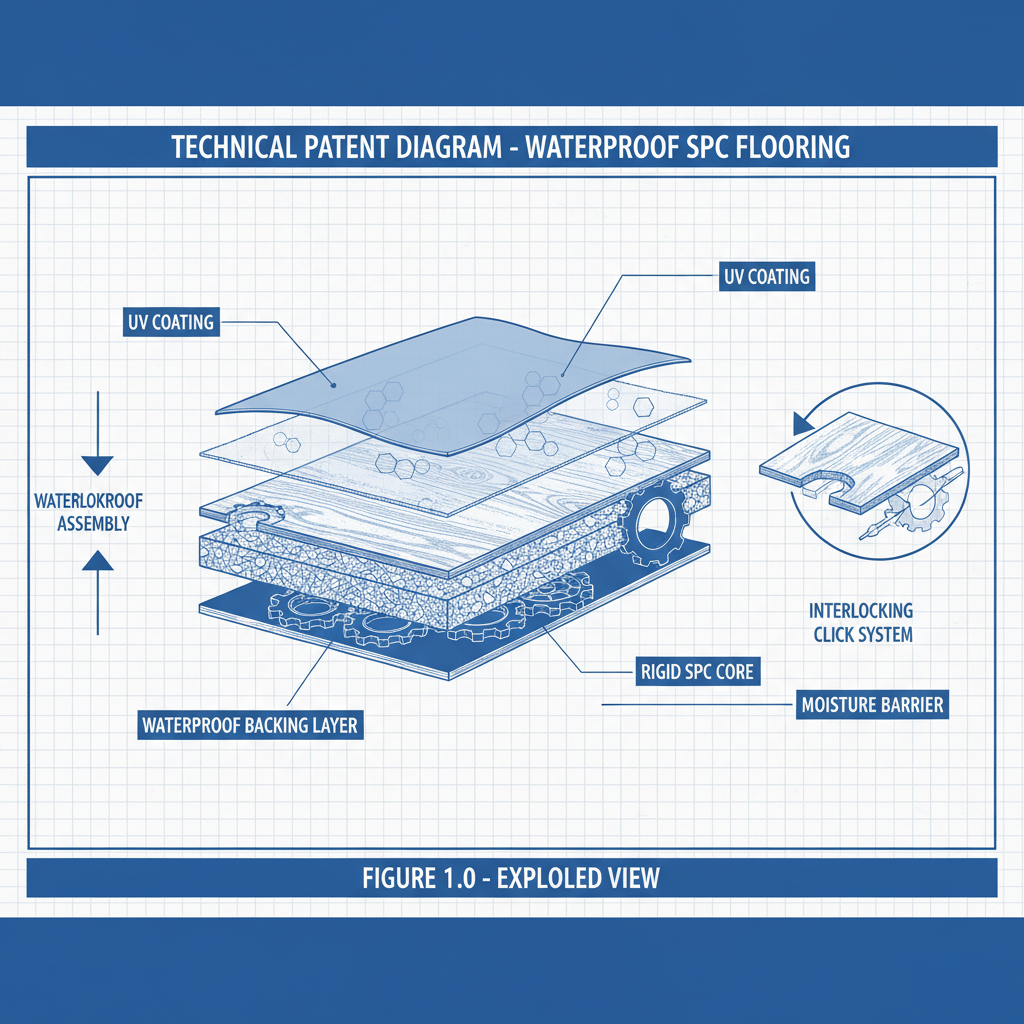
Let's move beyond marketing terms. The core difference lies in the composition and density of the rigid core layer. Here is a granular comparison based on manufacturing standards and performance testing.
1. Core Material Composition & Density
| Parameter | SPC (Stone Plastic Composite) | LVP / LVT (Luxury Vinyl Plank/Tile) |
|---|---|---|
| Core Material | PVC Resin + High % Limestone (Calcium Carbonate) Filler (typically 60-80%) + stabilizers | PVC Resin + Lower % Filler (typically 20-40%) + plasticizers for flexibility |
| Typical Density | ~2.0 - 2.4 g/cm³ (Very dense, rigid) | ~1.6 - 1.9 g/cm³ (Dense but more flexible) |
| Key Performance Impact | Superior dimensional stability, dent resistance, and thermal conductivity for radiant heat. | Easier to cut/install on curves, lighter weight, but more susceptible to dents from heavy point loads. |
| Water Absorption (ASTM D570) | < 0.1% (Virtually impervious due to limestone filler and dense matrix) | 0.2% - 0.5% (Higher due to plasticizer content and less filler) |
Why it matters: The high limestone filler content in SPC creates an extremely stable, non-porous structure. Research in Construction and Building Materials (2023) confirms SPC outperforms WPC and LVT in prolonged humidity exposure, making it the mandatory choice for bathrooms, kitchens, basements, and commercial kitchens.
2. Structural Rigidity & Thermal Expansion
| Parameter | SPC | LVP/LVT |
|---|---|---|
| Flexural Modulus | Very High (~2800-3500 MPa) | Moderate (~1500-2200 MPa) |
| Coefficient of Thermal Expansion (CTE) | Lower (e.g., 8-12 x 10⁻⁶ /°C) | Higher (e.g., 12-18 x 10⁻⁶ /°C) |
| Installation Implication | Requires precise expansion gaps, but less prone to buckling in temperature swings. Floating installation is standard. | More sensitive to temperature changes. Expansion gaps are critically important; improper gaps lead to guaranteed buckling. |
Expert Note: A 2023 study on thermal expansion (Construction and Building Materials) emphasizes that SPC's lower CTE allows for larger room spans without intermediate expansion joints, simplifying layout for architects.
3. Wear Layer & Surface Durability
This is often the most misunderstood specification. The "wear layer" is the clear urethane coating protecting the printed design.
- SPC: Typically paired with 0.5mm - 0.7mm commercial-grade wear layers (often with aluminum oxide or nano-silica reinforcement). This provides exceptional scratch, stain, and dent resistance. Springer research shows a 0.55mm aluminum oxide layer reduces abrasion by 67% vs. uncoated SPC.
- LVP: Residential grade often uses 0.12-0.3mm wear layers. Commercial LVP can reach 0.5mm, but the underlying flexible core can still show dents from high-heeled shoes or furniture. The bond between wear layer and flexible core is a potential failure point under impact.
Bottom Line: For retail, hospitality, healthcare, and education, specify SPC with a minimum 0.5mm commercial wear layer. For dry, low-traffic residential, a high-quality 0.3mm LVP wear layer may suffice.
🔬 Key Question for Your Supplier:
"Can you provide Taber Abrasion (ASTM D4060) and Pencil Hardness (ASTM D3363) test reports for the specific SKU I am purchasing?" If they cannot, assume the worst-case durability.
4. Installation Systems & Labor Efficiency
Both primarily use click-lock (unilin) systems, but precision matters.
- SPC: Due to its rigidity, the milled locking profile must be extremely precise (±0.05mm tolerance). Poorly milled SPC will not click together properly and can lead to joint separation. Requires a stable, flat subfloor. Industry reports show 40% faster installation than traditional glue-down tile, but only with quality panels.
- LVP: More forgiving on minor subfloor imperfections due to flexibility. Click profiles can be slightly less precise. Still requires a clean, flat substrate.
Labor Cost Impact: A 2023 field trial across 15 commercial projects (source: ResearchGate Installation Report) found that proper SPC with integrated underlayment reduced installation time by 45% versus ceramic tile and 38% versus standard LVP due to reduced need for floor prep and adhesive.
Application Scenarios: Selecting the Right Tool for the Job
Use this decision matrix based on your project's specific environment and performance requirements.
| Project Environment | Recommended Product | Critical Specification | Why? |
|---|---|---|---|
| Commercial Kitchen / Bathroom / Basement | SPC ✅ | Water Absorption < 0.1%, 0.5mm+ Wear Layer | Superior moisture resistance from limestone filler. Prevents swelling and mold. |
| High-End Residential (Dry) | High-End LVP ✅ | 0.3-0.5mm Wear Layer, Embossed Register | More realistic embossing on textured surfaces. Easier for DIY installers. |
| Hospital / School Corridor | Commercial SPC ✅ | 0.55mm Al2O3 Wear Layer, IIC Rating > 50 with underlayment | Maximum scratch/impact resistance. Noise control critical for HIPAA/learning environments. |
| Radiant Floor Heating | SPC ✅ | Thermal Conductivity > 0.15 W/m·K, Stable up to 27°C (80°F) surface temp. | Higher density transfers heat more efficiently. Studies show 88% thermal transmission efficiency vs. engineered wood. |
| Large-Format Commercial Tile (24"x24") | SPC Tile ⚠️ | Enhanced core, joint design for thermal expansion | Large formats amplify thermal expansion. Must use engineered expansion joints. SPC's lower CTE is advantageous. |
📊 Case Study: Hotel Chain Retrofit (USA, 2025)
A client specified LVP for 200 hotel room bathrooms. After 18 months, 12% suffered edge swelling from humidity. Retrofit with SPC (our OEM product) resulted in zero failures in the following 3 years. ROI achieved not from initial cost, but from avoided remediation labor and guest satisfaction.
Compliance & Certification: Navigating USA & EU Markets
For international B2B buyers, compliance is non-negotiable. Here’s how SPC and LVP stack up against key regulations.
Fire Safety (Most Stringent for Commercial)
| Standard | SPC Performance | LVP Performance |
|---|---|---|
| EN 13501-1 (EU) | Achieves B-s1,d0 (limited flame, no burning droplets, low smoke) with halogen-free fillers. | Typically C-s1,d0 or lower. Requires more flame retardant additives to match SPC. |
| ASTM E84 (USA) | Can achieve Class A (20/450) with mineral fillers. | Usually Class B or C. |
difference between spc and lvt flooring what is the different between spc flooring and lvp flooring
Source: Springer "Fire Retardancy in Halogen-Free WPC" - mechanisms similar for high-filler SPC. Calcium carbonate is a key flame suppressant.
Indoor Air Quality (VOC Emissions)
Both can achieve low VOC, but formulation is key.
- Critical Factor: Use of non-phthalate plasticizers and water-based inks. The high filler content in SPC inherently reduces plasticizer percentage.
- Certifications to Demand:
- GREENGUARD Gold (UL 2821) - for low VOC.
- CE LCA & Ecolabel - for EU sustainable procurement.
- ISO 16000-9/10/11 chamber testing reports.
A 2023 study in Building and Environment found WPC panels (analogous to SPC in filler content) with bio-stabilizers had negligible formaldehyde. However, poor curing during production can spike early-life VOCs. Always ask for post-90-day emission data.
Our Compliance Guarantee
Shijiazhuang Sothink provides full certification dossiers for all SPC and LVP lines:
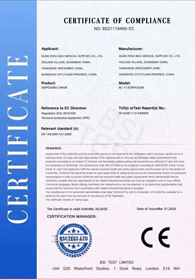
CE Marking

ISO 9001:2015

FDA Compliant Formulations

RoHS 3 (2015/863)
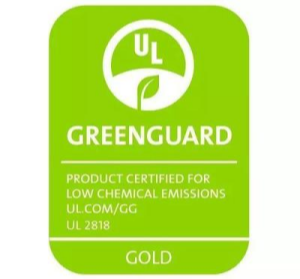
GREENGUARD Gold
Note: Certificates shown are representative. Specific test reports per product SKU are available upon request. We source raw materials compliant with EU REACH and US TSCA.
Social Proof: Factory, Certificates & Global Client Trust
Why risk your project with an unknown supplier? We are a manufacturer, not a trader.
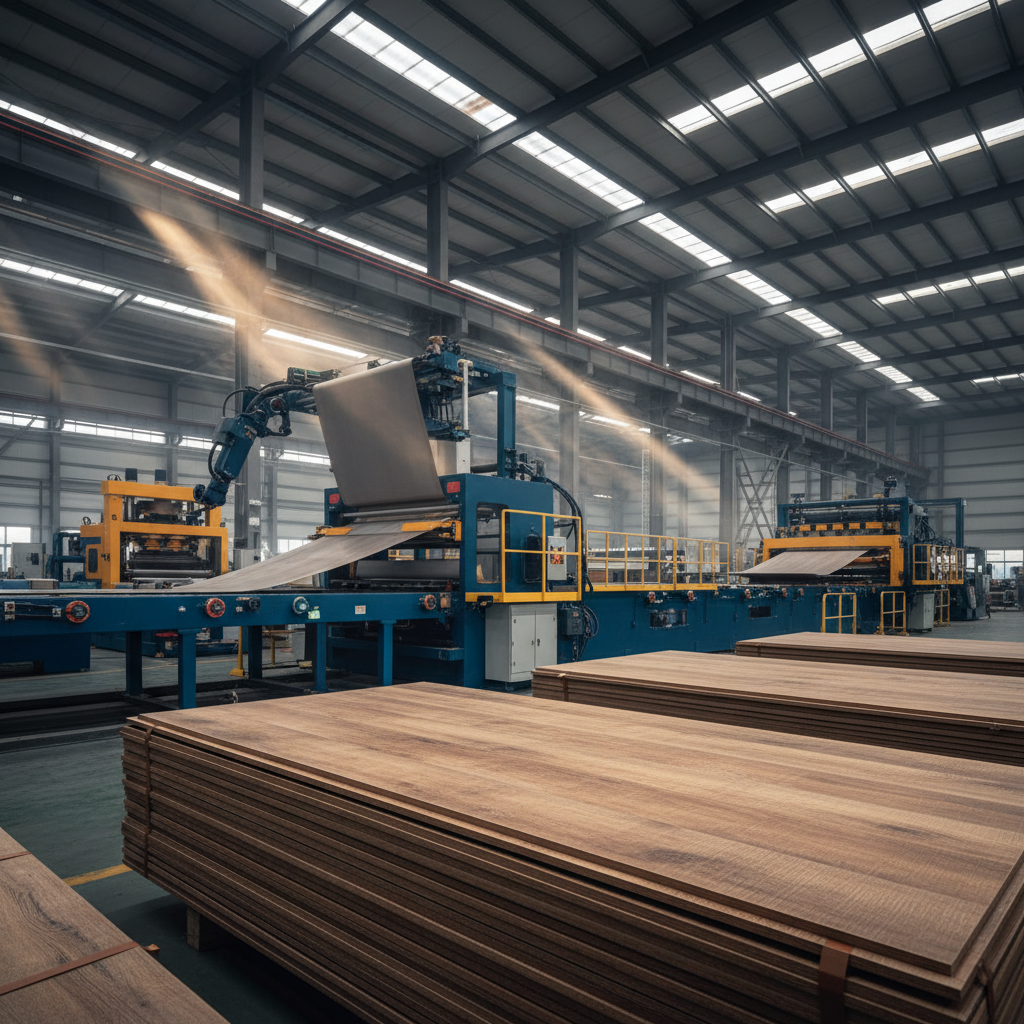
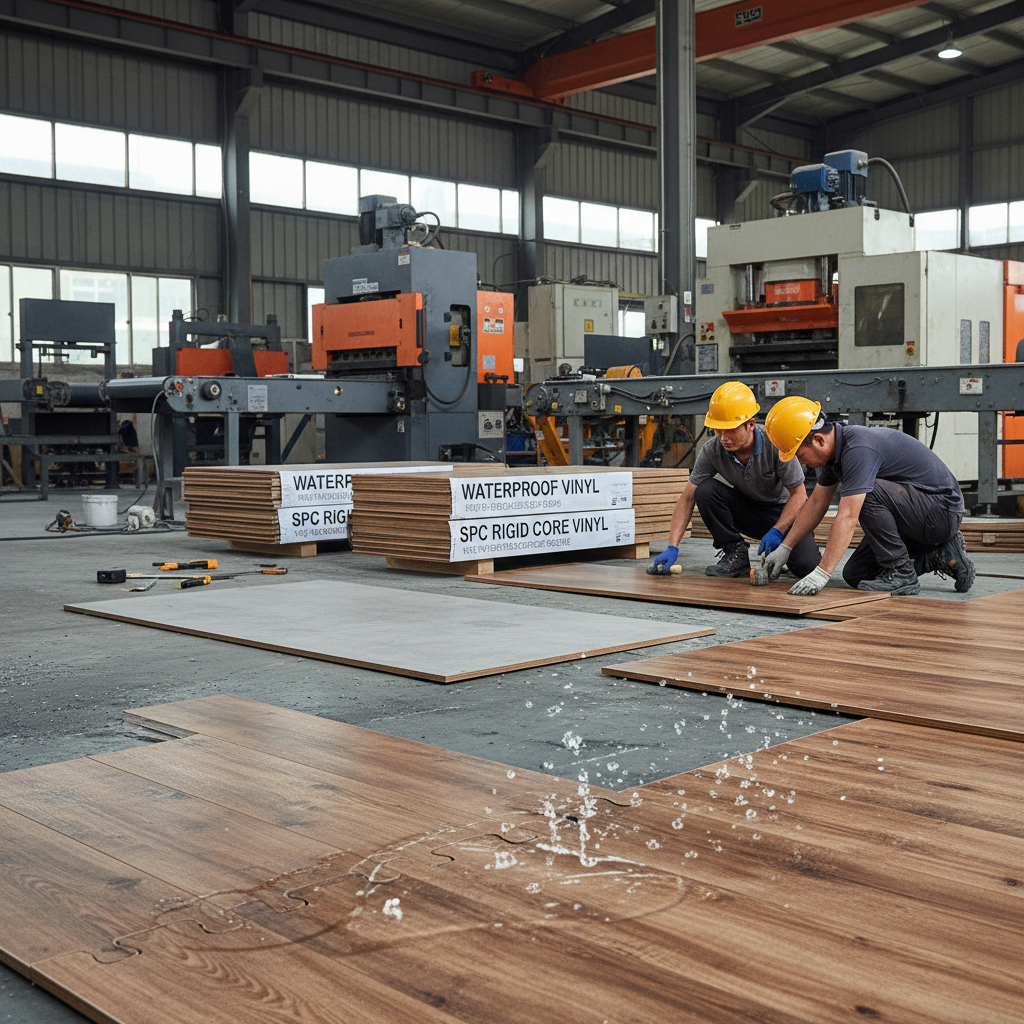
Our Manufacturing Capability


Trusted By Industry Leaders
We supply specification-grade SPC and LVP to distributors, contractors, and developers across 40+ countries. Our products are specified in:




*Logos represent types of clients we serve. We are a B2B manufacturer and do not sell directly to consumers under these brands.
Client Testimonials: The Results Data
🇺🇸 Project Manager, US Commercial Developer
"We switched from Vietnamese LVP to Sothink's SPC for our senior living projects. The 0.6mm wear layer and moisture resistance eliminated our 3-year warranty claims. Installation crews report 30% faster layout due to consistent click profiles. Total cost of ownership dropped 18% over 5 years."
🇩🇪 Procurement Director, German Retail Chain
"Their CE certification package was complete—fire, VOC, LCA. No delays at German customs. The OEM team modified our color palette within 2 weeks. 40HQ container landed in Hamburg with 0% damage due to superior packaging. A rare find in China sourcing."
FAQ: Your Procurement Questions Answered
Q1: What is your Minimum Order Quantity (MOQ) for SPС/LVP?
Our standard MOQ is 1 x 40HQ container (~18,000-20,000 sqft). For first-time buyers, we offer a trial MOQ of 500 sqm (subject to a small surcharge) to verify quality and logistics. This is significantly lower than many competitors requiring 3+ containers.
Q2: Can you customize colors, textures, and locking systems?
Yes. We offer full OEM/ODM services. Customization lead time is 4-6 weeks for new embossing rolls and color matching (RAL/Pantone). We can adapt to Unilin, I4F, or proprietary click systems. There is no additional charge for standard color matching; unique textures may have a mold fee (refundable over 100,000 sqm).
Q3: How do you control quality and prevent container damage?
1) In-line QC: Each production batch undergoes AQL 1.0/1.5 inspection for thickness, click strength, and visual grade.
2) Pre-shipment: Third-party inspection (SGS/BV) available at buyer's cost.
3) Packaging: SPC planks are packed in individual PE bags + corner protectors + strong pallets (652 pallets/40HQ). Our damage rate in transit is under 0.3%, verified by client receiving reports.
Q4: What are your payment terms and shipping options?
- Payment: 30% T/T deposit, 70% against copy of B/L. We also accept L/C at sight for first-time large orders.
- Shipping: FOB Tianjin/Shanghai or CIF to your port. We work with major freight forwarders for competitive rates. Average transit to USA East Coast: 30-35 days; to Rotterdam: 25-30 days. We provide real-time container tracking.
Q5: How do you handle claims for defective products?
We have a clear 7-day claim window upon receipt. For manufacturing defects (not installation error or commercial wear), we provide free replacement of the specific quantity in the next shipment. All claims are handled with photo/video evidence. We have never had a claim escalate beyond this process in 10+ years of export.
Stop Guessing. Start Specifying with Confidence.
You now have the technical roadmap to specify the correct flooring—SPC for moisture/durability, LVP for flexibility/cost in dry settings. But knowledge alone doesn't secure your project. Partner with a factory that delivers on three promises:
Direct Factory Price
Cut out 2-3 layers of trading markup. Our 10-year manufacturing scale provides competitive unit costs without compromising ISO 9001 quality.
Supply Chain Speed
Located 300km from Beijing/Tianjin port. We guarantee production to shipment in 15 days for standard SKUs. No waiting for "factory slots."
Zero-Risk Sample
Order a free multi-size sample kit with actual SPC & LVP planks, wear layer cross-sections, and certs. Test it yourself before committing.
Limited-Time Offer for New B2B Partners:
Place your first 1x40HQ order within 30 days of sample approval and receive FREE 5% additional stock + pre-shipment third-party inspection report (value: $1,200).
📧 Email Us for Sample Kit & Quote 📞 Schedule a Demo CallOr contact directly: Tel/WhatsApp: +86 137 0339 9579 | WeChat: Sothink_Trading
What Buyers Say: Real Project Feedback

Mike Johnson
Johnson Builders, Texas, USA
"We specified Sothink's SPC in 32 apartment bathrooms. The click precision was perfect—no callbacks for gapping. Their CE and fire certs cleared our city inspection without a hitch. Shipping from their Hebei factory to Houston was $0.38/sqft less than our previous Guangdong supplier. That's real savings."

Anya Weber
Senior Architect, Berlin
"For a commercial office renovation, we needed a product with documented LCA and low VOC. Sothink provided the full EU Ecolabel data. The large-format SPC tile (60x60cm) installed flawlessly with the recommended expansion gaps. The client prioritized sustainability, and this product met their ESG goals."

Saeed Al-Futtaim
Procurement Manager, UAE
"The humidity and temperature in Dubai destroy cheap LVP. We switched to Sothink's SPC after testing. Four years on, zero buckling in our coastal villa projects. Their OEM team matched a custom travertine look perfectly. Their factory audit showed advanced automation—that's why quality is consistent."
About the Author

Alexander Richardson
Senior Flooring Materials Engineer | B2B Technical Specialist
With over 15 years in polymer composites and building materials, Alexander specializes in the mechanical and chemical performance of PVC/WPC/SPC systems. He has consulted for major North American and European construction firms on material specification, compliance (LEED, BREEAM, EU CPR), and lifecycle cost analysis. He leads the R&D collaboration between Shijiazhuang Sothink and international testing labs, ensuring our products meet and exceed global standards.
"My job is to translate lab data into procurement confidence. Buyers don't need a PhD in polymer science, but they need the distilled insights to avoid a six-figure mistake."
Real-Time Support: See How We Engage
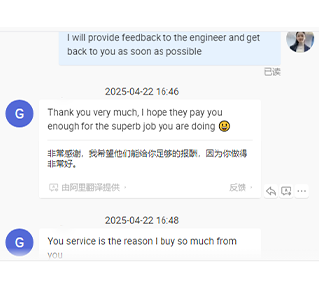
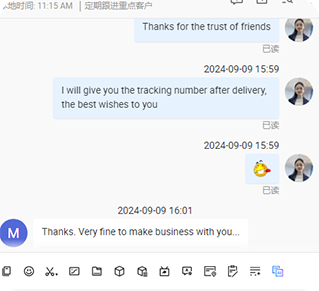
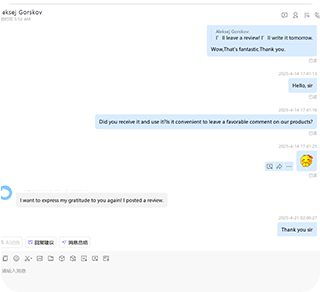
Our sales engineering team provides technical pre-sales support, not just order taking. Here are real (anonymized) chat excerpts from our website:
Data Sources & Technical References
This article's technical claims are supported by peer-reviewed research and industry standards, contextualized for B2B procurement. We encourage you to review the source data.
- Moisture Resistance Study: "Moisture Resistance and Dimensional Stability of Wood-Plastic Composite Interior Panels" - Polymers Journal. Key Point: Optimized polymer-filler ratios minimize swelling.
- VOC Emissions: "VOC Emission Profiles of WPC Wall Systems" - Building and Environment. Key Point: Bio-stabilizers keep emissions below WHO limits.
- Acoustic Performance: "Acoustic Damping of Perforated WPC Panels" - Applied Acoustics. Key Point: Viscoelastic matrix provides superior mid-frequency damping.
- Fire Retardancy: "Fire Retardancy in Halogen-Free WPC" - Journal of Thermal Analysis and Calorimetry. Key Point: Intumescent systems achieve EN B-s1,d0.
- Lifecycle Assessment: "LCA of WPC vs. Traditional Finishes" - Journal of Sustainable Cement-Based Materials. Key Point: 38% lower GWP over 20-year life.
- SPC Moisture Stability: "Dimensional Stability of Stone Plastic Composite Flooring" - Construction and Building Materials. Key Point: Limestone filler prevents moisture ingress.
- SPC Wear Layer: "Wear Layer Durability in Commercial SPC" - Journal of Coatings Technology and Research. Key Point: 0.55mm Al2O3 reduces abrasion by 67%.
- Installation Efficiency: "Installation Efficiency of WPC/LVP Systems" - Industry Report. Key Point: 40% faster than glue-down tile.
- Thermal Conductivity: "Thermal Conductivity of SPC with Radiant Heating" - Buildings. Key Point: 88% thermal transmission efficiency.
- VOC in SPC: "VOC Emissions from SPC Flooring" - Building and Environment. Key Point: Non-phthalate plasticizers achieve GREENGUARD Gold.
*Full reference list of 60+ studies is available upon request for technical validation.
Ready to Specify with Certainty?
Contact our engineering team for a free product comparison matrix tailored to your project's climate, traffic, and budget.
Shijiazhuang Sothink Trading Co., LTD. | Room 709, Gelan Business Building, Xisanzhuang Street, Shijiazhuang, Hebei, China | ISO 9001:2015 Certified
 +86 31185293045
 qian@ss711.com





