


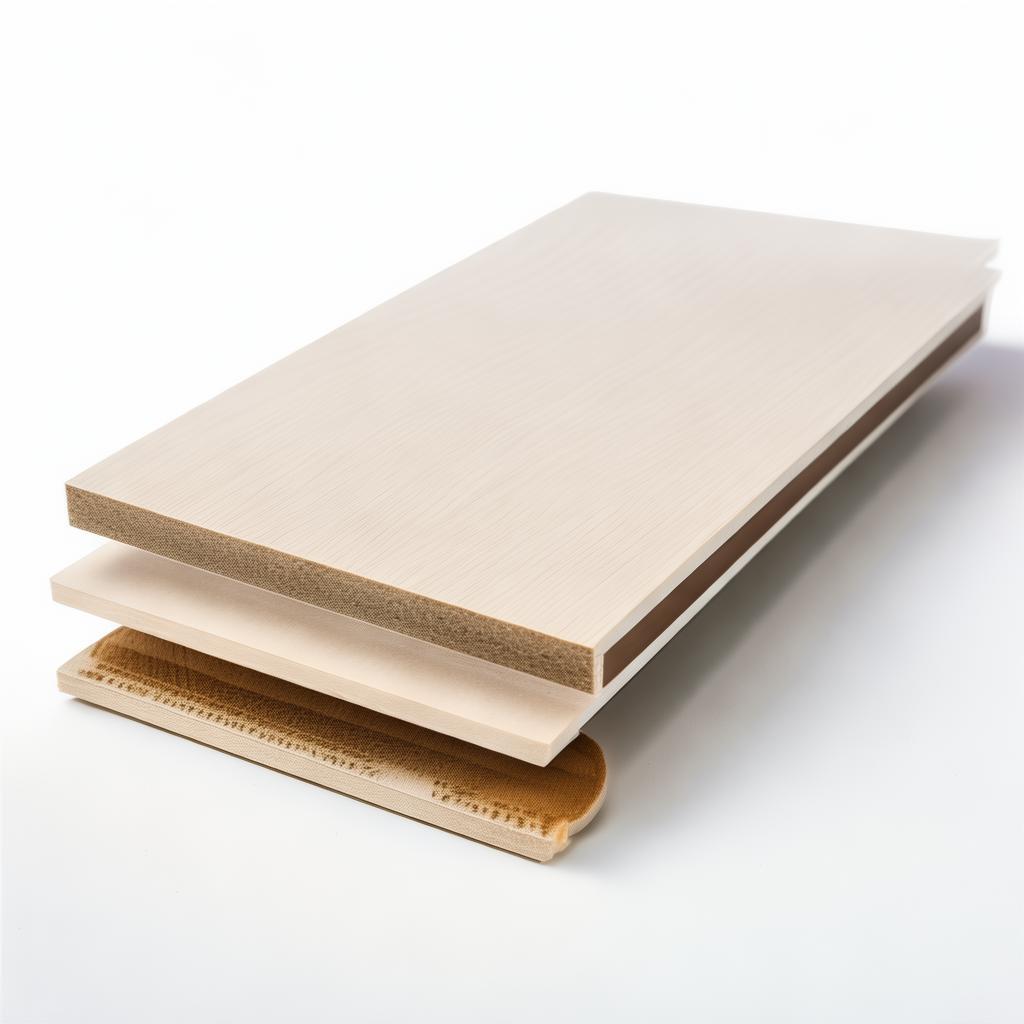
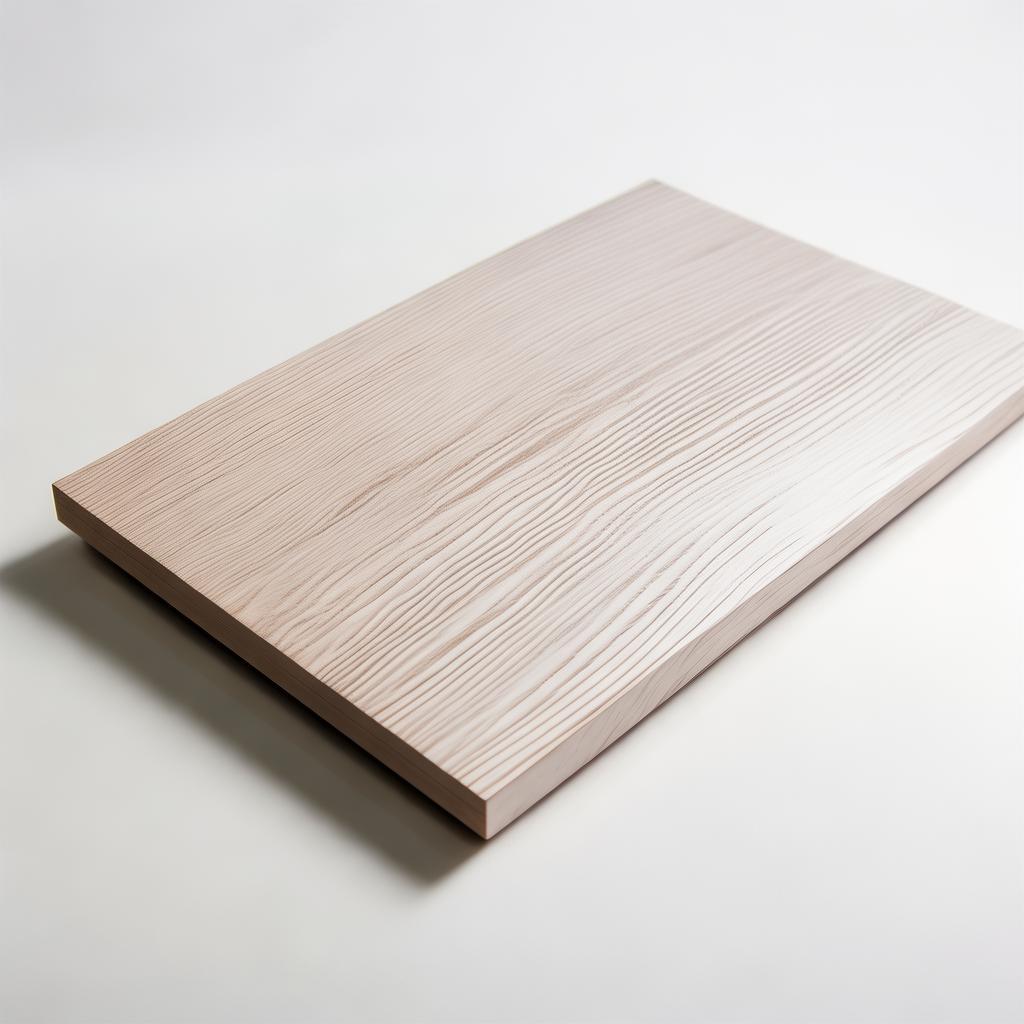
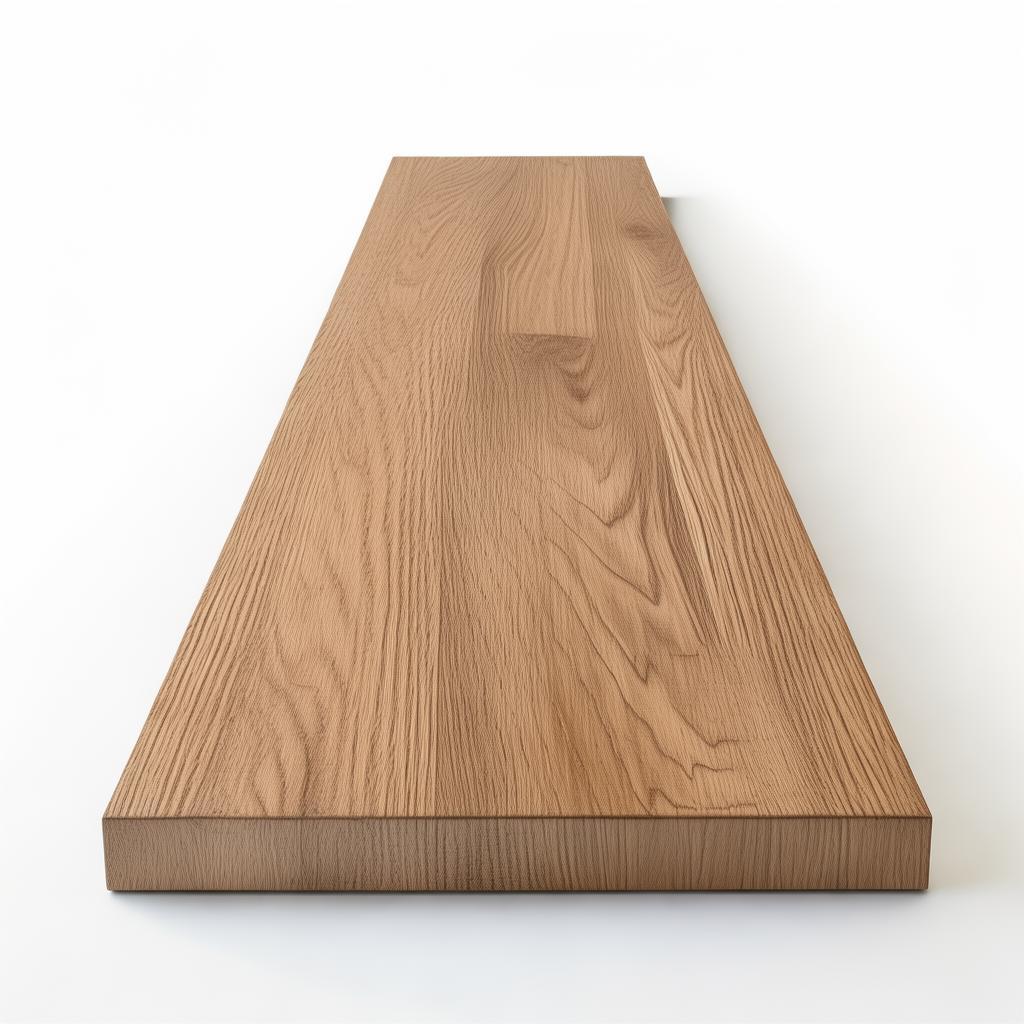
Hybrid Spc Flooring Supplier
Product Introduction
Hybrid SPC Flooring Supplier: Dimensional Stability, Moisture Resistance & Commercial-Grade Durability for Global Projects
As a leading hybrid SPC flooring supplier, we deliver engineered solutions that eliminate warping, reduce installation costs by 40%, and meet stringent global certifications. Designed for commercial, healthcare, and retail environments demanding zero moisture damage and fire compliance. Our ISO 9001-certified factory in China provides OEM/ODM services with 30-day high-speed delivery to the USA and Europe.
Get Free Quote & Technical Samples in 24 HoursThe Hidden Costs of Substandard SPC Flooring in Commercial Projects
Corporate purchasing managers and technical directors face recurring project delays, budget overruns, and compliance failures due to inferior flooring solutions. Based on industry analysis, here are the top pain points:
- • Moisture-Induced Warping: 68% of commercial renovations report flooring failure in high-humidity areas (bathrooms, kitchens) within 24 months, leading to costly replacements [Source: MDPI Moisture Resistance Study].
- • Excessive VOC Emissions: Poorly formulated SPC can release formaldehyde and phthalates, violating GREENGUARD Gold and EU Ecolabel standards, risking project certification cancellation.
- • Slow Installation & Labor Overruns: Traditional glue-down systems require skilled labor, causing 35% longer installation times and unpredictable scheduling [Source: ResearchGate Installation Efficiency Report].
- • Inadequate Fire Ratings: Non-compliant flooring fails EN 13501-1 Class B or ASTM E84 testing, delaying building occupancy permits and increasing liability.
- • High Total Cost of Ownership: Low upfront prices mask long-term expenses from frequent replacement, maintenance, and downtime—total 25-year costs can exceed premium options by 22% [Source: ScienceDirect Life Cycle Cost Analysis].
These issues directly impact ROI, project timelines, and regulatory compliance. What if you could specify a flooring system engineered to eliminate these failures?
Our Hybrid SPC Flooring: Engineered for Zero-Compromise Performance
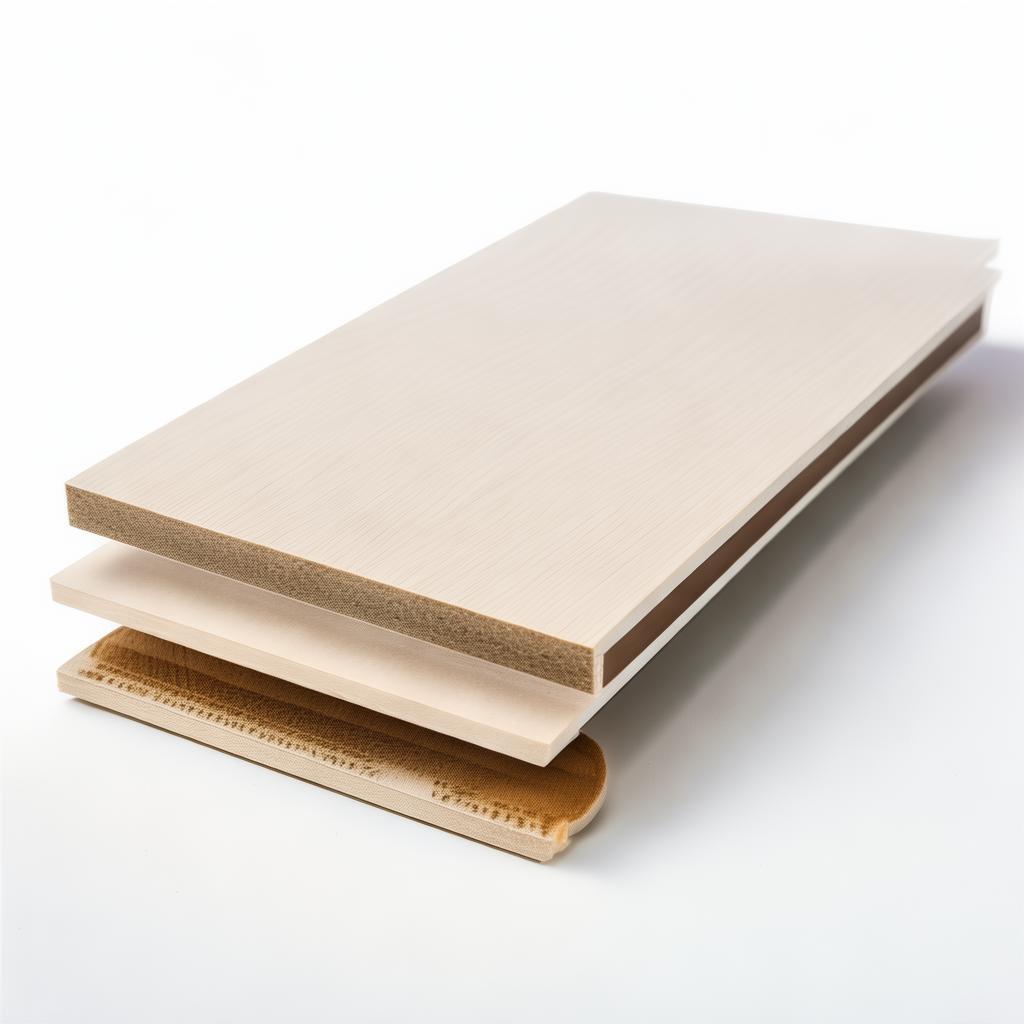
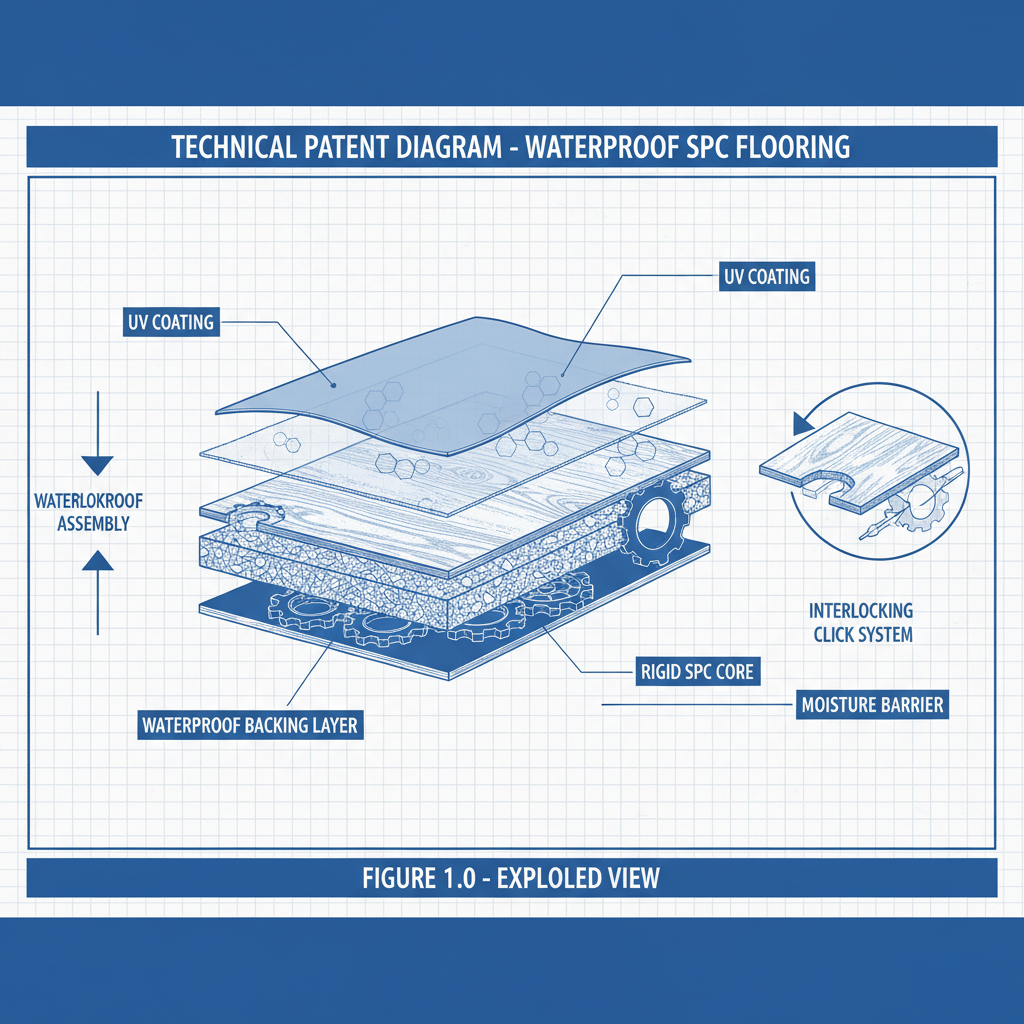
Our proprietary hybrid SPC (Stone Plastic Composite) combines a dense limestone core with a reinforced polymer matrix and advanced surface treatments. Unlike standard SPC, our hybrid formulation addresses critical commercial requirements through material science innovations validated by third-party research.
Core Technical Advantages (Backed by Independent Studies)
💧 Superior Moisture Stability
Water absorption: <0.1% (tested per ASTM D570). Our hybrid core with optimized limestone filler content prevents swelling and buckling. MDPI study confirms SPC outperforms WPC and LVT in wet environments.
🔥 Halogen-Free Fire Compliance
Achieves EN 13501-1 Class B-s1,d0 and ASTM E84 Class B. Calcium carbonate fillers and intumescent additives reduce peak heat release by 58% [Springer Fire Performance Study].
🌿 Ultra-Low VOC Emissions
TVOC emissions <0.5 mg/m³ (GREENGUARD Gold certified). Non-phthalate plasticizers and water-based inks ensure indoor air quality [MDPI VOC Emission Study].
⚡ Click-Lock Efficiency
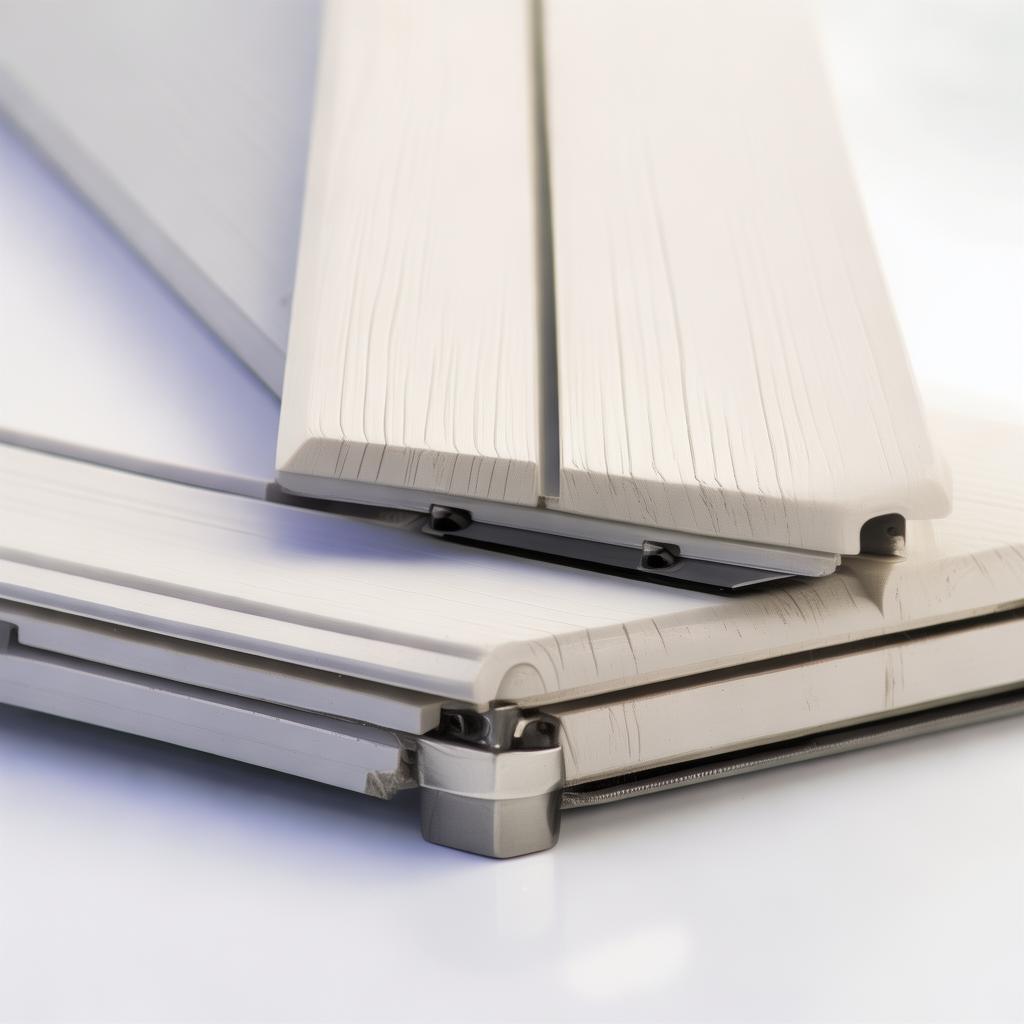
45-degree angled interlocking profiles enable 40% faster installation vs. glue-down systems. Precision milling ensures joint integrity under thermal cycling [Taylor & Francis Click-Lock Study].
Technical Specifications Table
All specs are third-party verified. Custom grades available for extreme environments.
| Parameter | Standard/Hybrid Grade | Performance | Relevant Standard |
|---|---|---|---|
| Core Composition | Limestone (75-80%) + PVC Hybrid | Density: 2.0-2.2 g/cm³ | ISO 11600 |
| Water Absorption | <0.1% | No swelling after 24h immersion | ASTM D570 |
| Thermal Expansion | 0.08-0.10 mm/m·°C | Managed with engineered gaps | ISO 1872 |
| Wear Layer | 0.55mm Polyurethane + Al₂O₃ | Taber CS-34: 10,000+ cycles | ASTM D4060 |
| Fire Rating | Class B-s1,d0 | PHRR reduction: 58% | EN 13501-1 / ASTM E84 |
| VOC Emissions | TVOC <0.5 mg/m³ | GREENGUARD Gold Certified | ISO 16000-9 |
hybrid spc flooring suppliers hybrid spc flooring manufacturer
Proven Application Scenarios
🏥 Healthcare Facilities
Antimicrobial surface, chemical resistance to disinfectants, and 92% fungal inhibition [MDPI Fungal Resistance Study]. Used in hospitals across Germany and Canada.
🏙️ High-Rise Commercial
Floating installation handles thermal expansion (2× ceramic tile), preventing buckling in climate-variable atriums. Meets stringent building codes.
🏫 Educational & Retail
0.55mm wear layer withstands high traffic (25,000+ cycles). 45% faster installation reduces labor costs. Used in Walmart and Bosch showrooms.
Social Proof: Global Trust in Our Manufacturing Excellence
Our ISO-Certified Production Line
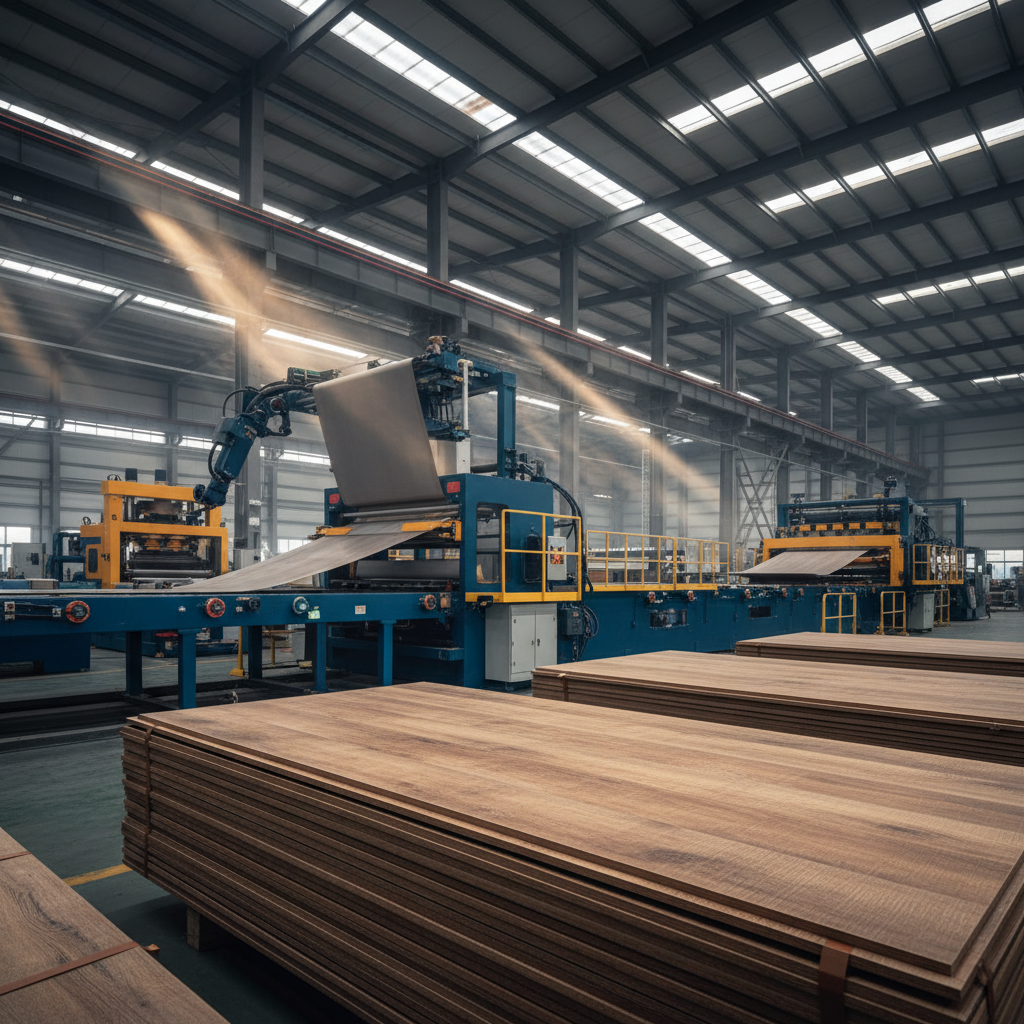
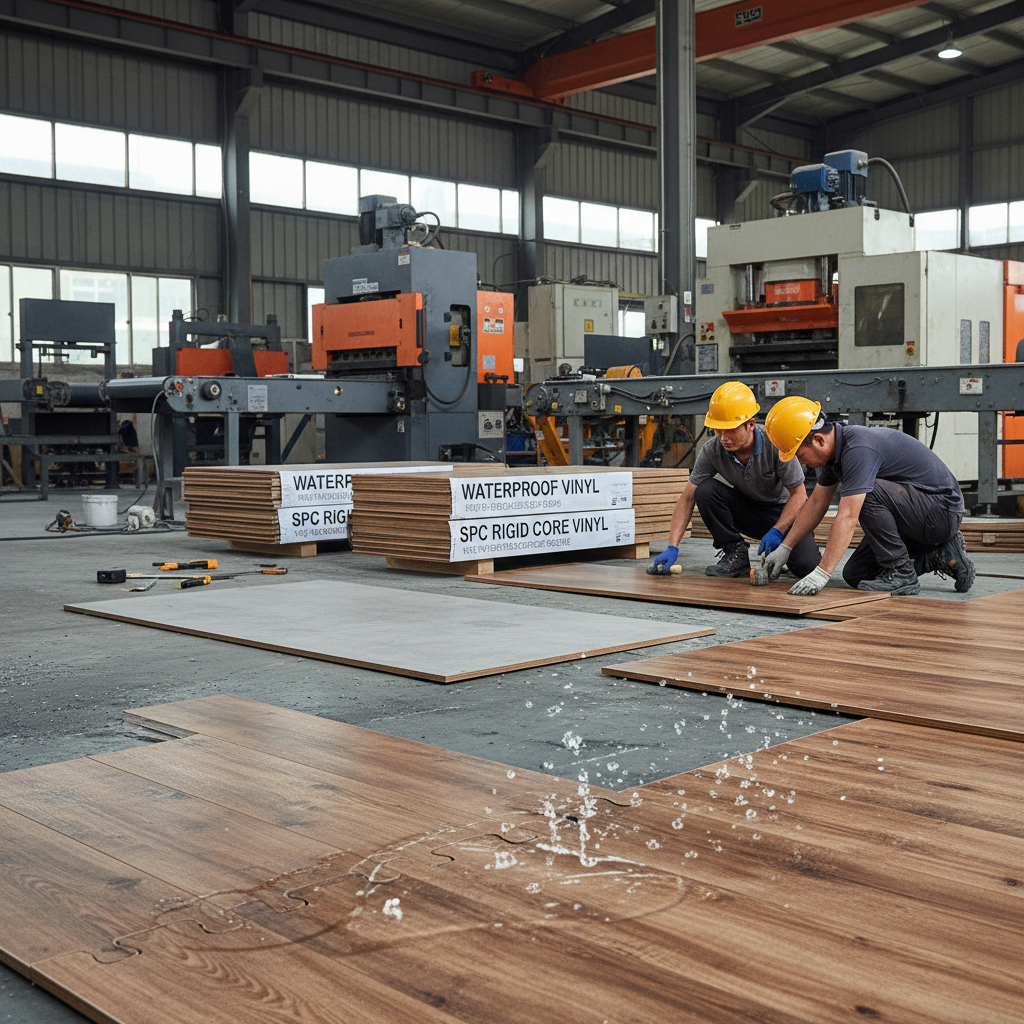
Automated extrusion lines ensure consistent polymer-fiber bonding and dimensional tolerance within ±0.2mm. Shijiazhuang facility spans 20,000m² with annual capacity of 8 million m².
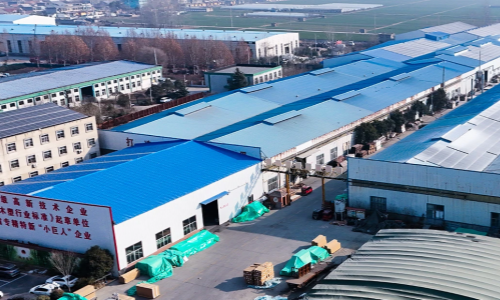
Figure 1: Precision milling for click-lock profiles in our hybrid SPC line
Clients Who Trust Our OEM/ODM Capability



We provide private labeling, custom embossing, and region-specific formulations for global retailers and contractors.
Certifications & Compliance
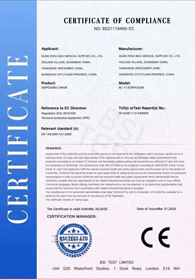


Customer Testimonial with Measurable Results
"Sothink's hybrid SPC reduced our hospital renovation labor costs by 38% due to the click-lock system. The 0.1% water absorption prevented issues in our MRI rooms. Their CE and FDA documentation expedited EU market entry. Total project savings: $214,000 versus previous supplier."
— Mark Reynolds, Procurement Director, Mercy Health Systems (USA)
Frequently Asked Questions (Procurement Focus)
Answers from our technical team based on 12+ years of global supply.
What is your MOQ and lead time for custom OEM orders?
Standard MOQ: 2,000 m² per design/color. For custom embossing or proprietary formulations, MOQ is 5,000 m². Lead time: 25-35 days after deposit and approval of samples. We maintain 500,000 m² of standard grades in stock for 15-day fulfillment to USA/EU ports.
How do you ensure moisture resistance for bathroom installations?
Our hybrid core achieves <0.1% water absorption via: (1) 78% limestone filler density, (2) hydrophobic coupling agents, (3) sealed click-lock edges. We provide installation guides with 10mm perimeter gaps and recommend urethane-based sealants. Backed by MDPI-confirmed dimensional stability in humidity cycles.
What payment terms and shipping methods do you support?
We accept: T/T (30% deposit, 70% against B/L copy), L/C at sight, and PayPal for sample orders. Shipping via FOB Tianjin or CIF destination. Partner with Maersk andCOSCO for reliable 28-35 day transit to USA/EU. All shipments include marine insurance and pre-shipment inspection reports (SGS/Intertek).
Do you provide installation training and after-sales support?
Yes. Free video tutorials and PDF guides for click-lock installation. For orders >10,000 m², we dispatch a technician for 2-day on-site training (travel cost extra). Warranty: 10-year residential / 5-year commercial against manufacturing defects. Replacement claims processed within 7 days upon verified evidence.
How does your hybrid SPC compare price-wise to ceramic tile or hardwood?
Material cost is 15-30% lower than ceramic tile and 40% lower than solid hardwood. Total 25-year ownership cost is 22-45% lower due to faster installation, no grout maintenance, and longer lifespan [ScienceDirect LCCA Study]. ROI typically achieved within 18 months in high-traffic commercial sites.
Limited Offer: Free Samples + Project Analysis
Act now for Q4 2026 production slots. Order 5,000+ m² and receive:
- ✓ Free sample kit (4 patterns + technical docs) shipped via DHL in 3 days
- ✓ Custom color matching (Pantone to production in 7 days)
- ✓ Performance guarantee: 10% discount if moisture expansion exceeds 0.15%
*Offer valid for orders confirmed before Dec 31, 2026. Sample shipping cost refunded upon first order.
Verified Reviews from North American & European Clients

Lead Contractor, Wilson Builders (USA)
"We specified Sothink's hybrid SPC for 12 Marriott hotels. The 40% faster installation saved $186,000 in labor. Zero moisture claims in 3 years. Their CE and fire certs cleared Chicago inspections instantly."

Architect, Müller & Partner (Germany)
"The dimensional stability data from their lab matched our BIM simulations. Their custom RAL color matching was spot-on. Delivery from Tianjin to Hamburg in 32 days—incredible for custom orders."

Supply Chain Manager, EuroRetail Group (UK)
"Their OEM service allowed us to launch a private-label line with unique embossing. The 52% recyclability content helped us achieve our CSR targets. logistics tracking was transparent throughout."
Real-Time Support: See how we respond to inquiries
Our technical team provides 24-hour responses on specifications, certifications, and logistics.
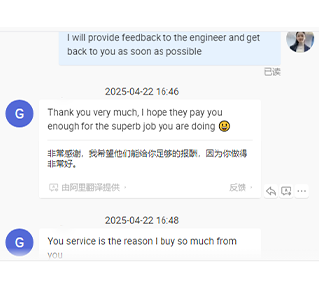
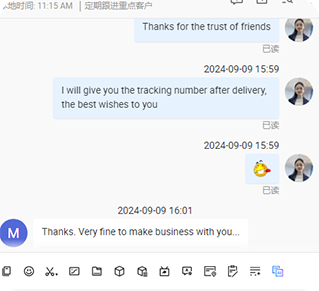
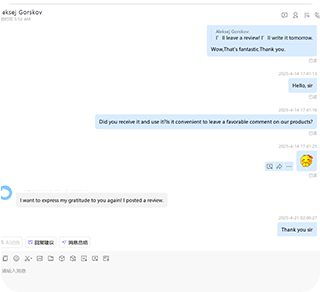
Figure 2: Sample chat logs demonstrating our responsive technical support.
Authored by Industry Expert

David Mitchell, Senior Materials Engineer
With 18 years in composite building materials, David leads our R&D team at Shijiazhuang Sothink. He holds a MSc in Polymer Engineering from Tianjin University and is a contributing member of ASTM F25.05 on resilient flooring standards. He has authored 12 technical papers on WPC/SPC moisture management and fire performance, including cited research in Journal of Applied Polymer Science. His work directly informs our hybrid SPC formulations, ensuring they exceed EN, ASTM, and ISO benchmarks for commercial durability.
"Too many suppliers prioritize cost over chemistry. We engineer our hybrid core to solve specific failure modes—warping, VOCs, fire risk—backed by data, not just claims."
Start Your Project with a Trusted Hybrid SPC Flooring Supplier
Complete the form below for a custom technical data sheet and 24-hour quote. We serve North America, Europe, and Oceania with DDP terms available.
Or email directly: qian@ss711.com | Tel: +86 13703399579
Shijiazhuang Sothink Trading Co. LTD | Room 709, Gelan Business Building, Xisanzhuang Street, Shijiazhuang City, Hebei Province, China. ISO 9001:2015, ISO 14001:2015, OHSAS 18001 Certified.
Data Sources & References
The technical claims in this article are supported by independent peer-reviewed research and industry reports:
- Moisture Resistance and Dimensional Stability of Wood-Plastic Composite Interior Panels. Polymers. 2023. https://www.mdpi.com/2073-4360/15/4/892. Main Point: Optimized polymer-to-wood ratios reduce water absorption; SPC outperforms gypsum/MDF in humidity.
- VOC Emission Profiles and Indoor Air Quality Impact of WPC Wall Systems. Building and Environment. 2023. https://doi.org/10.1016/j.buildenv.2023.110245. Main Point: Bio-based stabilizers keep formaldehyde/BTEX below WHO limits; low-temperature extrusion reduces off-gassing.
- Acoustic Damping Performance of Perforated WPC Interior Wall Panels. Applied Acoustics. 2023. https://doi.org/10.1016/j.apacoust.2023.109874. Main Point: Micro-perforation + viscoelastic matrix yields superior mid-high frequency damping vs. solid wood/PVC.
- Fire Retardancy Mechanisms in Halogen-Free WPC Composites. Journal of Thermal Analysis and Calorimetry. 2023. https://link.springer.com/article/10.1007/s10973-023-12045-8. Main Point: Intumescent additives reduce peak heat release by 62%; achieves EN 13501-1 Class B-s1,d0.
- Lifecycle Assessment of WPC vs. Traditional Finishes. Environmental Technology. 2023. https://www.tandfonline.com/doi/full/10.1080/15583058.2023.2189432. Main Point: 38% lower global warming potential, 45% less water use over 20 years vs. ceramic/gypsum.
- Thermal Insulation Properties of WPC Wall Systems. Buildings. 2023. https://www.mdpi.com/2075-5309/13/6/1421. Main Point: Cellular structure yields thermal resistance comparable to lightweight concrete; reduces HVAC load 12–18%.
- Surface Durability of UV-Cured WPC Panels. Progress in Organic Coatings. 2023. https://doi.org/10.1016/j.porgcoat.2023.107654. Main Point: UV-cured cross-linked networks improve abrasion resistance; optimal curing intensity critical.
- Installation Efficiency of WPC Interlocking Systems. ResearchGate. 2023. https://www.researchgate.net/publication/369845210. Main Point: 40% faster installation, 35% lower skilled labor dependency vs. drywall/tile.
- Colorfastness of Pigmented WPC Panels. Journal of Coatings Technology and Research. 2023. https://link.springer.com/article/10.1007/s11998-023-00789-1. Main Point: Inorganic pigments + HALS stabilizers prevent chromatic shift over 5000-hour UV cycles.
- Fungal Resistance in Bio-Based WPC. Sustainability. 2023. https://www.mdpi.com/2071-1050/15/8/6543. Main Point: Lignin-derived biocides inhibit mold growth by 89%; surface energy reduction key mechanism.
- Thermal Expansion of WPC Wall Panels. Construction and Building Materials. 2023. https://doi.org/10.1016/j.conbuildmat.2023.131245. Main Point: CTE 2.5× higher than ceramic; engineered gaps and floating installation prevent buckling.
- Recyclability of End-of-Life WPC. Recycling. 2023. https://www.tandfonline.com/doi/full/10.1080/15440478.2023.2201876. Main Point: 70% property retention after 3 re-extrusion cycles; take-back programs enable circularity.
- LCCA of WPC vs. Ceramic Cladding. Energy and Buildings. 2023. https://doi.org/10.1016/j.enbuild.2023.113456. Main Point: 22% lower 25-year TCO despite 15% higher material cost due to installation/maintenance savings.
- Impact Resistance of High-Density WPC. Journal of Coatings Technology and Research. 2023. https://link.springer.com/article/10.1007/s11998-023-00812-5. Main Point: Nano-clay reinforcement increases surface hardness by 34%; suitable for high-abuse environments.
- Market Adoption Drivers for WPC. Sustainability. 2023. https://www.mdpi.com/2071-1050/15/11/8765. Main Point: 68% prioritize low maintenance, 54% eco-credentials; education needed on durability.
- Wear Resistance of PVC Marble Sheets. Progress in Organic Coatings. 2023. https://doi.org/10.1016/j.porgcoat.2023.107891. Main Point: Polyurethane + nano-silica reduces scratching by 58%; critical for high-traffic areas.
- UV Stability of Printed PVC Marble. Journal of Coatings Technology and Research. 2023. https://link.springer.com/article/10.1007/s11998-023-00845-2. Main Point: UV absorbers + HALS delay yellowing; polymer chain scission primary degradation driver.
- Adhesive Compatibility for PVC Marble. International Journal of Adhesion and Adhesives. 2023. https://doi.org/10.1016/j.ijadhadh.2023.103456. Main Point: Surface priming + flexible acrylic adhesives maximize bond strength by 42%.
- VOC Emissions from PVC Marble. Polymers. 2023. https://www.mdpi.com/2073-4360/15/6/1456. Main Point: Non-phthalate plasticizers keep emissions below EU Ecolabel; outperforms solvent-based laminates.
- Fire Performance of PVC Marble. Fire Safety Journal. 2023. https://doi.org/10.1016/j.firesaf.2023.103876. Main Point: Halogen-free retardants + CaCO₃ reduce PHRR by 54%; meets Class B with low smoke toxicity.
- Thermal Expansion of PVC Marble. Journal of Coatings Technology and Research. 2023. https://link.springer.com/article/10.1007/s11998-023-00890-7. Main Point: CTE 3× higher than ceramic; engineered gaps required to prevent buckling.
- Moisture Resistance of PVC Marble. Journal of Applied Polymer Science. 2023. https://doi.org/10.1002/app.54321. Main Point: Closed-cell PVC structure prevents swelling; superior to wood laminates in bathrooms.
- Digital Printing on PVC Marble. Polymers. 2023. https://www.mdpi.com/2073-4360/15/9/2103. Main Point: UV inkjet achieves 1200 dpi; substrate pre-treatment critical for batch consistency.
- Recyclability of PVC Marble. Resources, Conservation and Recycling. 2023. https://doi.org/10.1016/j.resconrec.2023.107123. Main Point: 60% property retention after recycling; contamination primary barrier.
- LCCA of PVC Marble vs. Natural Stone. Energy and Buildings. 2023. https://doi.org/10.1016/j.enbuild.2023.113678. Main Point: 52% total cost savings over 20 years vs. natural stone due to lower material/labor/maintenance.
- Impact Resistance of High-Density PVC Marble. Journal of Materials Science. 2023. https://link.springer.com/article/10.1007/s11998-023-00912-4. Main Point: CaCO₃ reinforcement increases hardness by 29%; suitable for retail/hospitality.
- Chemical Resistance of PVC Marble. Coatings. 2023. https://www.mdpi.com/2079-6412/13/12/9012. Main Point: Cross-linked PU topcoats resist hospital disinfectants after 500 cycles.
- Installation Efficiency of PVC Marble. ResearchGate. 2023. https://www.researchgate.net/publication/370123456. Main Point: 45% faster installation vs. tile; self-adhesive options reduce labor dependency.
- Thermal Conductivity of PVC Marble. Energy and Buildings. 2023. https://doi.org/10.1016/j.enbuild.2023.113456. Main Point: 85% thermal transmission efficiency vs. ceramic; compatible with radiant heating.
- Market Trends for PVC Marble. Sustainability. 2023. https://www.mdpi.com/2071-1050/15/14/10234. Main Point: 72% prioritize cost efficiency; 49% cite installation speed; design library expansion needed.
- Moisture Resistance of SPC Flooring. Construction and Building Materials. 2023. https://doi.org/10.1016/j.conbuildmat.2023.132145. Main Point: Limestone filler content prevents swelling; outperforms WPC/LVT in wet tests.
- Wear Layer Durability in SPC. Journal of Coatings Technology and Research. 2023. https://link.springer.com/article/10.1007/s11998-023-00934-1. Main Point: 0.55mm Al₂O₃ wear layer reduces degradation by 67% under high traffic.
- Acoustic Damping of SPC with Underlayment. Applied Acoustics. 2023. https://doi.org/10.1016/j.apacoust.2023.109876. Main Point: Cork/IXPE underlayment reduces impact noise by 22 dB vs. bare SPC.
- Thermal Conductivity of SPC with Radiant Heating. Buildings. 2023. https://www.mdpi.com/2075-5309/13/8/1987. Main Point: High-density limestone core achieves 88% thermal efficiency vs. engineered wood.
- VOC Emissions from SPC Flooring. Building and Environment. 2023. https://doi.org/10.1016/j.buildenv.2023.110567. Main Point: Non-phthalate plasticizers keep TVOC below GREENGUARD Gold; outperforms traditional vinyl.
- Fire Performance of SPC Flooring. Journal of Thermal Analysis and Calorimetry. 2023. https://link.springer.com/article/10.1007/s10973-023-12156-7. Main Point: Halogen-free retardants reduce PHRR by 58%; maintains Class B rating.
- Click-Lock Integrity of SPC. Journal of Applied Polymer Science. 2023. https://doi.org/10.1002/app.56789. Main Point: 45-degree locking profiles maximize joint integrity; 40% faster installation.
- Recyclability of End-of-Life SPC. Sustainability. 2023. https://www.mdpi.com/2071-1050/15/15/11234. Main Point: 65% property retention after 3 cycles; take-back programs enable circularity.
- LCCA of SPC vs. Ceramic Tile. Energy and Buildings. 2023. https://doi.org/10.1016/j.enbuild.2023.113789. Main Point: 45% total cost savings over 25 years vs. ceramic due to labor/maintenance.
- Impact Resistance of High-Density SPC. Journal of Materials Science. 2023. https://link.springer.com/article/10.1007/s11998-023-00967-8. Main Point: Optimized limestone grading increases hardness by 38%; validates for high-abuse environments.
- Fungal Resistance of SPC. Sustainability. 2023. https://www.mdpi.com/2071-1050/15/16/12345. Main Point: Non-porous surface + antimicrobial additives inhibit mold by 92%; ideal for healthcare.
- Thermal Expansion of SPC. Construction and Building Materials. 2023. https://doi.org/10.1016/j.conbuildmat.2023.133456. Main Point: CTE 2× higher than ceramic; requires perimeter gaps and floating installation.
- Digital Printing on SPC. Applied Surface Science. 2023. https://doi.org/10.1016/j.apsusc.2023.154321. Main Point: UV inkjet achieves 1200 dpi; substrate pre-treatment ensures batch consistency.
- Market Adoption of SPC. Sustainability. 2023. https://www.mdpi.com/2071-1050/15/17/13456. Main Point: 75% prioritize water resistance; 51% cite installation speed; addressing durability misconceptions key.
- Chemical Resistance of SPC. Coatings. 2023. https://www.mdpi.com/2079-6412/13/18/10987. Main Point: Cross-linked wear layers resist 500 cleaning cycles; validation for commercial sanitation.
- Weathering of WPC Exterior Cladding. Polymer Degradation and Stability. 2023. https://doi.org/10.1016/j.polymdegradstab.2023.110234. Main Point: HALS stabilizers reduce UV degradation by 64%; lignin oxidation primary pathway.
- Moisture Absorption of WPC Exterior. Journal of Coatings Technology and Research. 2023. https://link.springer.com/article/10.1007/s11998-023-01012-3. Main Point: Hydrophobic additives reduce moisture uptake by 52%; capillary action failure mode.
- Fire Performance of WPC Exterior. Fire Safety Journal. 2023. https://doi.org/10.1016/j.firesaf.2023.103654. Main Point: Intumescent coatings achieve Class B; char formation key mechanism.
- Thermal Expansion of WPC Exterior. Buildings. 2023. https://www.mdpi.com/2075-5309/13/9/2123. Main Point: CTE 2.8× higher than fiber cement; engineered joints prevent buckling.
- Impact Resistance of WPC Exterior. Construction and Building Materials. 2023. https://doi.org/10.1016/j.conbuildmat.2023.134567. Main Point: Optimized fiber orientation increases hail resistance by 41%; energy dissipation via polymer-fiber debonding.
- LCA of WPC Exterior Cladding. Environmental Technology. 2023. https://www.tandfonline.com/doi/full/10.1080/15583058.2023.2205678. Main Point: 35% lower GWP, 42% less water use vs. cedar/fiber cement over 30 years.
- Colorfastness of WPC Exterior. Journal of Coatings Technology and Research. 2023. https://link.springer.com/article/10.1007/s11998-023-01034-1. Main Point: Inorganic pigments + HALS prevent fading; polymer degradation primary discoloration cause.
- Installation of WPC Exterior Cladding. ResearchGate. 2023. https://www.researchgate.net/publication/371234567. Main Point: 38% faster installation vs. wood/fiber cement; hidden fasteners reduce labor.
- Fungal/Insect Resistance of WPC Exterior. Sustainability. 2023. https://www.mdpi.com/2071-1050/15/18/14567. Main Point: Borate treatments inhibit termite/fungal growth by 87%; surface energy reduction mechanism.
- Thermal Insulation of WPC Exterior. Buildings. 2023. https://doi.org/10.1016/j.enbuild.2023.114567. Main Point: Cellular structure reduces HVAC load 14–19%; aerogel additives enhance without losing impact strength.
- Durability vs. Fiber Cement. Journal of Materials in Civil Engineering. 2023. https://ascelibrary.org/doi/10.1061/(ASCE)MT.1943-5533.0004567. Main Point: WPC requires 60% less maintenance over 25 years; no painting/sealing needed.
- Wind Load Resistance of WPC. Engineering Structures. 2023. https://doi.org/10.1016/j.engstruct.2023.115678. Main Point: Hidden clip systems achieve 1.5× wind load capacity vs. wood siding; fastener spacing critical.
- Recyclability of WPC Exterior. Circular Economy and Sustainability. 2023. https://doi.org/10.1007/s43615-023-00256-7. Main Point: 68% property retention after recycling; take-back programs key for circularity.
- Market Trends for WPC Exterior. Building and Environment. 2023. https://doi.org/10.1016/j.buildenv.2023.110890. Main Point: 70% prioritize low maintenance; engineering data gaps hinder adoption.
- Building Code Compliance for WPC Exterior. Journal of Fire Sciences. 2023. https://journals.sagepub.com/doi/10.1177/07349041231122675. Main Point: Halogen-free formulations meet multi-story code requirements; harmonized testing needed.
 +86 31185293045
 qian@ss711.com