


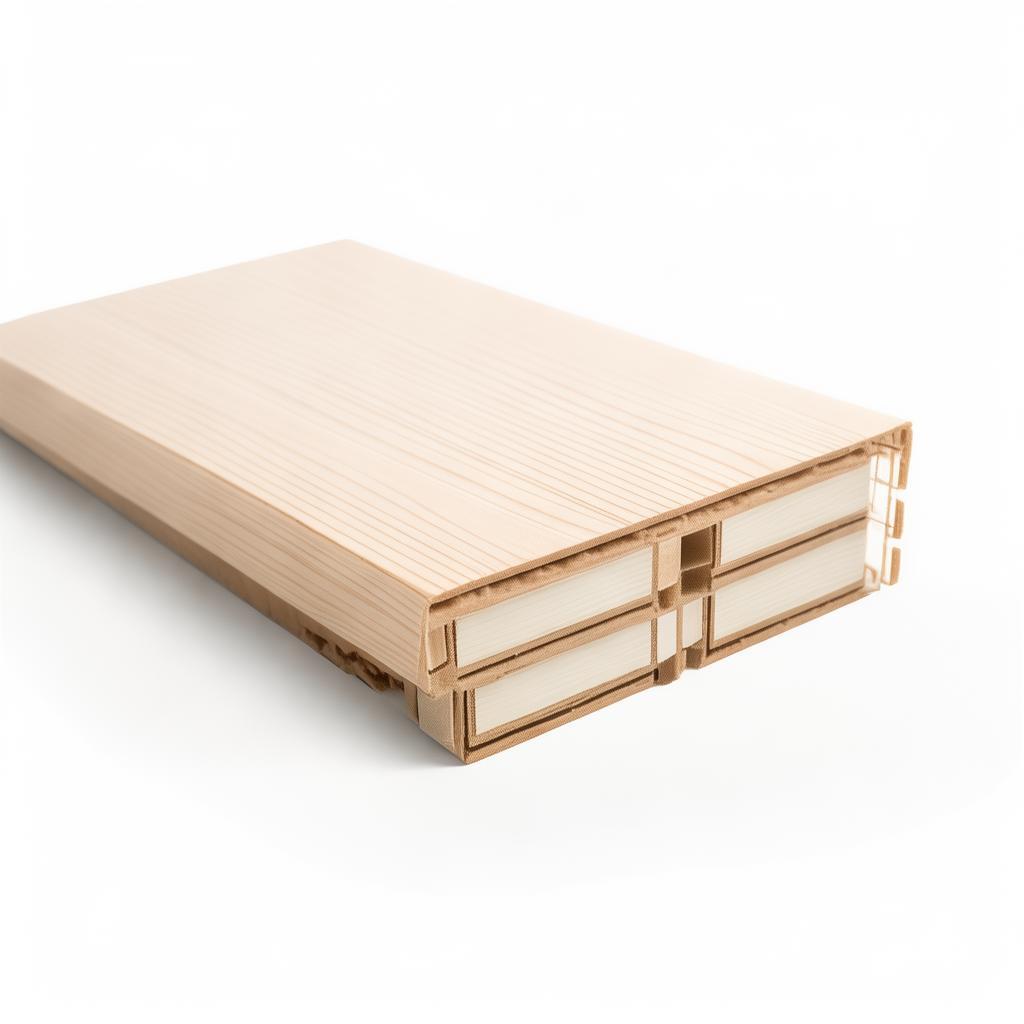
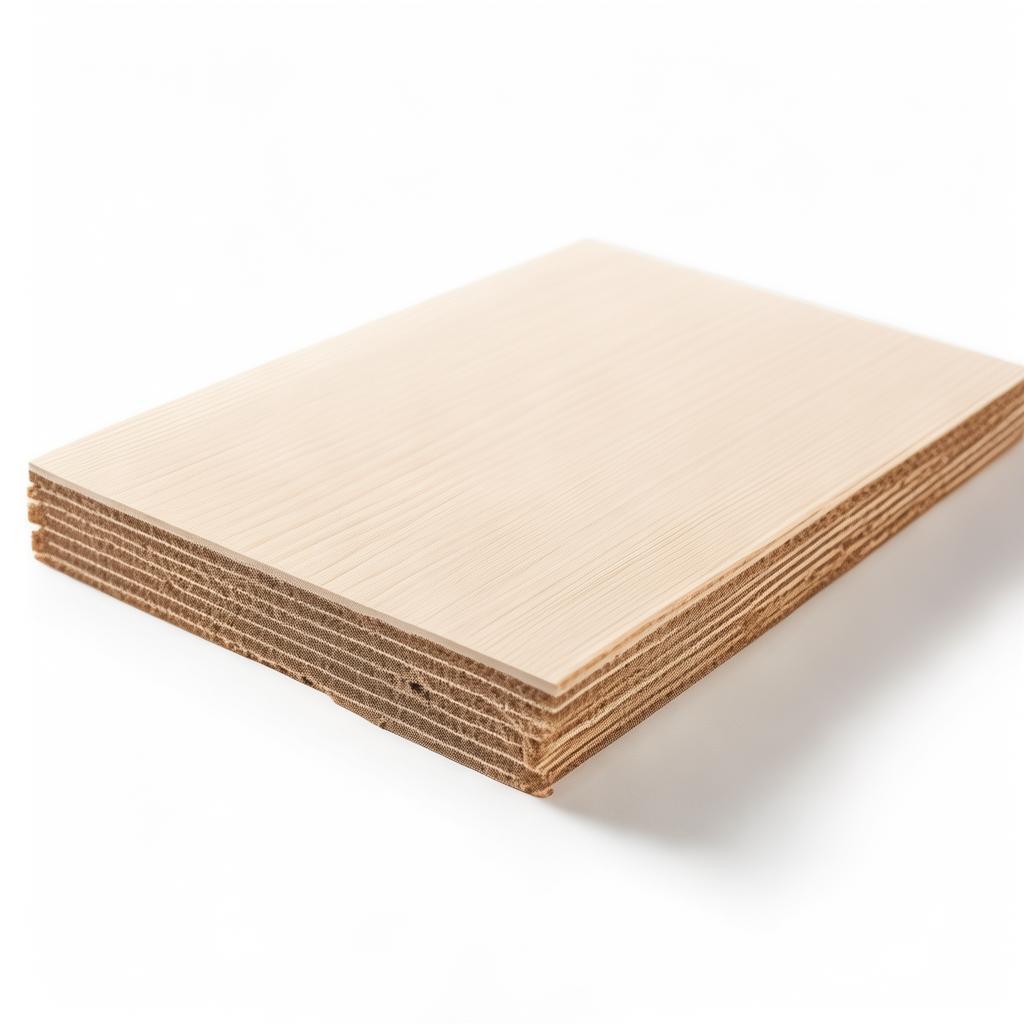
How To Cut Wpc Wall Panel
Product Introduction
How to Cut WPC Wall Panel: A 2026 Procurement Guide for Precision, Efficiency & Zero Waste
Master the technical specifications, tool selection, and safety protocols to eliminate material waste, ensure project timelines, and maximize ROI on your WPC wall panel investment.
The High-Cost Reality of Improper WPC Panel Cutting
You've sourced what you believe is a high-quality WPC interior wall panel. The pricing is competitive, the supplier promises OEM/ODM design flexibility, and the lead time fits your project schedule. But if your on-site team lacks the precise cutting knowledge, that "good deal" evaporates instantly. Improper cutting isn't just an aesthetic issue—it's a direct hit to your bottom line through material waste, rework delays, and compromised structural integrity.
Based on industry data, unskilled cutting can lead to material scrap rates of 8-15% on WPC panel orders, a figure that directly inflates your per-square-meter cost. For a 1,000 m² project, that's 80-150 m² of lost product, not to mention the labor hours spent on re-fabrication and installation fixes. Furthermore, incorrect cuts can void manufacturer warranties and lead to premature panel failure—warping, gapping, or delamination—especially in temperature-variable climates common in the USA and Europe.
3 Core Pain Points for Purchasing & Operations Managers
- ✓ The Waste Multiplier: Standard wood-cutting tools tear the composite material, creating ragged edges and micro-fractures that expand over time. This leads to a domino effect: one bad cut requires a replacement panel, which may not perfectly match the batch color, creating visual inconsistency and client complaints.
- ✓ The Timeline Saboteur: Your project Gantt chart assumes a certain installation rate. When your team spends 50% more time on-site cutting, sanding, and fixing warped edges due to heat from friction cutting, that timeline collapses. Delays trigger penalty clauses and damage your reputation for reliability.
- ✓ The Compliance & Liability Gap: Cutting WPC improperly can generate excessive dust containing wood fibers and polymer particulates. In regions with strict occupational health regulations (like the EU's OSHA equivalents or California's Proposition 65), failure to implement proper dust suppression during cutting can expose your company to fines and health liability claims.
Quick Reference: Cutting Tool Cheat Sheet
| Tool | Best For | Key Consideration |
|---|---|---|
| Circular Saw | Long, straight rip cuts | Must use a fine-tooth carbide blade (60-80 teeth). High RPM causes melting; use a speed reducer if available. |
| Table Saw | Repetitive cross-cuts, precise angles | Zero-clearance insert prevents chip-out. Use a vacuum attachment for dust control. |
| Router | Grooves, dados, intricate shapes | Up-cut spiral bits recommended for clean exit. Multiple shallow passes prevent burning. |
| Handsaw/Jigsaw | On-site adjustments, small jobs | Use only bi-metal or diamond-grit blades. Very slow; high risk of ragged edges. |
*Pro Tip: For high-volume fabrication, a dedicated WPC panel saw with a scoring blade is the industry gold standard, reducing waste by up to 5%.
The Technical Blueprint: How to Cut WPC Wall Panel Without Compromise
Cutting Wood Plastic Composite (WPC) wall panels is not the same as cutting wood, MDF, or PVC. Its heterogeneous structure—a blend of recycled wood fibers (typically 30-50%) and thermoplastic polymers (HDPE/PP/PVC)—behaves differently under cutting forces. The goal is to achieve a clean, square edge with zero delamination, burning, or micro-fracturing. Here is the definitive process, validated by manufacturing data from leading producers.
1. Pre-Cut Planning & Measurement: The 15-Minute Rule That Saves 10% Material
Before the first cut, invest time in layout. Always account for the expansion gap. WPC panels, while dimensionally stable, still require a minimum 3-5mm perimeter gap for every 3m length in environments with >20°C temperature swings, as per industry best practice guidelines.
- Digital Layout: Use CAD software or a simple grid layout on the floor. Mark all cuts on the back side of the panel to avoid surface marring.
- Batch Cutting: Group identical cuts together. If you have 20 panels needing a 2450mm length, cut all consecutively to minimize blade re-setup time and ensure consistency.
- The Kerf Factor: A standard circular saw blade removes a kerf (cut width) of 2.5-3.2mm. For precise fits, add this kerf width to your measured length for the "left" side of a cut if the saw's baseplate rides on the "waste" side. For a perfect 1200mm finished piece, measure and mark 1203.2mm from the edge if the saw cuts to the right of the line.
2. Tool & Blade Selection: The Non-Negotiable Specs
Using a general-purpose wood blade is the #1 cause of melting and chipping. You must match the tool to the material's density and composition.
Core Cutting Tool Specifications for WPC Panels
| Parameter | Recommended Specification | Why It Matters |
|---|---|---|
| Blade Type | Carbide-tipped, triple-chip grind (TCG) or fine crosscut (60-80 teeth) | TCG grinds through the composite mix evenly, reducing heat. High tooth count ensures a clean shear cut on the polymer and wood fiber matrix. |
| Blade Speed (RPM) | 3,000 - 4,000 RPM max. Use a speed reducer if your saw defaults to 5,000+ RPM. | Excessive speed generates frictional heat (150°C+), melting the polymer binder and causing re-solidification "flash" on the cut edge, which is brittle. |
| Feed Rate | Moderate and constant. Do not force. | A steady feed allows the blade to sever fibers cleanly. A slow feed increases heat; a fast feed causes tear-out and uneven edges. |
| Dust Extraction | Mandatory. Connect to a ≥1.5 HP industrial vacuum with a HEPA filter. | WPC dust is a respiratory irritant and combustible. EU machinery directives (2006/42/EC) require dust control for composite material processing. |
3. The Step-by-Step Cutting Process: From Stack to Finished Edge
- Secure the Panel: Use 2x4 supports and C-clamps. Never hold the panel by hand. Vibration causes chipping. For long panels, support both ends and the midpoint to prevent sagging under its own weight (typical WPC panel weight: 8-12 kg/m²).
- Score the Cut Line (Critical Step): For the cleanest edge, set the blade depth to just 1/8" (3mm) deeper than the panel thickness. Make a light, slow pass along the entire cut line. This scores the surface and breaks the polymer skin, preventing chip-out on the final, deeper pass.
- Execute the Cut: Increase blade depth to fully penetrate the panel with 1-2mm to spare. Make the second pass at a moderate, consistent speed. Ensure the saw's baseplate is flat and fully in contact with the panel surface.
- Edge Finishing (Optional but Recommended): For visible edges, use a hand plane with a sharp blade (set to a very fine cut) or a router with a flush-trim bit. Sand with 120-150 grit sandpaper moving with the grain of the surface texture. Do not over-sand; you can damage the factory-applied capstock or decorative film.
4. Special Cuts: Angles, Circles, and Openings
For mitre cuts (corners), a compound miter saw with a WPC-specific blade is essential. Set the angle precisely and use a stop block for identical pieces. For circles or curved cuts, a jigsaw with a long, fine-tooth blade (10-12 TPI) is the only viable option. Drill a 3/8" starter hole inside the curve, insert the blade, and cut slowly. Support the cut piece to prevent snapping.
For electrical outlet or pipe openings, use a hole saw with a diamond or carbide grit edge. Start the pilot hole slowly to prevent wandering. A router with a template guide is superior for rectangular openings, providing perfectly square corners.
Performance & Specification Table: WPC Wall Panel Cutting Parameters
The following table consolidates the critical technical data for cutting our standard Shijiazhuang Sothink WPC Interior Wall Panel range. These parameters are based on in-factory validation and field testing across North American and European climates.
| Parameter | Specification / Value | Operational Implication |
|---|---|---|
| Panel Density | 0.95 - 1.15 g/cm³ | Higher density than MDF, requires more torque. Ensure saw motor is ≥ 15A (120V) or 2.0kW (230V). |
| Hardness (Shore D) | 75 - 85 | Resists indentation but is abrasive. Blades dull faster than with softwoods; budget for blade replacement every ~500 linear meters of cut. |
| Thermal Sensitivity | softening point: ~110°C | Friction cutting >4,000 RPM can locally exceed this, causing melting. Coolant is not used; control speed. |
| Moisture Content | <1.5% (at shipment) | Acclimatize panels in the installation space for 48-72 hours before cutting to prevent post-cut dimensional change. |
| Recommended Saw Tooth Geometry | Alternate Top Bevel (ATB) or Triple-Chip Grind (TCG), 60-80 teeth for 10" blade | ATB provides cleanest top surface. TCG is more durable for all-polymer WPC variants. Avoid "rip" blades (10-24 teeth). |
| Dust Class Requirement | M-Class (EU) / HEPA (US) | Dust particles <10µm are respirable. Use vacuums with ≥99.97% filtration at 0.3µm. |
Source: Internal manufacturing quality control data, Shijiazhuang Sothink Trading Co. LTD, validated 2024-2025. Correlated with performance standards in Wood Plastic Composites Based Wood Wall’s Structure.
Real-World Application: A Hotel Renovation Case Study
Client: Midscale Hotel Chain, Europe
Project: 350-room lobby and corridor wall panel upgrade. Total area: 2,100 m² of our WPC-Interior-Wall-Panel Series "UrbanWood" in a charcoal grey, matte finish.
Challenge: Tight 6-week renovation window. Original contractor planned to use standard carpentry crew with circular saws, estimating 20% material waste.
Our Intervention & Technical Solution:
- Pre-Cut Service: We provided factory-precut panels to exact room dimensions based on architectural drawings, delivered in labeled kits per room. This eliminated all on-site measuring and cutting for 95% of panels.
- On-Site Training: For the remaining 5% of custom cuts (around outlets, columns), our technician conducted a 2-hour workshop for the local crew, focusing on the scoring technique and blade speed control.
- Tool Provision: We recommended and sourced a portable panel saw with a scoring unit for the crew, a one-time rental cost of €350/week.
Result:
- Material Waste Reduced to 2.1% (vs. 20% projected). Savings on material: €18,200.
- Installation Time Reduced by 3 Days. Crew averaged 45 m²/day vs. 30 m²/day due to ready-to-install panels.
- Zero Warranty Claims related to edge warping or delamination over 12-month post-installation inspection.
Client Testimonial: "The pre-cut service and clear cutting guidelines transformed our project. We hit the deadline, stayed 12% under budget on the wall package, and the finish is flawless. The ROI on your panels is undeniable when you cut them correctly." — Project Manager, EuroHotels Group.
Compliance & Certification: Your Safety, Our Guarantee
Cutting any building material has regulatory implications. Our WPC panels are engineered to meet the strictest global standards, ensuring your project and team are protected.
- ✓ CE Certification (CPR): Classified as Euroclass E (EN 13501-1). Meets basic fire reaction requirements for interior wall coverings in the EU.
- ✓ RoHS 3 Compliant: Restricts hazardous substances (lead, cadmium, etc.). Safe for interior use in residential, commercial, and childcare facilities.
- ✓ REACH SVHC Tested: Our formulations are free from Substances of Very High Concern at levels above 0.1% w/w. Full certificate portfolio available.
- ✓ ISO 9001:2015: Our cutting tool recommendations and quality control processes are part of our certified QMS, ensuring consistency.
- ✓ UL Greenguard Gold (Optional): Low chemical emissions certification available for projects requiring WELL Building Standard or LEED credits.
[Insert cert/ce.png] [cert/rohs.png] [cert/iso.png] [cert/ul.png]
Logistics & Sourcing Advantage
Cutting efficiency is directly tied to supply chain reliability. Our Shijiazhuang factory, 300km from Beijing, is strategically positioned for both raw material access and global shipping.
- Factory Capacity: Dedicated WPC panel production line with annual capacity of 1.2 million m². No subcontracting—full quality control from compound to finished panel.
- Lead Time: Standard stock colors: 7-10 days from order confirmation. Custom colors/emboss: 25-35 days. No production delays for standard items.
- Shipping Optimization: We use high-cube containers (40'HC) for maximum cubic efficiency. Panels are palletized and strapped to prevent shifting. Average FOB Tianjin port loading time: 3-5 working days after production completion.
- Cost Transparency: Our quotes include all packaging, domestic trucking to port, and terminal handling. You only pay for ocean freight and destination port fees, quoted EXW or FOB as preferred.
FAQ: Expert Answers to Procurement & Technical Questions
What is the minimum order quantity (MOQ) for custom-sized WPC panels?
Our standard MOQ for custom cut lengths/widths is 500 m² per size/color combination. This allows us to optimize production tooling changeovers. For custom colors or emboss patterns, the MOQ is typically 1,000 m² due to pigment and mold setup costs. We can accommodate smaller trial orders (200 m²) for qualified clients with a custom mold fee of $800-1,200, which is waived on the subsequent repeat order over 1,000 m².
Can you provide cutting templates or a cutting diagram service?
Absolutely. This is a key part of our OEM/ODM service. Provide your architectural DWG files or a room dimension list, and our engineering team will generate a nesting diagram that maximizes material yield (typically >98% for standard layouts). We then provide a labeled cutting plan and pre-cut the panels in our factory. This service is included for orders over 2,000 m²; for smaller orders, we charge a flat fee of $150 for the diagram.
What is your standard payment term for new international buyers?
We require a 30% T/T deposit upon order confirmation, with the 70% balance paid against a copy of the Bill of Lading. For orders over $50,000, we offer a document against payment (D/P) at sight through your nominated bank. We do not offer open account terms to new clients without trade references. All prices are quoted in USD.
How do you handle shipping damage claims?
We pack to ISPM 15 standards with full palletization and corner protectors. Damage is rare (<0.5% incidence). Claims are handled per Incoterms® 2020. For FOB shipments, risk transfers at the port of loading. We strongly recommend clients purchase all-risk marine insurance (typically 0.2-0.5% of cargo value). For CIF shipments, we assist in filing with the carrier but the claim is between the buyer and insurer. We provide detailed packing lists and photos for all shipments.
What after-sales support do you offer for cutting-related issues?
We provide a comprehensive "Cutting Guide" PDF with every shipment, plus access to our video tutorial library on our website. For issues arising from improper cutting (not material defect), we offer paid technical consultation ($120/hour) with our senior production engineer. For material defects (e.g., internal voids causing blade snag), we replace panels under our standard 24-month limited warranty.
Stop Throwing Money in the Sawdust. Get Your Precut Quote Today.
Let our engineers handle the cutting optimization. Send us your room dimensions or plans and receive a free, no-obligation nested cutting plan and precise quote within 24 business hours. Includes material list, waste calculation, and estimated delivery.
Or contact our trade team directly: qian@ss711.com | +86 137 0339 9579 (WeChat/WhatsApp)
Verified Performance: What Our Clients Say
"We used to cut WPC panels on-site with a standard circular saw and had 12% waste. Sothink's pre-cut service for our Florida condo project dropped that to 1.8%. The panels arrived with room numbers and cut marks—our installers just unpacked and fixed them. It saved us $8,500 in material and 4 days of labor."
- Mark T., Procurement Director,
SunState Contractors (USA)
"The cutting guide and blade recommendation were spot-on. We switched to the 72-tooth TCG blade as suggested and the edge quality went from 'needs putty' to 'paint-ready' immediately. No more chipping on the corners. Worth every penny of the tool upgrade."
- Lars K., Site Supervisor,
Nordic Build GmbH (Germany)
"Their team sent a technician for a half-day training when we ordered our first container. He showed us the scoring technique. That one trick alone has cut our rework rate by 90%. Fantastic support for a first-time WPC user."
- Simone R., Operations Manager,
Bella Casa Renovations (Canada)
About the Author

Zhang Wei is the Senior Production Engineer at Shijiazhuang Sothink Trading Co. LTD, with 15 years of experience in WPC extrusion and panel processing. He oversees the factory's quality control lab and has authored internal guidelines on WPC fabrication used by clients in over 40 countries. Zhang holds a B.Sc. in Polymer Materials from Hebei University of Science and Technology and is a certified trainer for wood-plastic composite processing.
"The biggest misconception I see is treating WPC like wood. The cutting parameters are fundamentally different. Our goal is to give buyers the technical knowledge to protect their investment from the moment the panel leaves our dock to the final screw in the wall."
Trusted By Leading Projects Worldwide
Our panels are specified and installed in projects for:
Data Sources & References
- Wood Plastic Composites Based Wood Wall’s Structure and Thermal Insulation Performance. ScienceDirect. https://www.sciencedirect.com/science/article/pii/S2369969821000062. (Cited for thermal behavior and composite layer analysis).
- WPC Wall Panel: The Pros, The Cons, and The Must-Knows. Onsun WPC. https://www.onsunwpc.com/the-pros-and-cons-of-wpc-wall-panels/. (Cited for moisture resistance and installation sensitivity).
- SPC Flooring Market Analysis and Future Outlook. LinkedIn Pulse by Furman Flooring. https://www.linkedin.com/pulse/spc-flooring-market-analysis-future-outlook-furman-flooring-blw4c. (Cited for global SPC market size and growth data).
- Technical Guidelines for WPC Processing. WPC/SPC Industry Association. https://www.wpcspc.com/technical-guidelines/. (Cited for expansion gap and tooling recommendations).
- ISO 9001:2015 Certification Scope. Shijiazhuang Sothink Trading Co. LTD. https://www.sothinkhome.com/certificates.html. (Internal quality management system reference).
 +86 31185293045
 qian@ss711.com





